
Best Home Workouts for Beginners to Lose Weight: Simple Routines That Actually Work
You don’t need a gym membership, expensive equipment, or two hours of free time every day to start losing weight.
The best home workouts for beginners are simple enough to stick with, challenging enough to raise your heart rate, and flexible enough to fit into a busy schedule. If you’re starting from zero, that’s exactly where we want to begin.
Weight loss doesn’t come from one magical exercise. It comes from consistently moving your body, eating in a way you can maintain, getting enough recovery, and gradually becoming more active.
The good news? You can do all of that at home.
Key Takeaways
- Walking, bodyweight strength exercises, and low-impact cardio are excellent home workouts for beginners.
- You don’t need to exercise for hours. Start with 15–30 minutes and build gradually.
- Strength training can help you maintain muscle while you’re losing weight.
- Consistency matters more than doing the hardest workout possible.
- Combine home workouts with balanced eating, adequate sleep, and realistic calorie control for better long-term results.
Why Home Workouts Are Great for Weight Loss
Let’s be honest: getting started is often harder than the workout itself.
You may have a busy schedule, limited money, no nearby gym, or simply feel uncomfortable exercising around other people. Home workouts remove many of those barriers.
You can exercise in your bedroom, living room, garage, backyard, or any other safe space where you can move comfortably.
You also don’t need to wait until you feel “fit enough” to begin.
A few minutes of movement today is better than waiting for the perfect workout plan next month.
Can Home Workouts Really Help You Lose Weight?
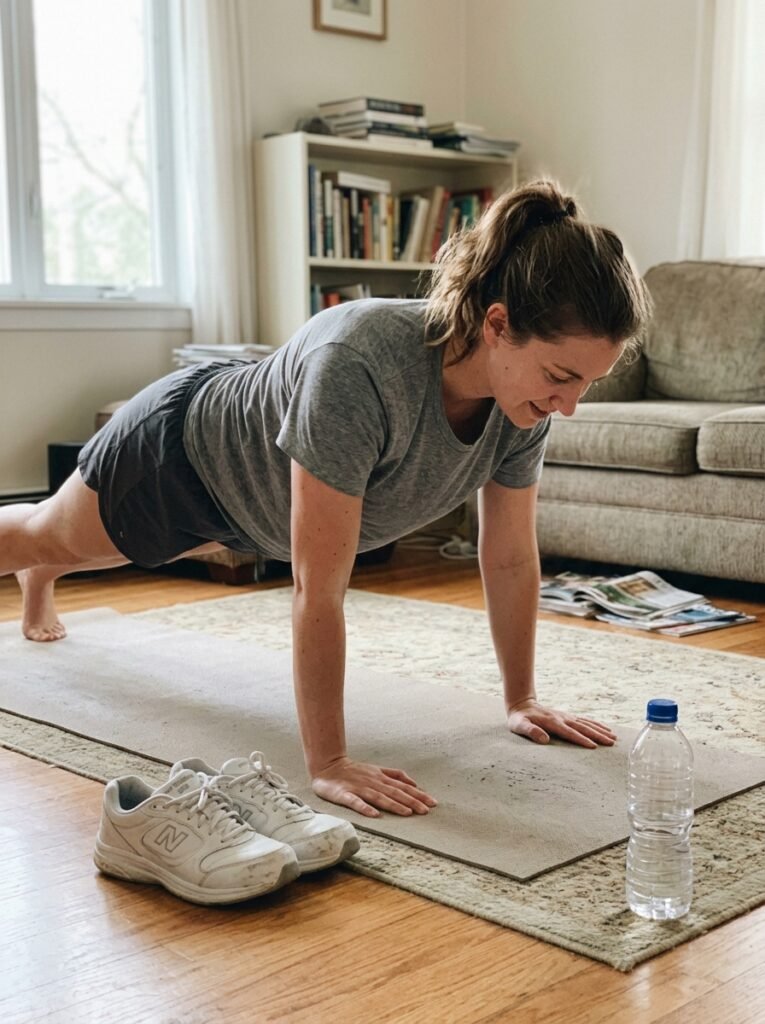
Yes, they can.
Weight loss generally happens when your body uses more energy than you consume over time. Exercise can increase the amount of energy you use, while a sensible eating pattern can help create a manageable calorie deficit.
But there’s an important detail here.
You don’t need to punish yourself with exhausting workouts to lose weight. A sustainable routine that you can repeat week after week is usually much more useful than a brutal workout you do twice and then abandon.
That’s why the best home workouts for beginners should feel challenging without leaving you completely wiped out.
The Best Home Workouts for Beginners to Lose Weight
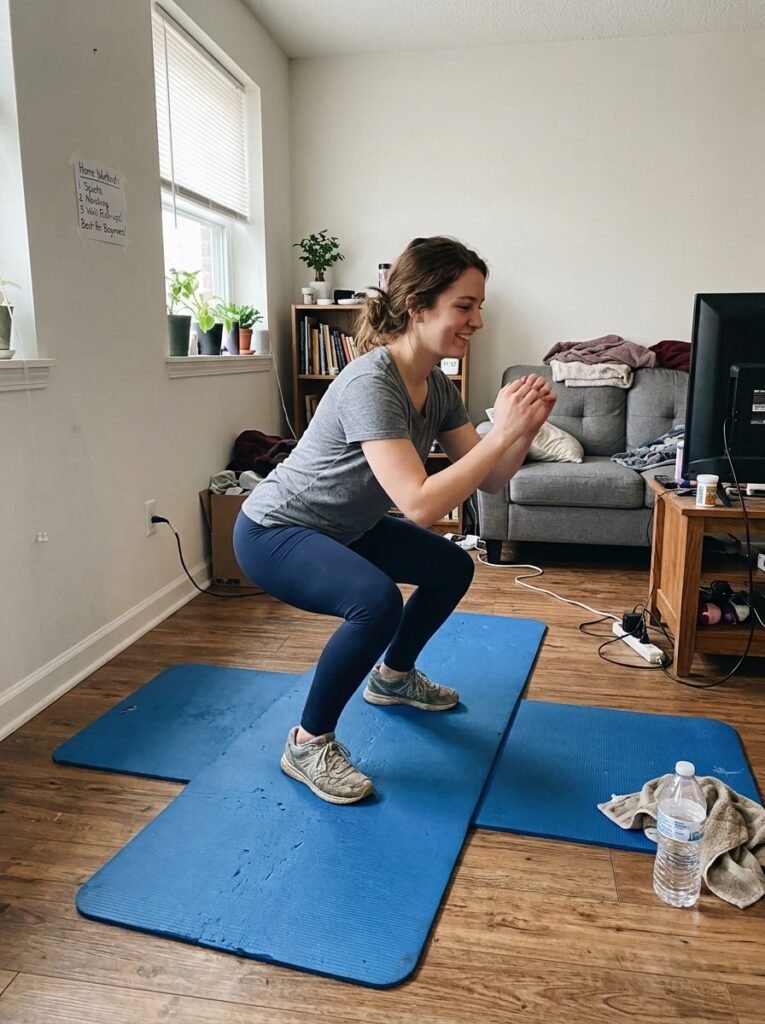
If you’re new to exercise, start with movements that train your whole body and don’t require complicated equipment.
Here are some of the best options.
1. Brisk Walking
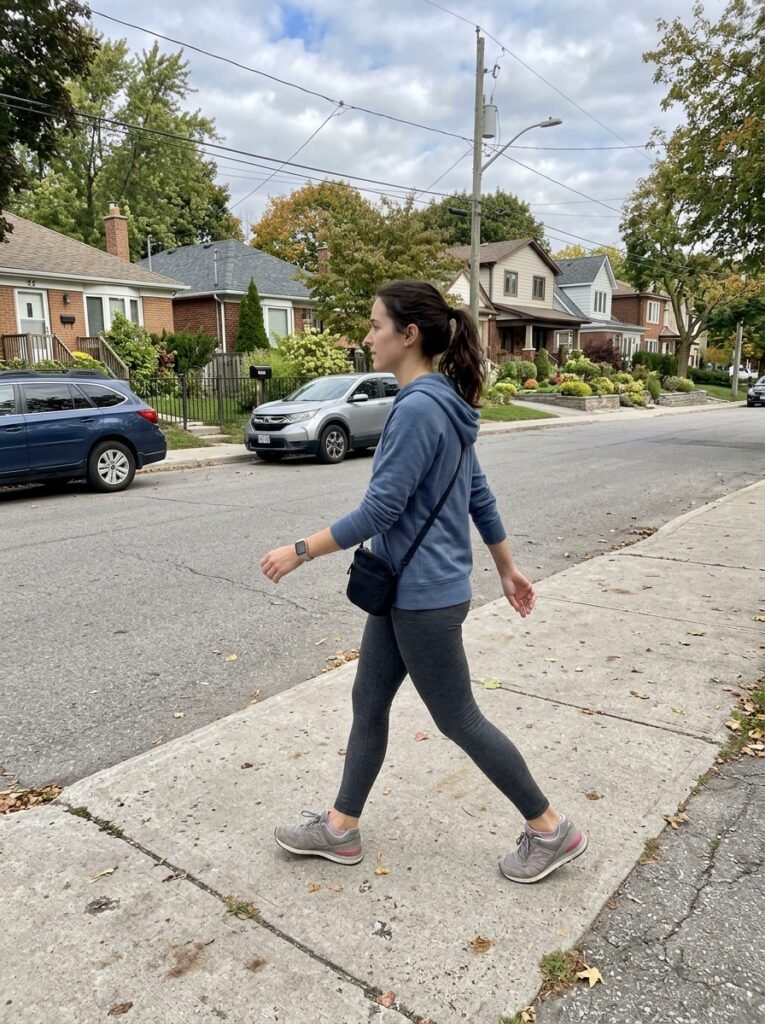
Walking may not look impressive on social media, but don’t underestimate it.
Brisk walking is one of the easiest ways to increase your daily activity without putting your body through an unnecessarily intense workout.
You can walk outside, around your neighborhood, on a treadmill, or even around your home if space is limited.
Beginner Walking Workout
Try this simple routine:
- Walk slowly for 3 minutes.
- Walk at a comfortable pace for 5 minutes.
- Increase your pace for 5 minutes.
- Walk comfortably for 2 minutes.
- Repeat the faster section if you feel good.
- Finish with 2–3 minutes of easy walking.
Aim for around 15–20 minutes when you’re starting.
As your fitness improves, gradually increase the duration or pace.
Why Walking Works
Walking is easy to recover from, which makes it easier to perform consistently.
It can also help you become more active throughout the day without requiring a complicated workout schedule.
If you’re currently very inactive, simply adding more walking can be a meaningful first step.
2. Bodyweight Squats
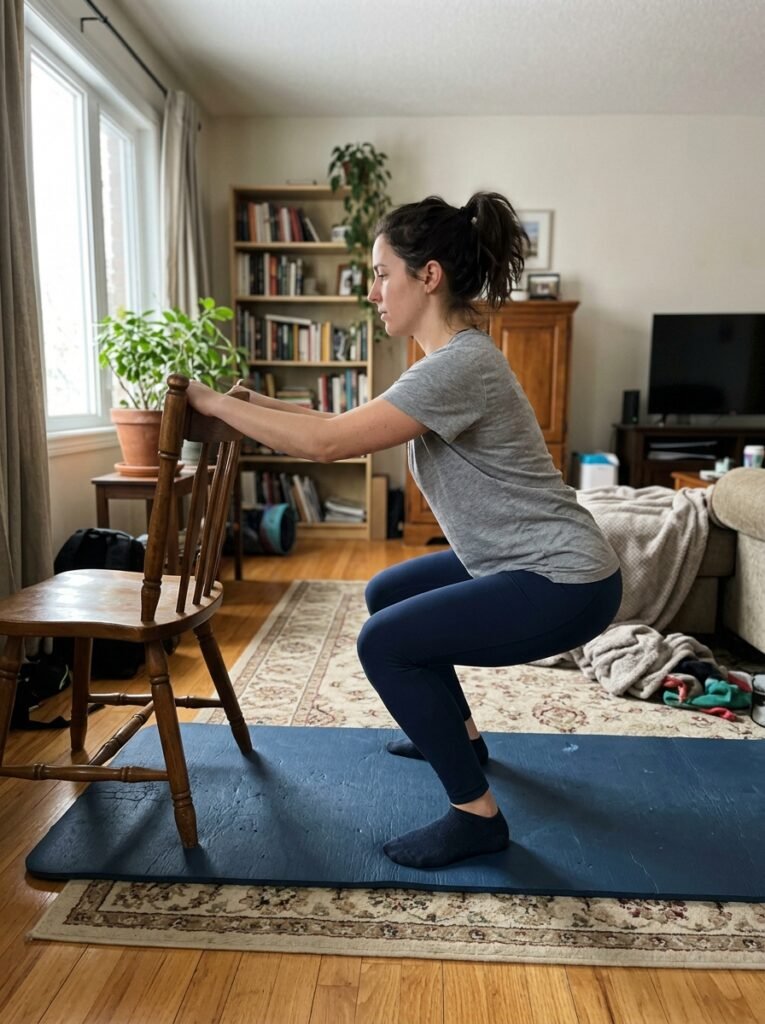
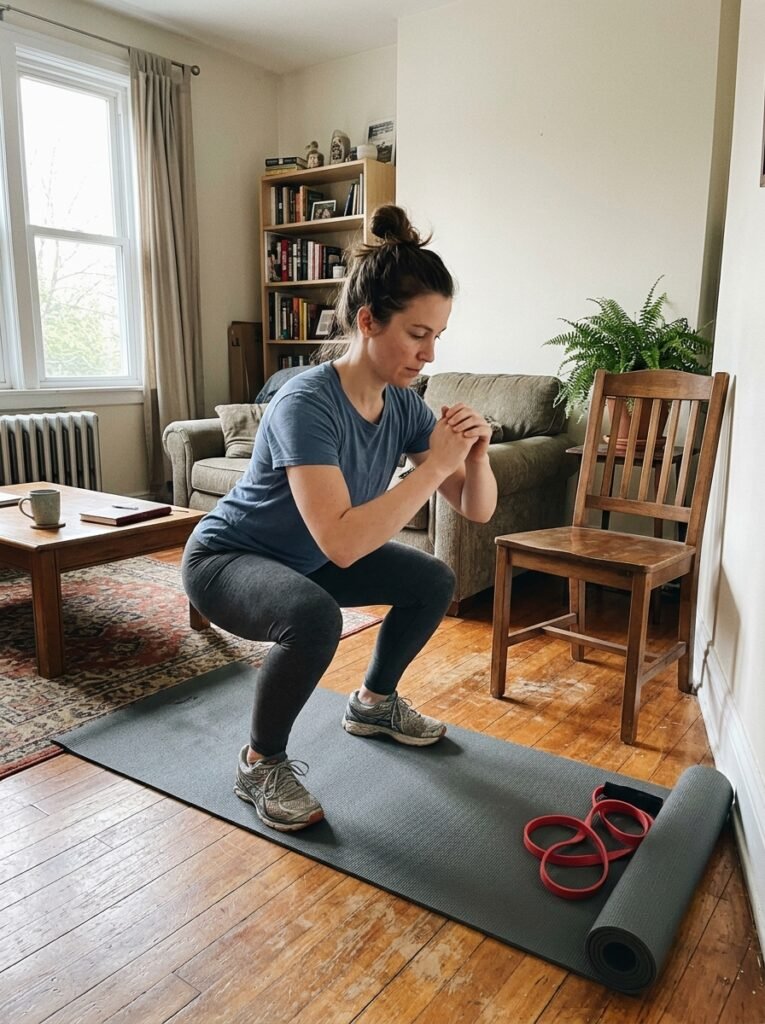
Squats are a beginner-friendly strength exercise that works several muscles in your lower body.
You don’t need dumbbells. Your body weight provides the resistance.
How to Do a Bodyweight Squat
- Stand with your feet roughly shoulder-width apart.
- Keep your chest comfortably lifted.
- Push your hips backward as if you’re sitting into a chair.
- Bend your knees and lower yourself as far as feels comfortable.
- Push through your feet to return to standing.
- Repeat with controlled movements.
Start with 8–12 repetitions.
If regular squats feel difficult, reduce the depth or practice sitting down and standing up from a sturdy chair.
Beginner Tip
Don’t worry about squatting as deeply as possible.
Good form and controlled movement are more important than forcing yourself into a position your body isn’t ready for.
3. Wall Push-Ups
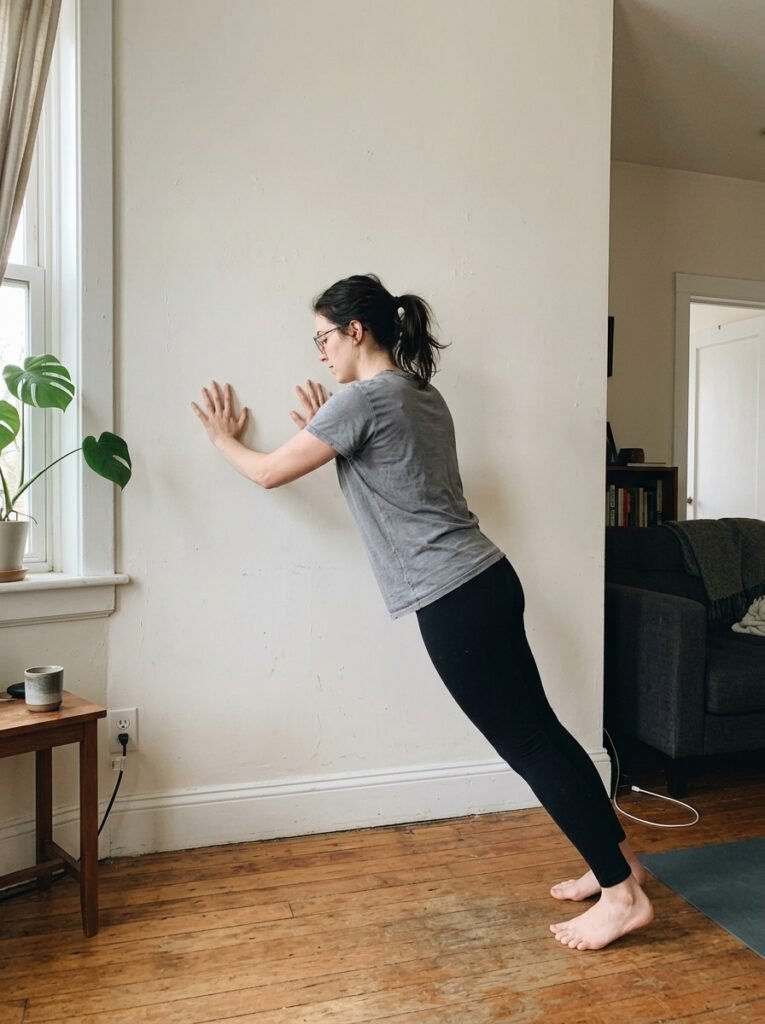
Traditional push-ups can be challenging when you’re just beginning.
Wall push-ups give you an easier way to train your chest, shoulders, arms, and core.
How to Do Wall Push-Ups
- Stand facing a wall.
- Place your hands on the wall around chest height.
- Step your feet back slightly.
- Keep your body in a straight line.
- Bend your elbows and bring your chest toward the wall.
- Push yourself away.
- Repeat.
Try 8–15 repetitions.
Once these become easy, you can progress to countertop push-ups and eventually incline or floor push-ups.
4. Glute Bridges
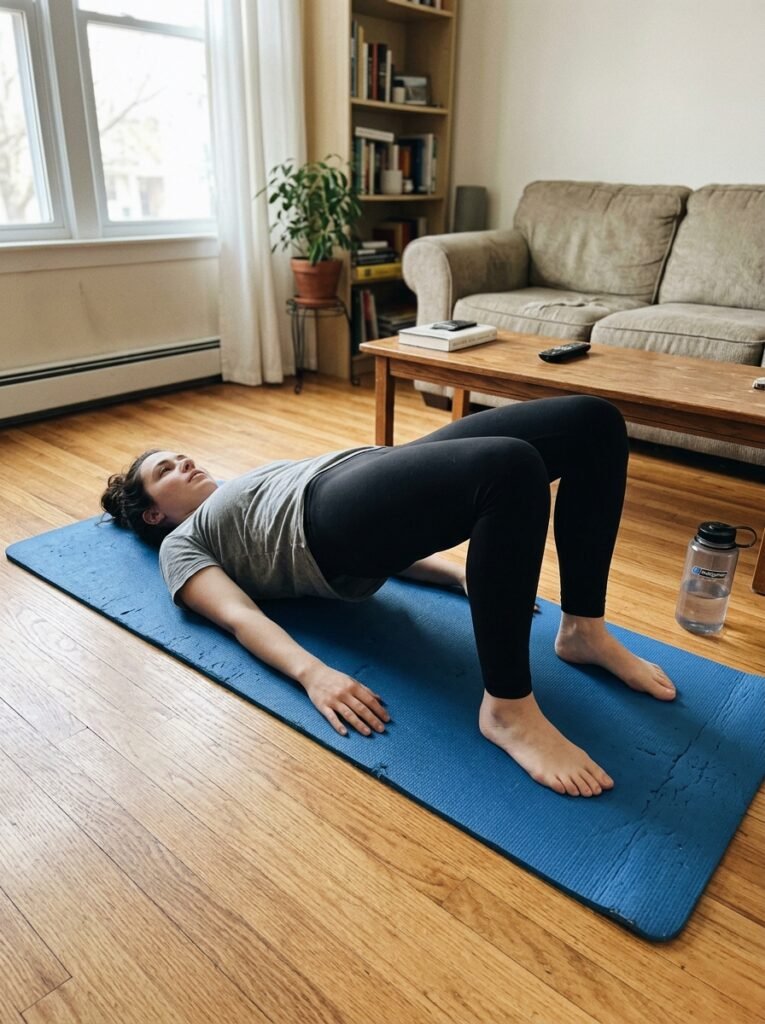
Glute bridges are a simple exercise for your glutes and the muscles around your hips.
They’re particularly useful for beginners because you perform them on the floor rather than balancing on your feet.
How to Do a Glute Bridge
- Lie on your back.
- Bend your knees and place your feet flat on the floor.
- Keep your arms relaxed beside you.
- Tighten your core gently.
- Press through your feet and lift your hips.
- Pause briefly at the top.
- Lower your hips slowly.
Try 10–15 repetitions.
Focus on controlled movement rather than trying to lift your hips as high as possible.
5. Marching in Place
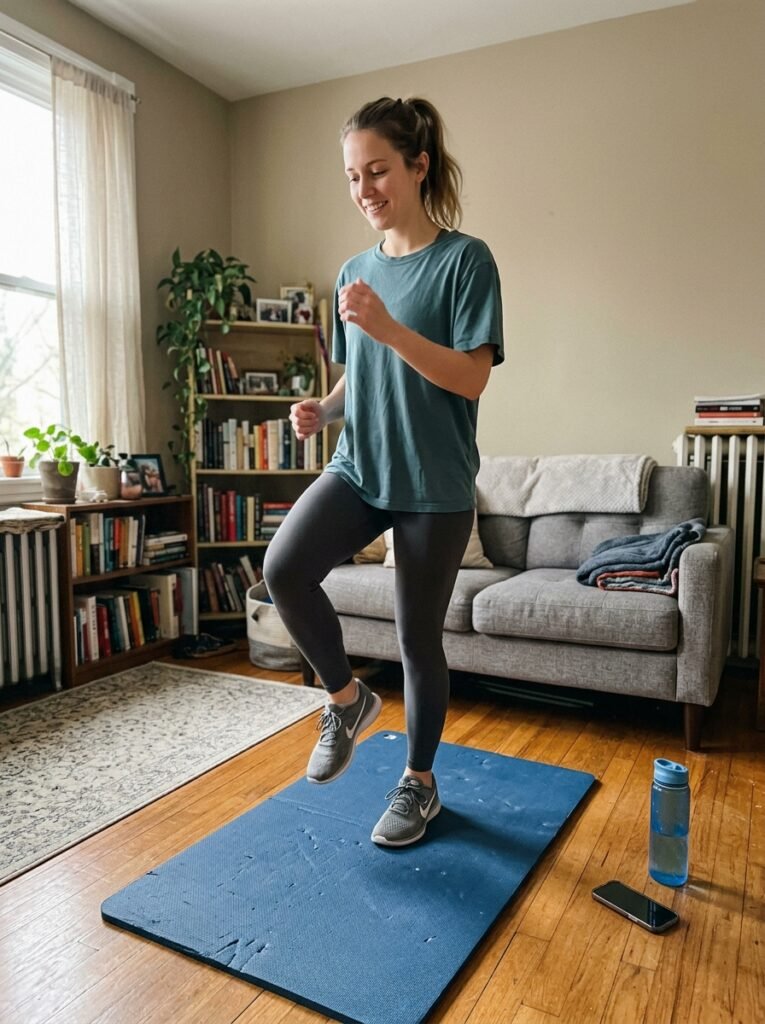
Don’t have much space?
No problem.
Marching in place can turn a few square feet into a simple cardio workout.
Beginner Marching Routine
Start with 30 seconds of marching.
Rest for 20–30 seconds.
Repeat for 5–10 rounds.
As you get fitter, increase your work interval to 45 or 60 seconds.
You can also move your arms naturally to make the exercise more dynamic.
6. Step-Ups
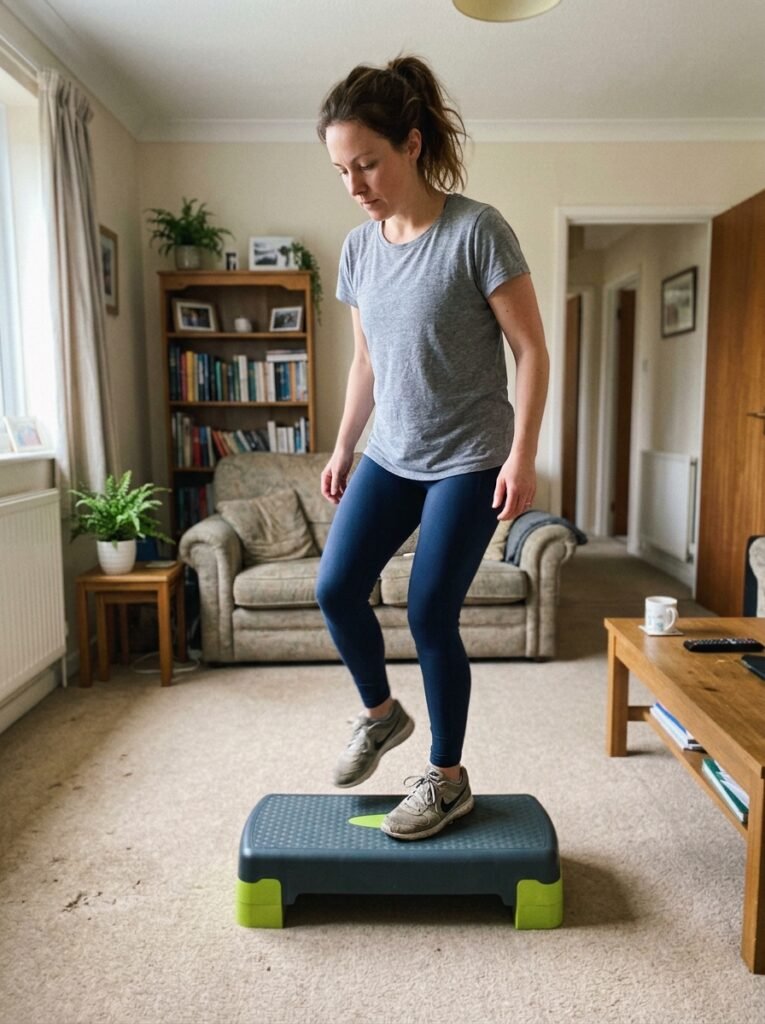
If you have access to a stable, secure step or low platform, step-ups can provide a useful lower-body and cardio challenge.
The key word is stable.
Never use an unstable chair, slippery surface, or anything that could move underneath you.
How to Do Step-Ups
- Stand facing the step.
- Place one foot securely on top.
- Push through that foot to step up.
- Bring the other foot up.
- Step down carefully.
- Alternate sides.
Start with 6–10 repetitions per leg.
If balance is an issue, skip this exercise and use marching in place instead.
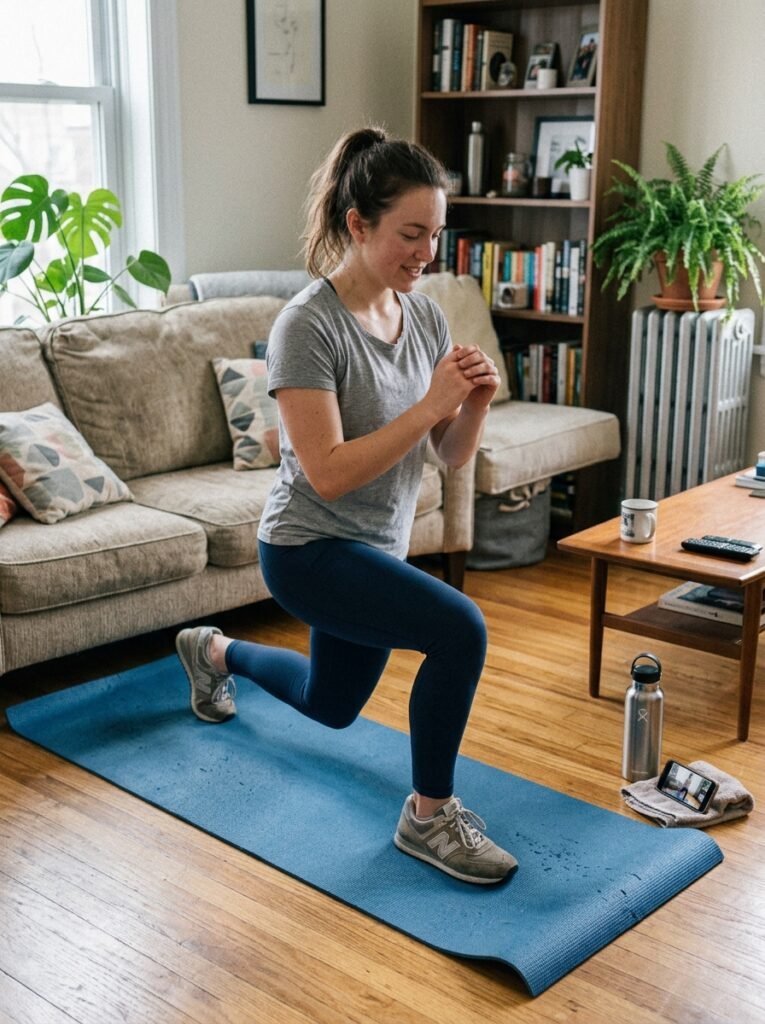
7. Reverse Lunges
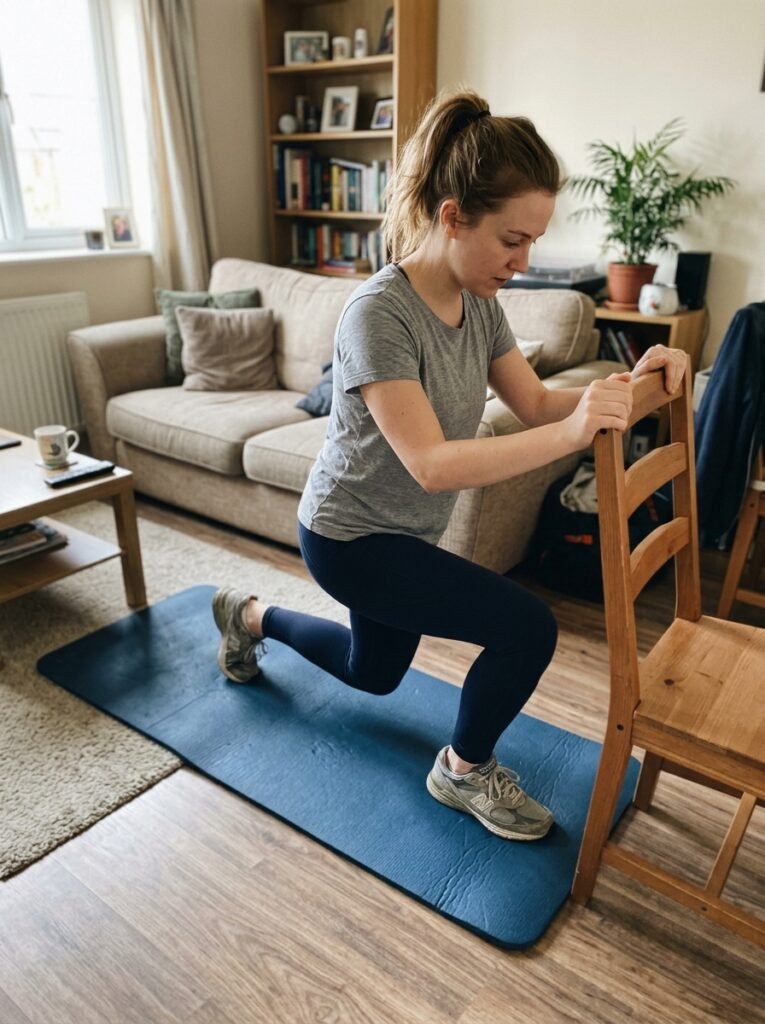
Lunges train your legs and require more balance than squats.
For beginners, reverse lunges are often a comfortable starting point because you step backward rather than forward.
How to Do Reverse Lunges
- Stand tall with your feet comfortably apart.
- Step one foot backward.
- Bend both knees gently.
- Lower your body as far as comfortable.
- Push through the front foot to return to standing.
- Switch sides.
Start with 5–8 repetitions per side.
If lunges don’t feel comfortable, replace them with chair squats.
8. Low-Impact Jumping Jacks
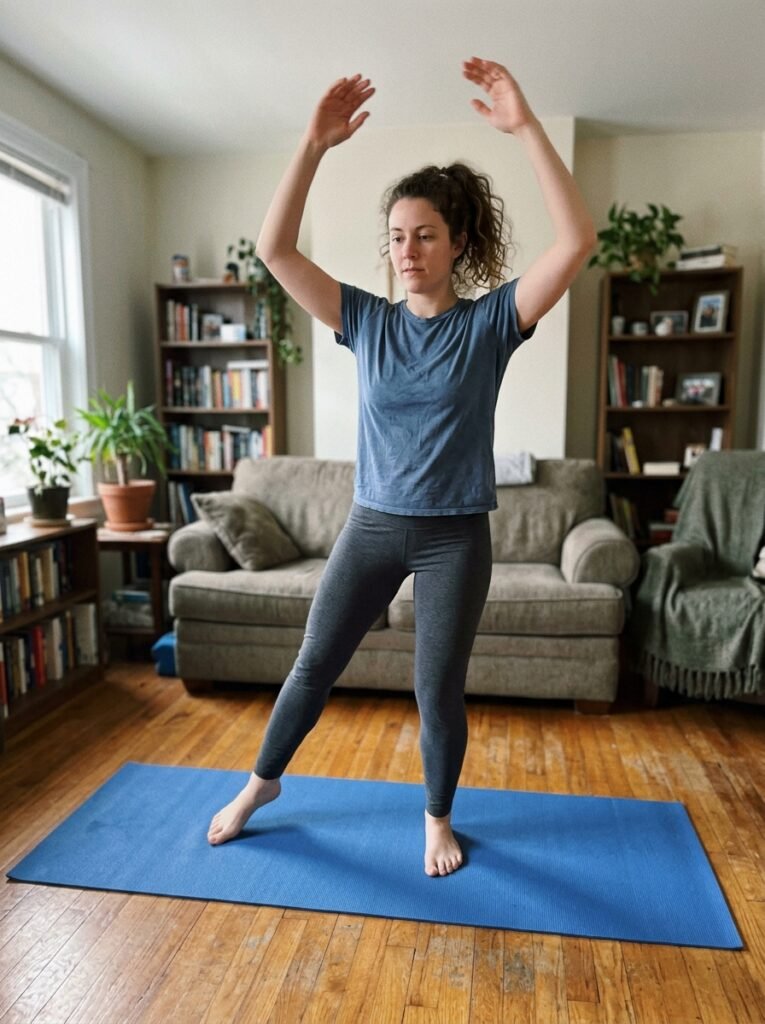
You don’t have to jump to get your heart rate up.
Low-impact jumping jacks are a useful alternative if traditional jumping feels uncomfortable.
How to Do Them
Instead of jumping both feet apart:
- Step one foot to the side.
- Bring it back.
- Step the other foot out.
- Bring it back.
- Move your arms overhead as you step.
Continue for 30–60 seconds.
This gives you a beginner-friendly cardio option with less impact than traditional jumping jacks.
9. Standing Knee Raises
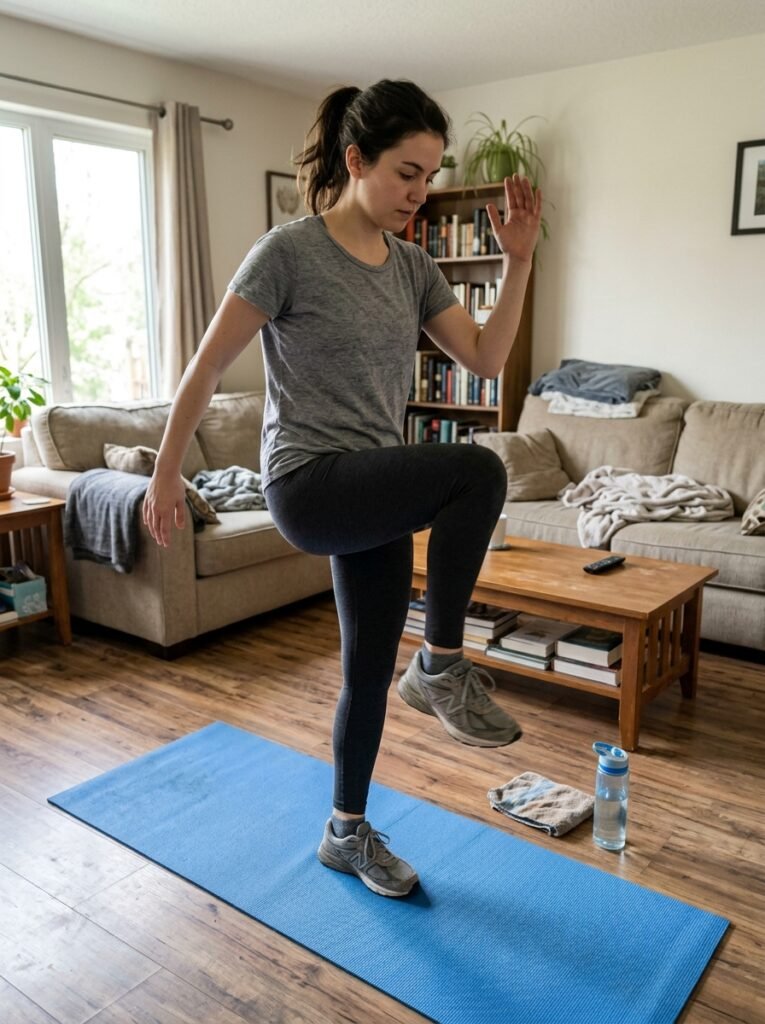
Standing knee raises are simple, require no equipment, and can be adjusted to your fitness level.
Stand tall and lift one knee toward your chest.
Lower it and switch sides.
Try 30–45 seconds of alternating knee raises.
For more intensity, move faster while maintaining control.
10. Beginner-Friendly Mountain Climbers
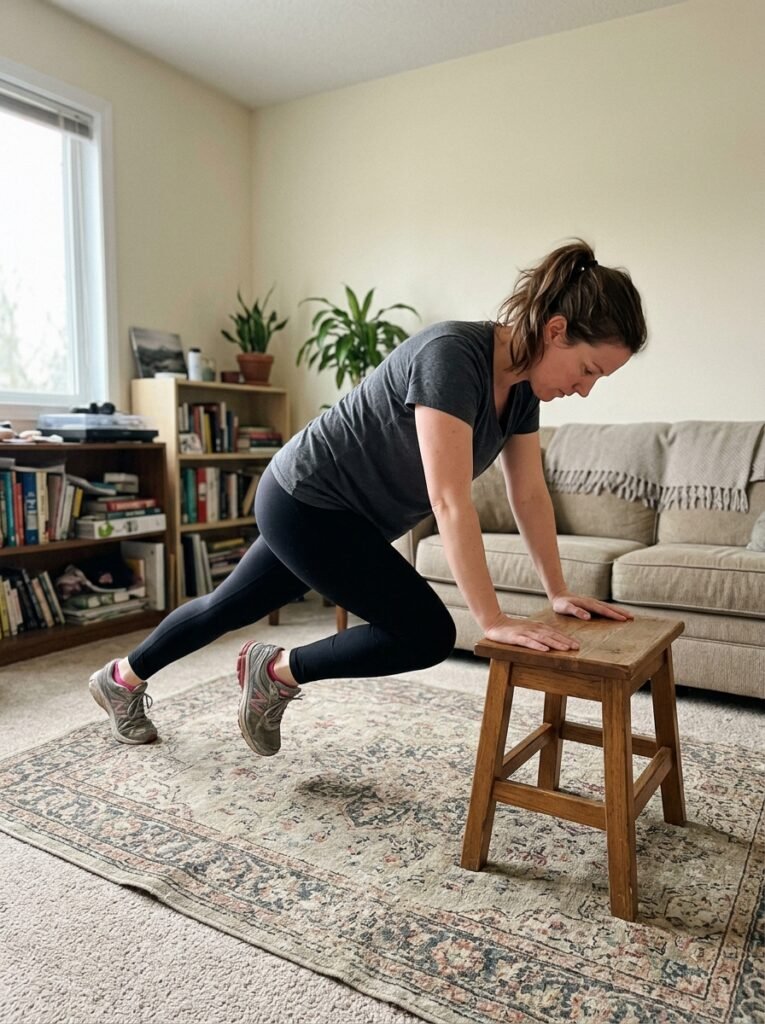
Mountain climbers can become intense quickly.
If you’re a beginner, don’t feel pressured to perform the fast version you see in workout videos.
Instead, try standing mountain climbers.
Stand tall, bring one knee toward your chest, lower it, and alternate sides. Move your arms naturally and gradually increase your pace.
Once you’re comfortable with the standing version, you can experiment with a slower elevated or floor variation.
A Simple 20-Minute Home Workout for Beginners
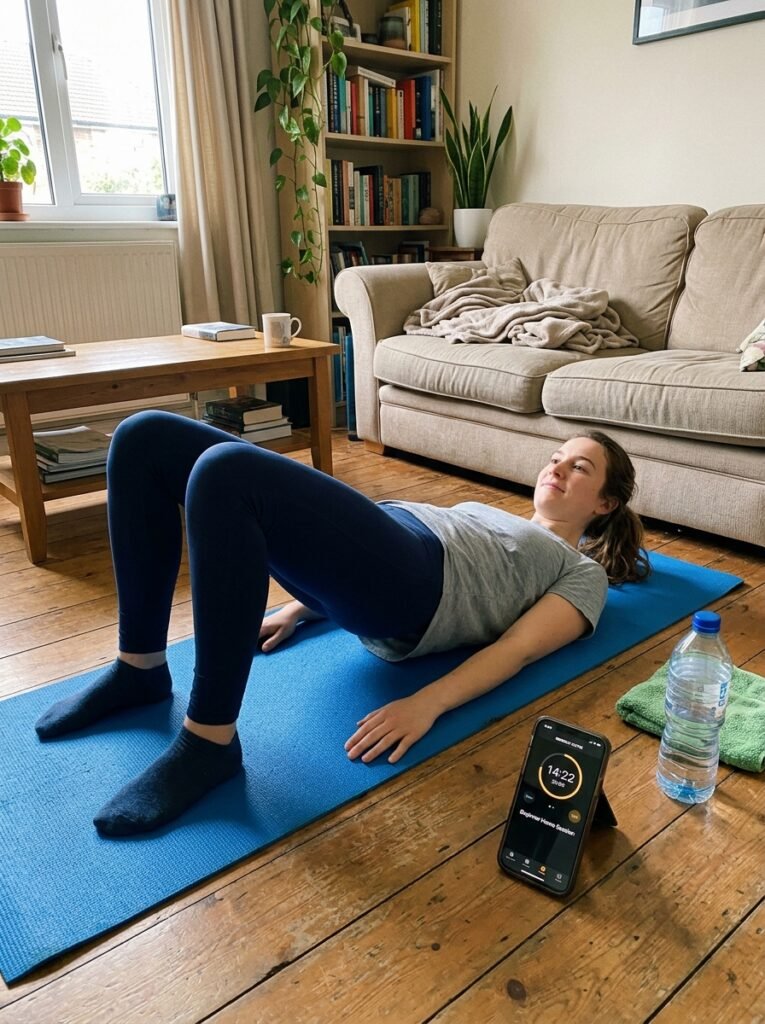
If you don’t know where to start, use this routine.
You won’t need equipment.
Warm-Up: 3 Minutes
Move gently through:
- Marching in place
- Shoulder rolls
- Arm circles
- Gentle side steps
- Easy knee raises
Don’t rush your warm-up.
The goal is simply to get your body moving and gradually raise your heart rate.
Main Workout: 15 Minutes
Perform each exercise for 40 seconds, followed by 20 seconds of rest.
Round 1
- Marching in place
- Bodyweight squats
- Wall push-ups
- Glute bridges
- Standing knee raises
Rest for 1–2 minutes.
Repeat the circuit two more times if your fitness level allows.
If three rounds are too much, start with one round.
That’s not failure. That’s your starting point.
Cool-Down: 2 Minutes
Slow your movements gradually.
Take relaxed breaths and perform gentle stretches for the muscles that feel tight.
You don’t need an elaborate cool-down routine.
A 30-Minute Home Workout for Beginners
If you’ve been exercising consistently for a few weeks, you can gradually move toward a 30-minute session.
Warm-Up — 5 Minutes
- Easy marching
- Side steps
- Arm circles
- Shoulder rolls
- Gentle knee raises
Strength Circuit — 10 Minutes
Perform:
- 10 squats
- 8–12 wall or incline push-ups
- 10 glute bridges
- 6 reverse lunges per side
- 10 standing knee raises per side
Rest as needed.
Repeat the circuit once or twice depending on your fitness level.
Cardio — 10 Minutes
Alternate:
- 1 minute brisk marching
- 1 minute easy marching
Repeat five times.
Cool-Down — 5 Minutes
Slow down gradually and finish with gentle mobility work.
How Often Should Beginners Do Home Workouts?
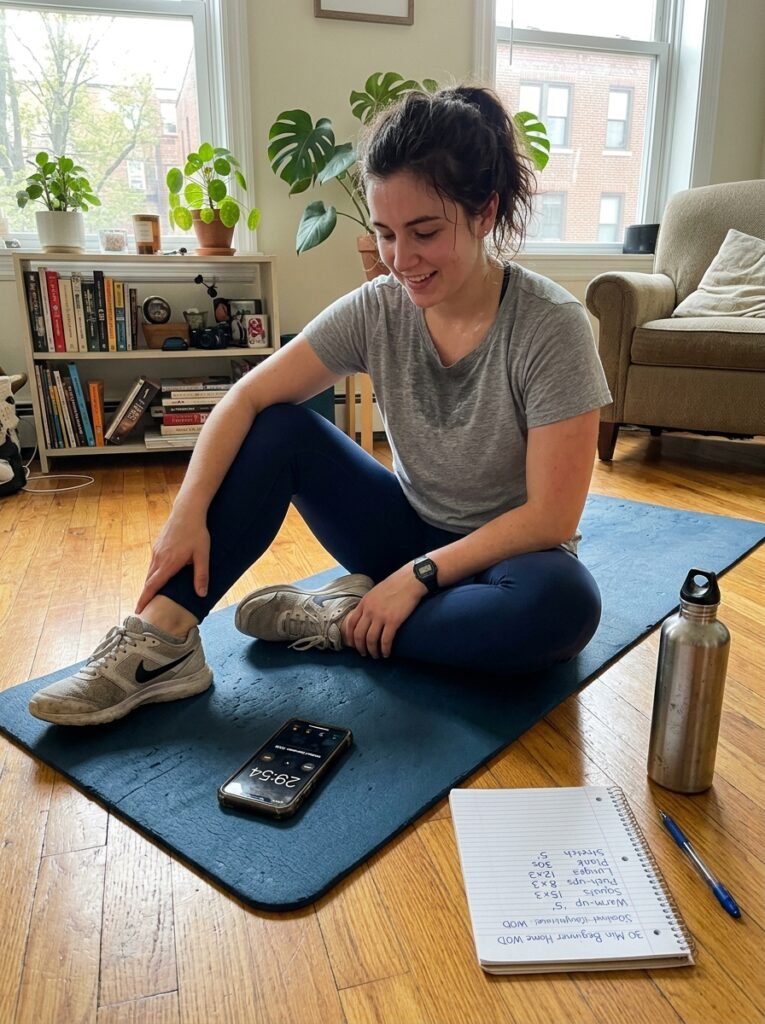
You don’t need to exercise hard every day.
A good starting point is 3 days of structured home workouts per week, with walking or other light movement on the days between workouts.
For example:
- Monday: Full-body home workout
- Tuesday: 20–30 minute walk
- Wednesday: Rest or gentle movement
- Thursday: Full-body home workout
- Friday: Easy walk
- Saturday: Full-body home workout
- Sunday: Rest
This gives your body time to recover while keeping you active throughout the week.
If three workouts feel like too much, start with two.
The best plan is the one you can actually maintain.
How Long Should a Beginner Home Workout Be?
You can make progress without spending an hour exercising.
For many beginners, 15–30 minutes is a practical starting point.
If you’re currently inactive, even a 10-minute session can help establish the habit.
As your fitness improves, you can gradually increase your workout duration, intensity, or frequency.
Don’t increase everything at once.
How to Make Home Workouts More Effective for Weight Loss
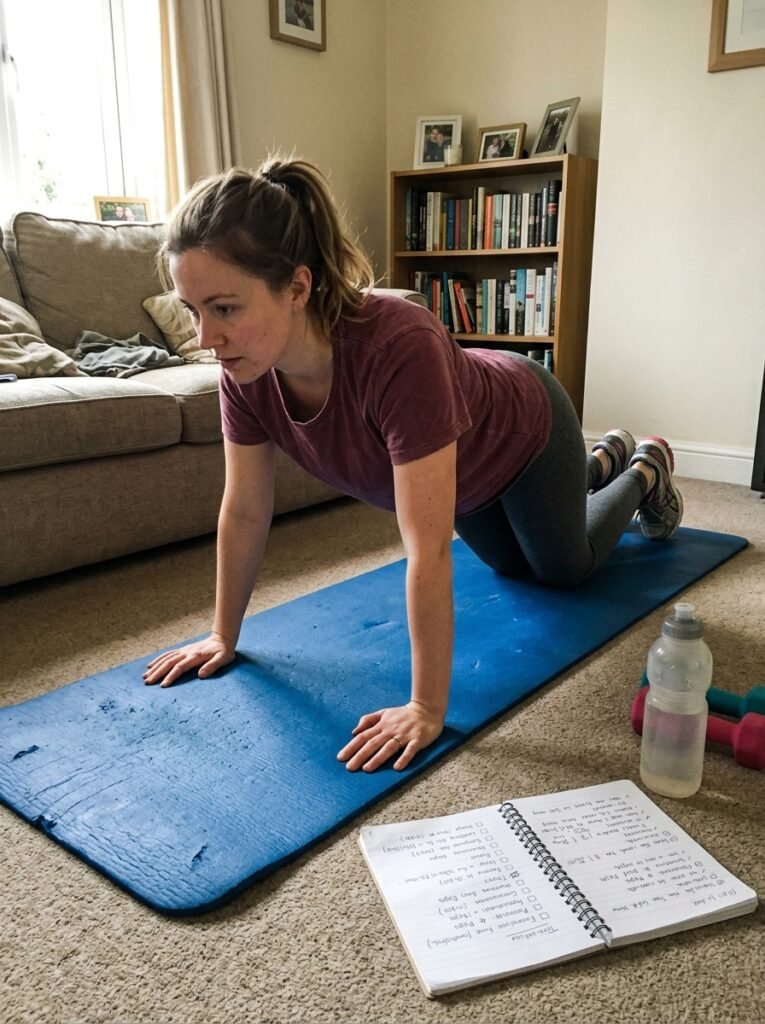
Your workout doesn’t need to become extreme to become more challenging.
Instead, gradually change one variable at a time.
Increase Repetitions
If you can comfortably perform 10 squats, try 12.
Don’t jump from 10 to 50 overnight.
Increase Workout Time
You might begin with 15 minutes.
After a few weeks, you could move toward 20 or 25 minutes.
Small increases are easier to recover from.
Reduce Rest Gradually
If you’re taking 60 seconds between exercises, you could eventually try 45 seconds.
But don’t eliminate rest completely.
Rest helps you maintain better form and control.
Choose Slightly Harder Variations
Your progression could look like this:
Wall push-ups → countertop push-ups → incline push-ups → floor push-ups
Or:
Chair squats → bodyweight squats → slower squats → squat variations
You don’t need to rush through these stages.
Why Strength Training Matters During Weight Loss
Cardio gets a lot of attention when people talk about losing weight.
But strength training deserves a place in your routine too.
When you’re losing weight, you generally want to lose excess body fat while maintaining as much lean muscle as possible. Resistance exercise can support muscle maintenance when combined with appropriate nutrition.
That’s why your home workout routine shouldn’t consist entirely of cardio.
Exercises such as squats, push-ups, lunges, glute bridges, and other bodyweight movements can give you a simple foundation for strength training.
Home Workouts vs. Walking for Weight Loss
You don’t necessarily need to choose one.
Walking and home workouts can complement each other beautifully.
For example, you might perform a 20-minute strength workout three times per week and walk on most other days.
This gives you both resistance exercise and additional everyday movement.
And if you’re having a low-energy day?
Go for a walk.
Something manageable is better than skipping movement because you couldn’t complete a demanding workout.
What About HIIT for Beginners?
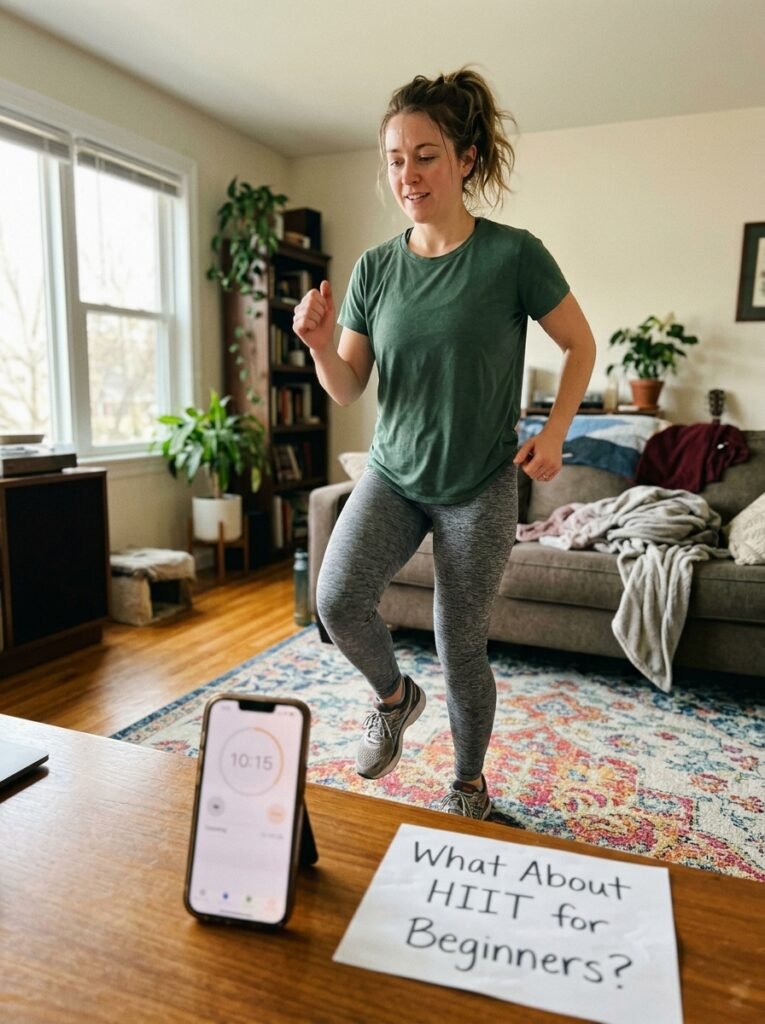
High-intensity interval training, or HIIT, can be effective and time-efficient.
But beginners don’t need to jump straight into all-out intervals.
If you haven’t exercised recently, start with low-impact intervals.
For example:
- 30 seconds brisk marching
- 30 seconds easy marching
- Repeat for 10 minutes
Over time, you can make the faster intervals more challenging.
There’s no prize for making your first workout the hardest workout you’ve ever done.
A Beginner 4-Week Home Workout Plan
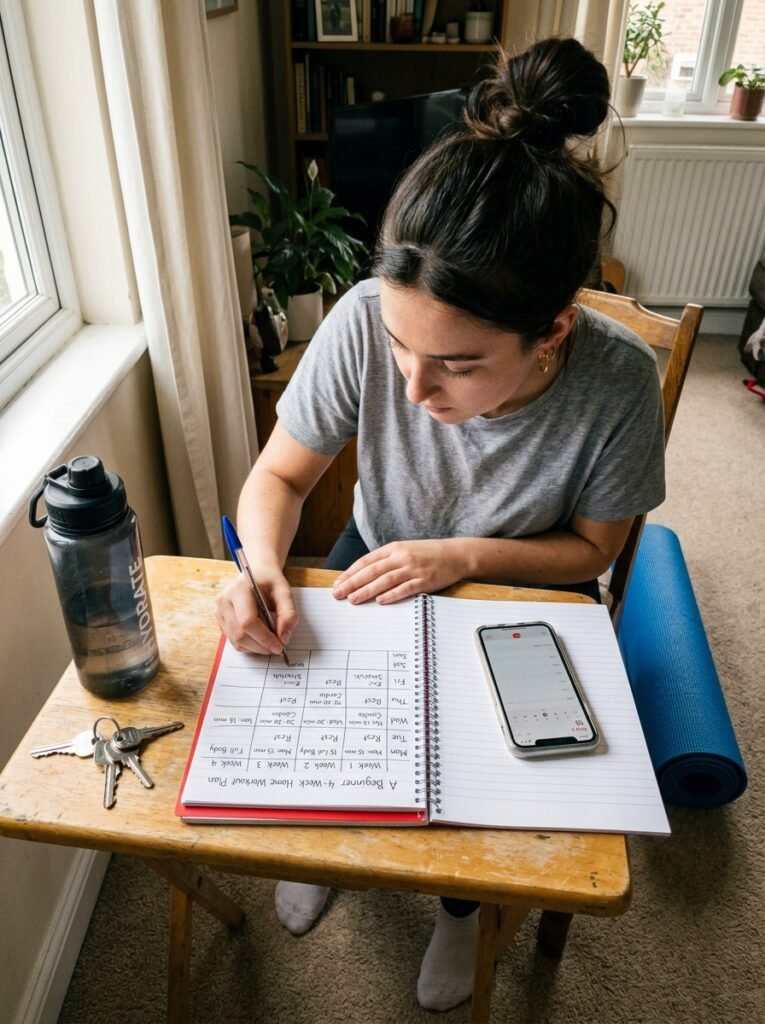
Here’s a simple way to build your routine gradually.
Week 1: Build the Habit
Aim for 2–3 workouts.
Keep each session around 15 minutes.
Focus on:
- Marching
- Chair or bodyweight squats
- Wall push-ups
- Glute bridges
- Gentle knee raises
Your main goal is simply to show up.
Week 2: Add a Little More
Aim for 3 workouts.
Increase sessions to around 15–20 minutes.
Add a few more repetitions or another circuit if you feel comfortable.
Continue walking on several days.
Week 3: Increase Your Challenge
Aim for 3 workouts of around 20–25 minutes.
You can begin using harder variations, slightly longer work periods, or shorter rest periods.
Choose only one or two progressions at a time.
Week 4: Establish Your Routine
Aim for 3–4 workouts, depending on recovery.
Work toward 20–30 minute sessions.
At this point, you should have a better idea of which exercises you enjoy and which movements feel comfortable for your body.
That’s valuable information.
A sustainable workout routine should fit you, not someone else’s fitness level.
Common Mistakes Beginners Make With Home Workouts
You can save yourself a lot of frustration by avoiding these common mistakes.
Doing Too Much Too Soon
It’s easy to feel motivated and decide you’re going to exercise every day for an hour.
Then soreness hits.
You miss a few workouts.
And suddenly the entire plan disappears.
Start smaller than your motivation tells you to.
Trying to “Burn Off” Food
Exercise shouldn’t be punishment for eating.
You don’t need to earn your meals or exercise because you ate dessert.
Build movement into your lifestyle because you want a stronger, healthier, more capable body.
Ignoring Recovery
Your body needs recovery.
Rest days, adequate sleep, hydration, and sensible nutrition all matter.
If you’re constantly exhausted and sore, your routine may be too demanding.
Focusing Only on the Scale
Your body weight can fluctuate from day to day because of factors such as water retention, food intake, and other normal changes.
Look at longer-term trends.
You can also pay attention to your energy, fitness, strength, walking ability, clothing fit, and consistency.
How to Combine Home Workouts With Healthy Eating
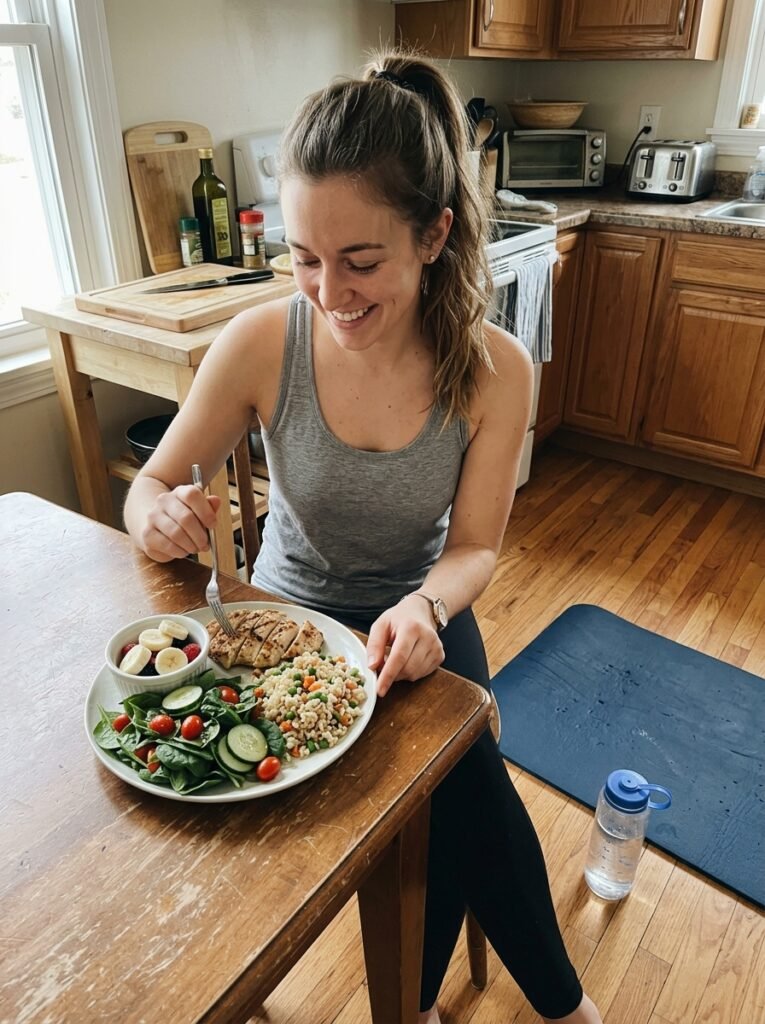
Exercise is only one part of weight management.
You don’t need a crash diet to support your workouts.
Instead, build meals around nutritious foods you enjoy.
A simple meal might include:
- A protein source such as eggs, chicken, fish, beans, lentils, yogurt, or tofu
- Plenty of vegetables or fruit
- A source of carbohydrates such as potatoes, oats, rice, or whole grains
- A moderate amount of healthy fats
- Water or another low-calorie drink
You can still enjoy foods you love.
The goal is to create an eating pattern you can maintain, not a temporary list of foods you’re forbidden to eat.
How to Stay Motivated When You Don’t Feel Like Exercising
Motivation comes and goes.
That’s normal.
Instead of waiting until you feel motivated, make your workouts easy to start.
Put your workout clothes somewhere visible.
Choose a specific time.
Keep your routine short enough that it doesn’t feel overwhelming.
And create a minimum goal.
For example, tell yourself:
“I’ll exercise for just 10 minutes.”
If you want to continue afterward, great.
If you stop after 10 minutes, you’ve still kept your commitment.
What If You’re Completely Out of Shape?
Start very gently.
You don’t need to perform every exercise in this article.
Choose three or four movements that feel manageable.
For example:
- 5 minutes of walking
- 8 chair squats
- 8 wall push-ups
- 10 glute bridges
Rest and repeat if you feel comfortable.
Your first workout is not supposed to prove how fit you are.
It’s supposed to give you a starting point.
What If You Have Joint Pain or an Injury?
Don’t try to push through significant pain.
You can often modify exercises to reduce impact, but persistent pain or an existing injury deserves individualized guidance from an appropriate healthcare professional.
Low-impact options such as walking at a comfortable pace, gentle marching, or upper-body movements may be more appropriate for some people.
Your workout should challenge your muscles and cardiovascular system—not create unnecessary pain.
How to Track Your Progress
You don’t have to obsessively count every workout detail.
A simple tracking system can be enough.
Write down:
- Workout date
- Workout duration
- Exercises completed
- Number of repetitions
- How difficult the workout felt
You might discover that a workout that once felt difficult becomes much easier after a few weeks.
That’s progress.
You can also track your walking time, daily steps if you use a tracker, strength improvements, or how consistently you’re exercising.
The Best Home Workout Is the One You Can Repeat
There’s always going to be another “best” workout online.
One person will tell you to run.
Another will recommend HIIT.
Someone else will tell you to do hundreds of squats.
You don’t need to chase every new fitness trend.
If you’re a beginner, focus on a simple combination of strength training, walking, and low-impact cardio.
Make it manageable.
Repeat it consistently.
Then gradually make it harder as your fitness improves.
That’s a much more realistic path than trying to transform your body in two weeks.
Do this two or three times per week and gradually increase the difficulty.
The goal isn’t to destroy yourself during a workout.
The goal is to become the person who keeps showing up.