
15-Minute Full Body Home Workout (No Equipment): A Simple Routine for Busy Days
You don’t need an hour at the gym to get your body moving.
If you’re short on time, this 15-minute full body home workout (no equipment) can help you work your legs, glutes, core, chest, shoulders, and arms using nothing more than your body weight and a little floor space.
The goal isn’t to exhaust yourself or turn every workout into a punishment. It’s to build a simple routine you can actually repeat, even on those busy days when finding an extra hour feels impossible.
Key Takeaways
- This 15-minute full body home workout (no equipment) targets your major muscle groups with simple bodyweight exercises.
- You can make the workout easier or harder by changing your pace, range of motion, or rest time.
- Good form matters more than rushing through repetitions.
- You don’t need to work out perfectly every day; consistency over time matters much more.
What Is a 15-Minute Full Body Home Workout?
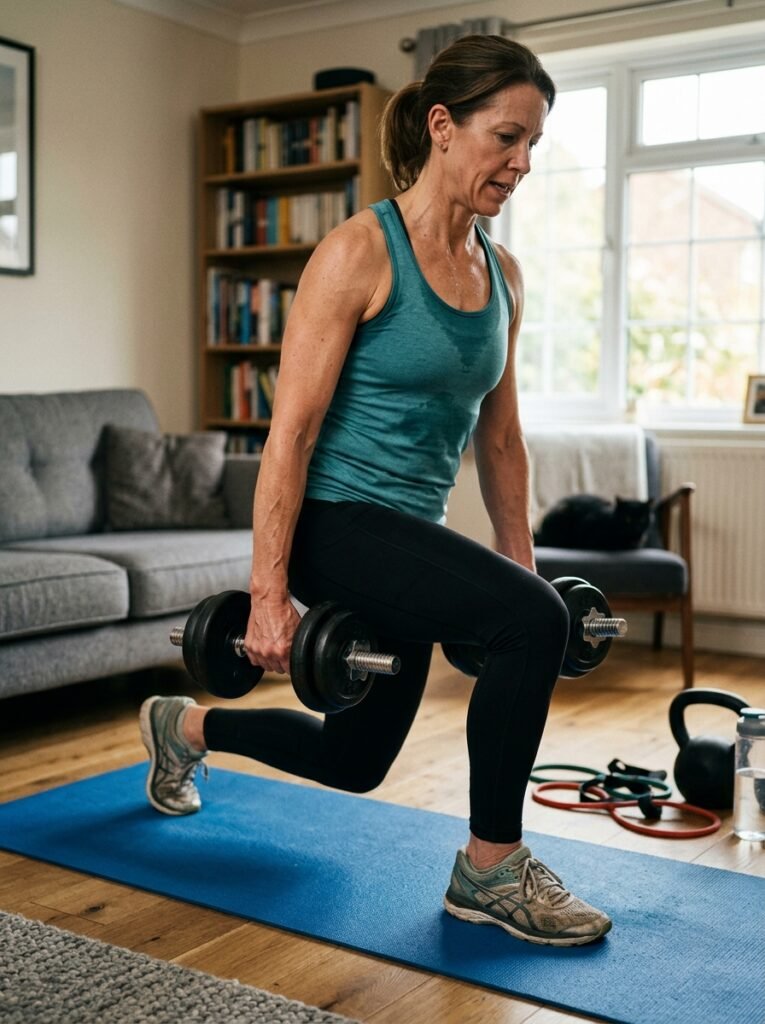
A full-body workout is a routine that trains several major muscle groups during the same session.
Instead of focusing only on your abs, legs, or arms, you’ll combine movements that challenge your lower body, upper body, and core.
The best part? You can do it at home without dumbbells, resistance bands, machines, or other workout equipment.
This makes a 15-minute full body home workout (no equipment) especially useful for beginners, busy parents, students, remote workers, or anyone who simply doesn’t enjoy going to the gym.
And yes, 15 minutes can still be worthwhile.
A short workout that you actually complete is far more useful than a long workout you keep postponing.
Before You Start: A Quick Warm-Up
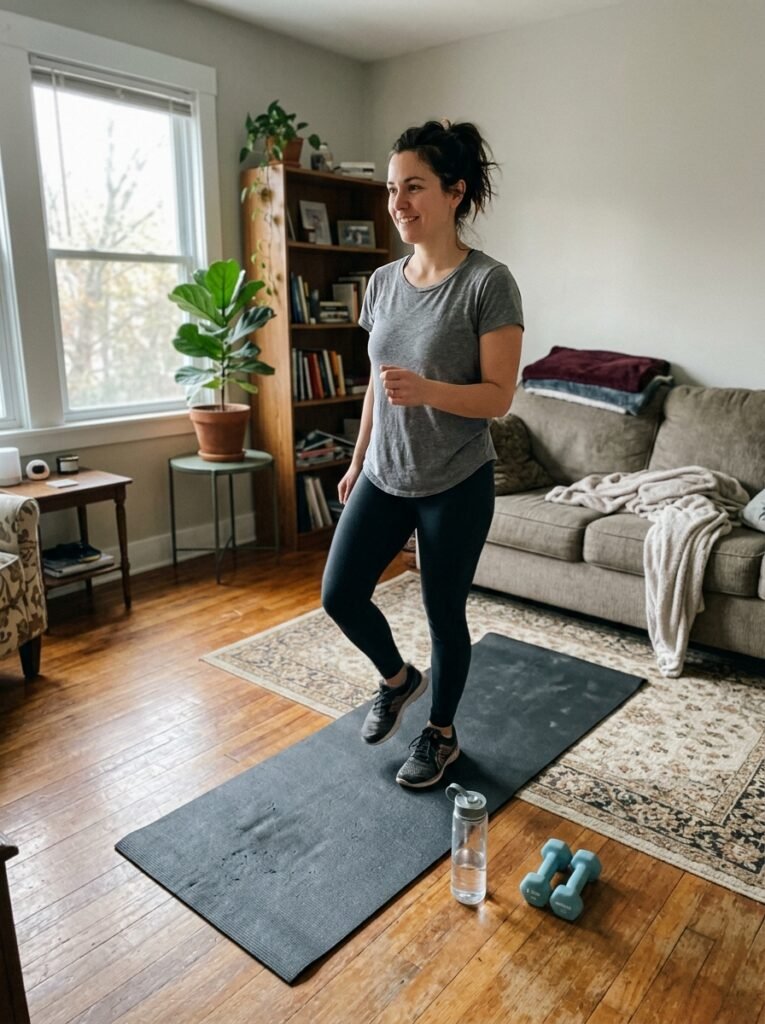
Don’t jump straight into intense movements when your body is cold.
Spend about 2 minutes warming up with easy movements. You don’t need a complicated warm-up routine.
Try:
- 30 seconds of marching in place
- 30 seconds of arm circles
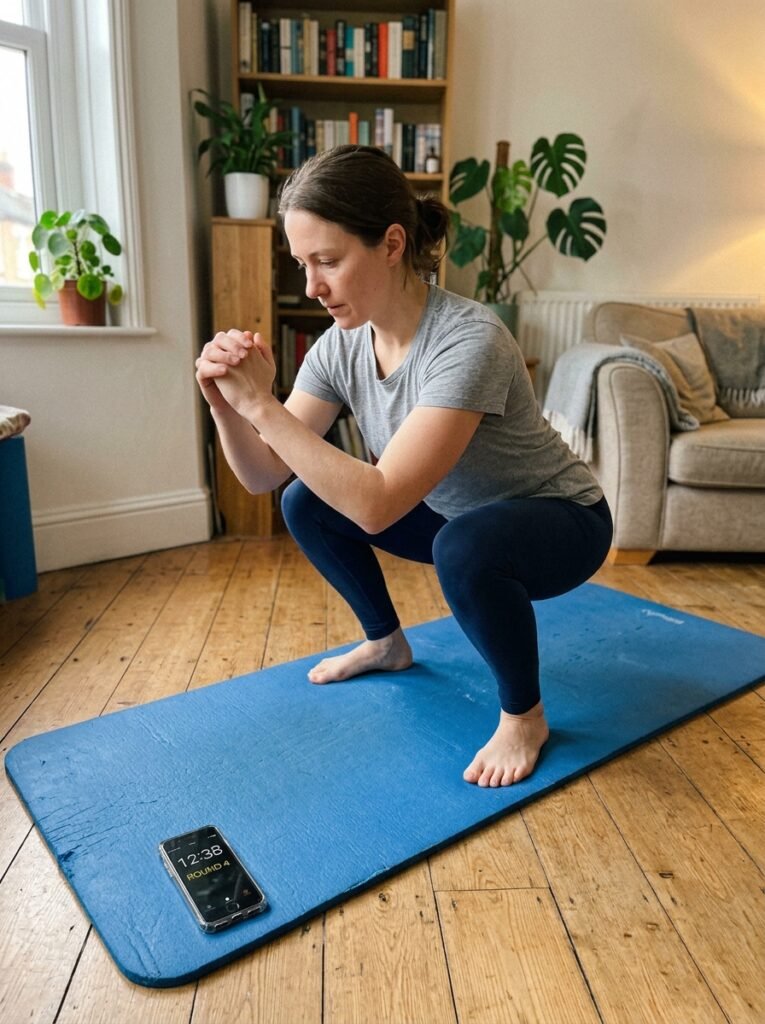
- 30 seconds of gentle bodyweight squats
- 30 seconds of alternating knee lifts
Keep the intensity comfortable.
The purpose is simply to get your body moving and gradually prepare your joints and muscles for the workout.
Your 15-Minute Full Body Home Workout
Here’s the complete routine.
You’ll perform 10 exercises, spending about 45 seconds working and 15 seconds transitioning to the next exercise.
That gives you 10 minutes of exercise.
Then you’ll finish with a 3-minute second round using selected movements at a slightly easier pace.
If you’re brand new to exercise, don’t worry about following the timing perfectly. You can start with 30 seconds of work and 30 seconds of rest.
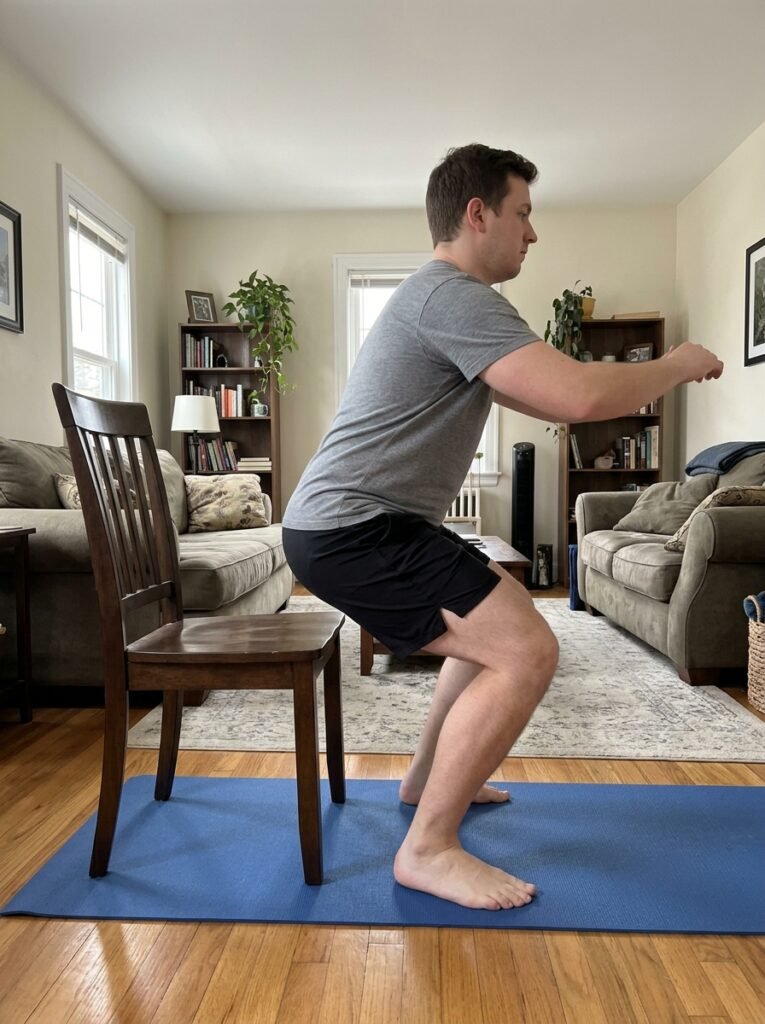
1. Bodyweight Squats
Time: 45 seconds
Squats are one of the simplest ways to train your lower body without equipment.
They primarily work your thighs and glutes while also requiring your core to stabilize your body.
How to Do a Bodyweight Squat
- Stand with your feet roughly shoulder-width apart.
- Keep your chest comfortably upright.
- Push your hips back as though you’re sitting into a chair.
- Bend your knees and lower yourself as far as feels comfortable.
- Push through your feet to return to standing.
- Repeat at a controlled pace.
Don’t worry about getting extremely low.
A comfortable range of motion with good control is better than forcing yourself into a deep squat.
Beginner Modification
Use a chair behind you as a target.
Lower your hips toward the chair without completely relaxing onto it, then stand back up.
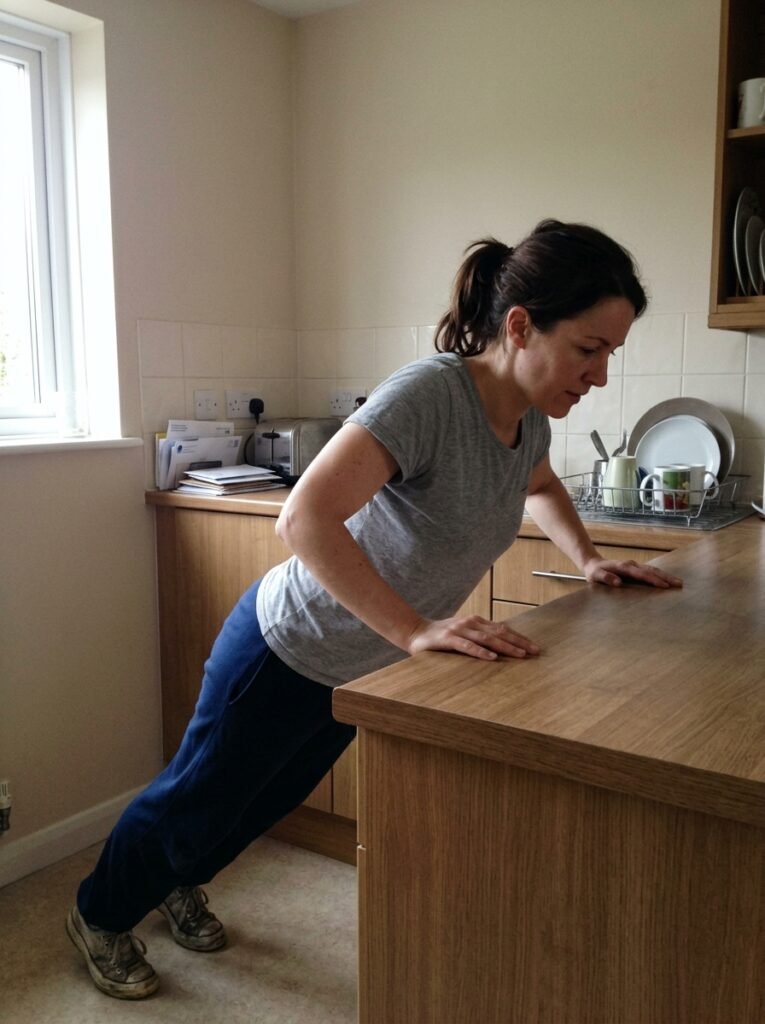
2. Incline or Regular Push-Ups
Time: 45 seconds
Push-ups are an excellent bodyweight movement for your chest, shoulders, arms, and core.
If traditional push-ups feel too difficult, there’s absolutely nothing wrong with modifying them.
How to Do a Push-Up
- Place your hands slightly wider than shoulder-width apart.
- Extend your legs behind you and create a straight line from your shoulders toward your feet.
- Brace your stomach gently.
- Bend your elbows and lower your chest toward the floor.
- Push through your hands to return to the starting position.
Keep your hips from dropping toward the floor.
Beginner Modification
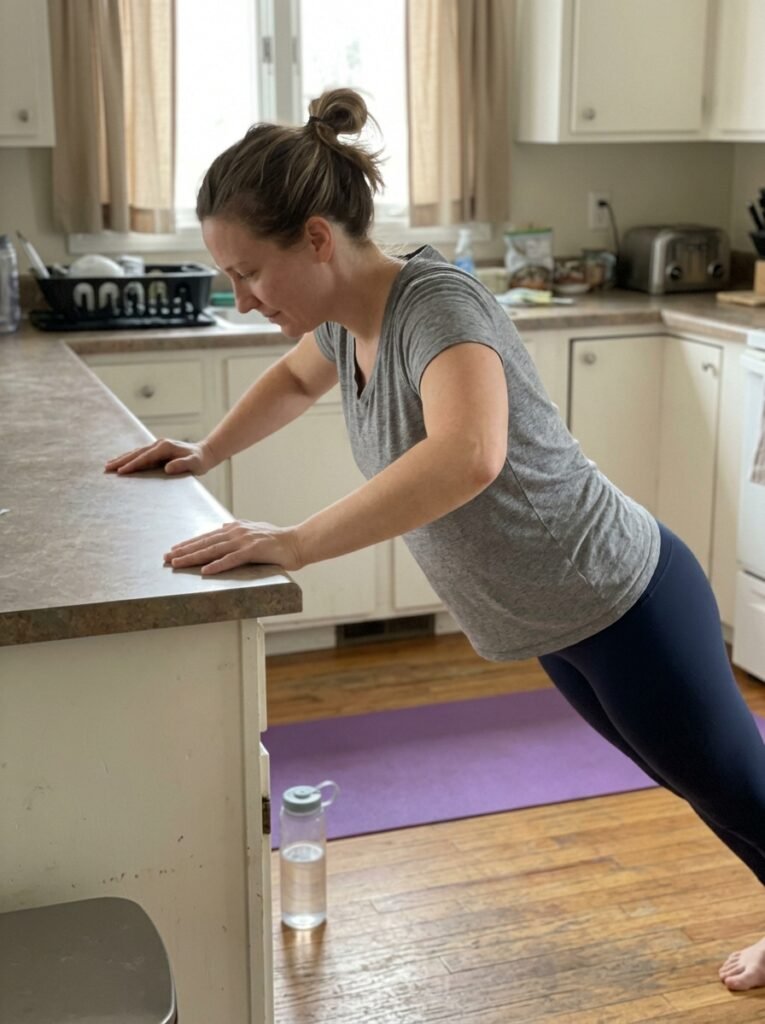
Place your hands on a sturdy countertop, table, or wall and perform incline push-ups.
The higher your hands are, the easier the movement generally becomes.
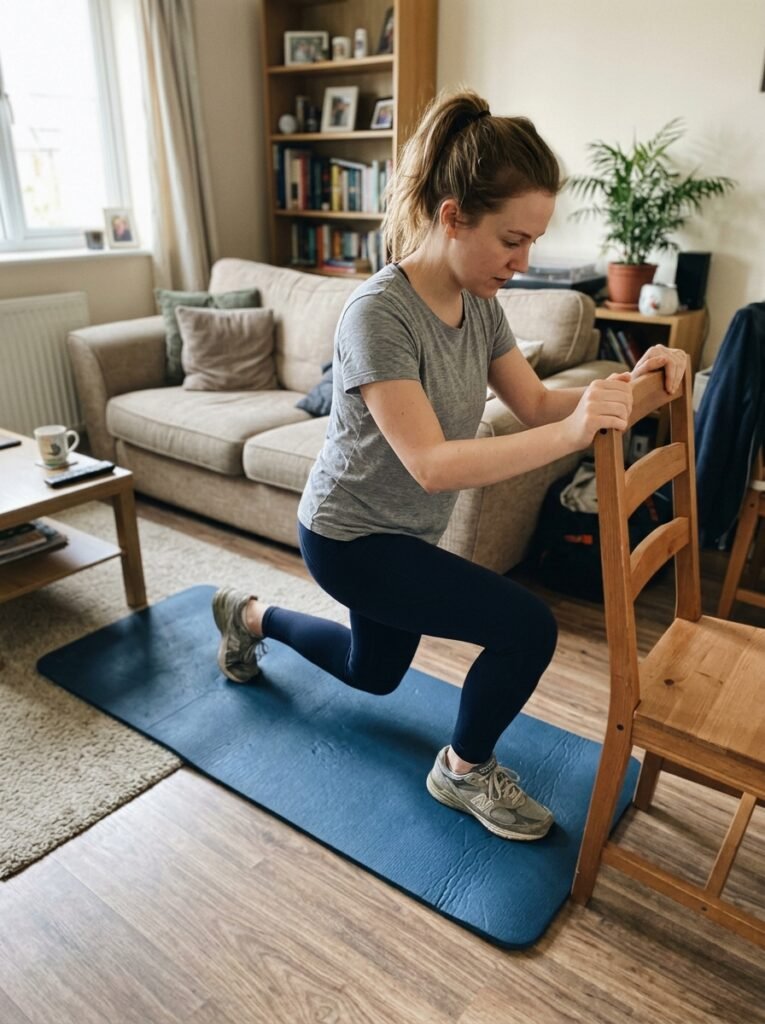
3. Reverse Lunges
Time: 45 seconds
Reverse lunges are a great way to challenge your legs and glutes while working one side at a time.
They can also be easier to control than forward lunges for many beginners.
How to Do Reverse Lunges
- Stand tall with your feet together.
- Step one foot backward.
- Lower your body until both knees are comfortably bent.
- Push through your front foot to return to standing.
- Repeat on the opposite side.
- Continue alternating.
Keep your front knee tracking in the same general direction as your toes.
You don’t have to touch your back knee to the floor.
Beginner Modification
Hold onto a wall or sturdy surface for balance.
You can also reduce the depth of the lunge until your legs become stronger.
4. Glute Bridges
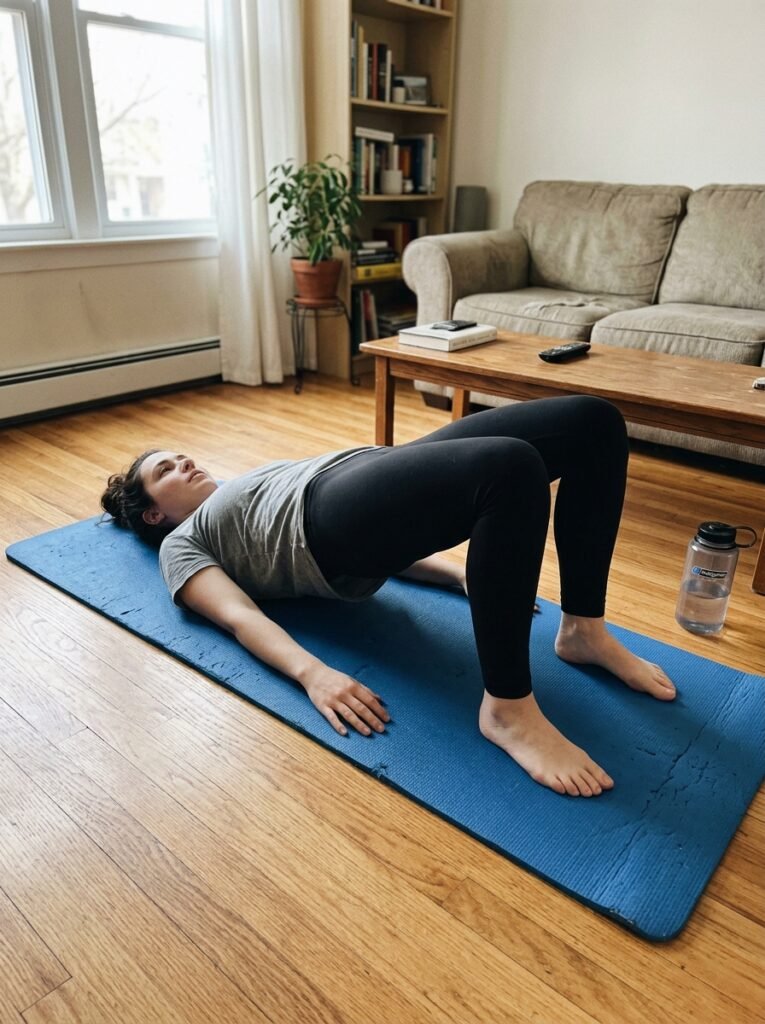
Time: 45 seconds
Now it’s time to give your glutes a little extra attention.
Glute bridges are performed on the floor and are especially useful if you’ve spent much of the day sitting.
How to Do a Glute Bridge
- Lie on your back.
- Bend your knees and place your feet flat on the floor.
- Keep your feet about hip-width apart.
- Gently brace your core.
- Press through your feet and lift your hips.
- Squeeze your glutes at the top.
- Lower your hips slowly and repeat.
Avoid arching your lower back excessively.
Think about lifting your hips by squeezing your glutes rather than simply pushing your stomach upward.
5. Mountain Climbers
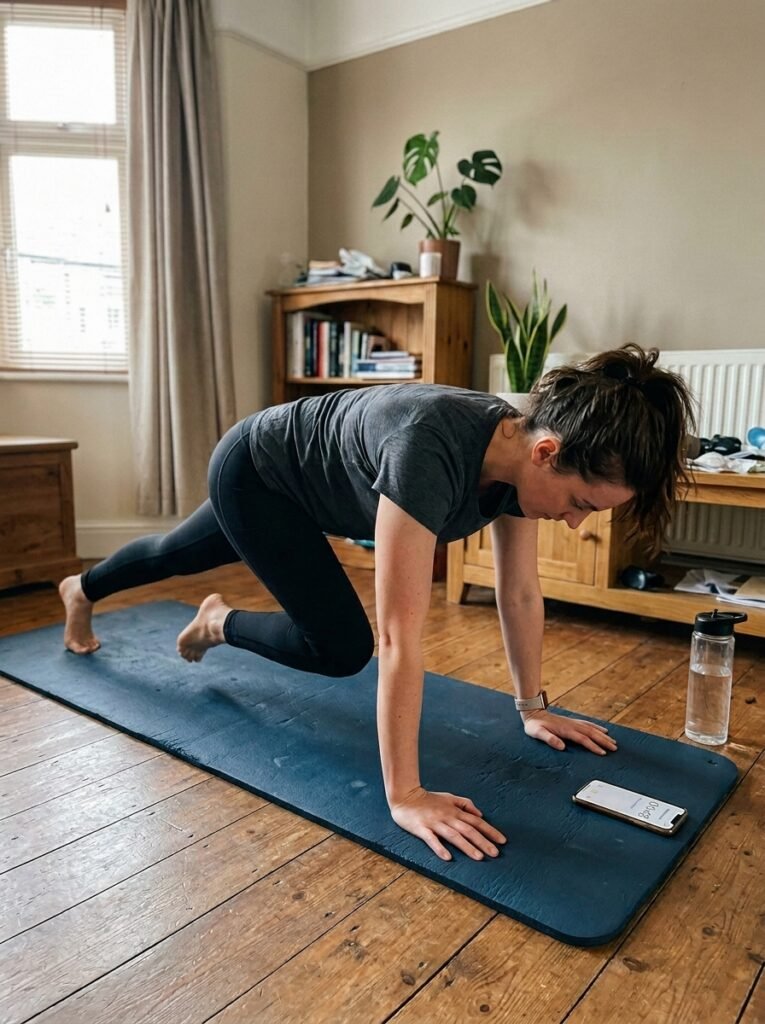
Time: 45 seconds
Mountain climbers bring a little more movement into the workout while challenging your shoulders, core, and legs.
They can also raise your heart rate quickly.
How to Do Mountain Climbers
- Start in a high plank position.
- Place your hands underneath or slightly wider than your shoulders.
- Keep your body as straight as possible.
- Bring one knee toward your chest.
- Return it to the starting position.
- Bring the opposite knee forward.
- Continue alternating.
You don’t need to sprint.
A slow, controlled mountain climber is still a useful exercise.
Beginner Modification
Place your hands on a sturdy elevated surface and perform the movement more slowly.
You can also step each foot forward instead of rapidly switching your legs.
6. Standing Knee-to-Elbow Crunches
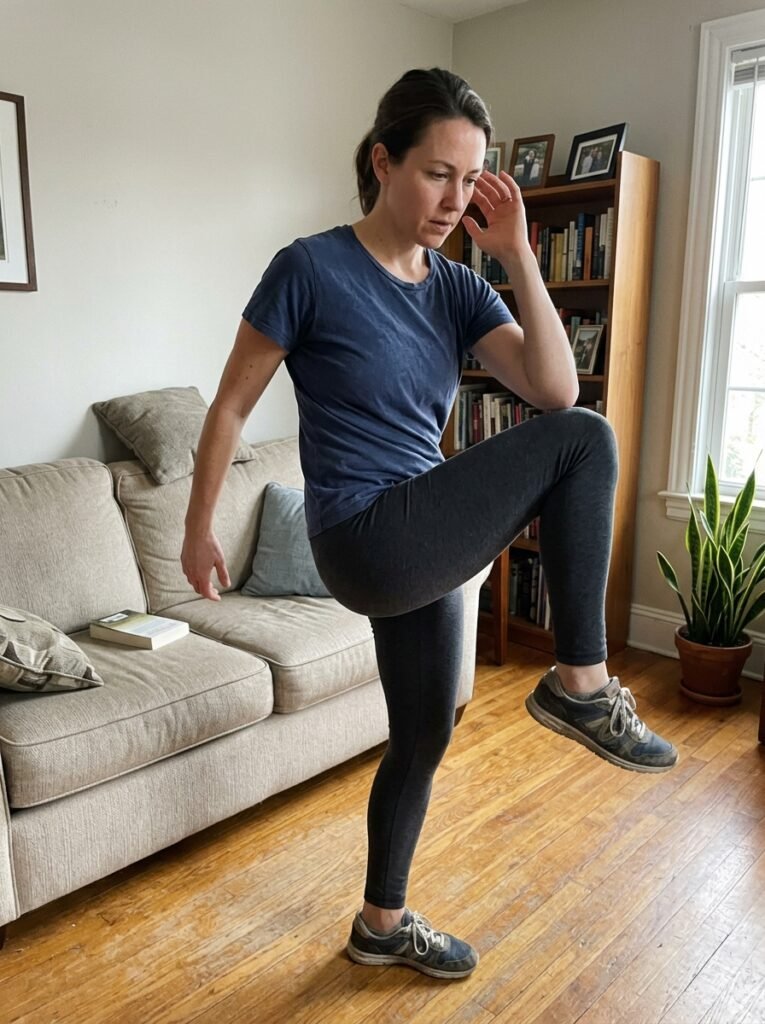
Time: 45 seconds
Want to train your core without getting down on the floor?
Standing knee-to-elbow crunches are a simple option.
How to Do Them
- Stand tall with your feet about hip-width apart.
- Place your hands lightly behind your head.
- Lift your right knee toward your right elbow.
- Gently crunch your torso toward the raised knee.
- Return to the starting position.
- Switch sides.
Focus on bringing your ribs and knee toward each other rather than simply swinging your elbow downward.
Keep the movement controlled.
7. Push-Up to Shoulder Tap
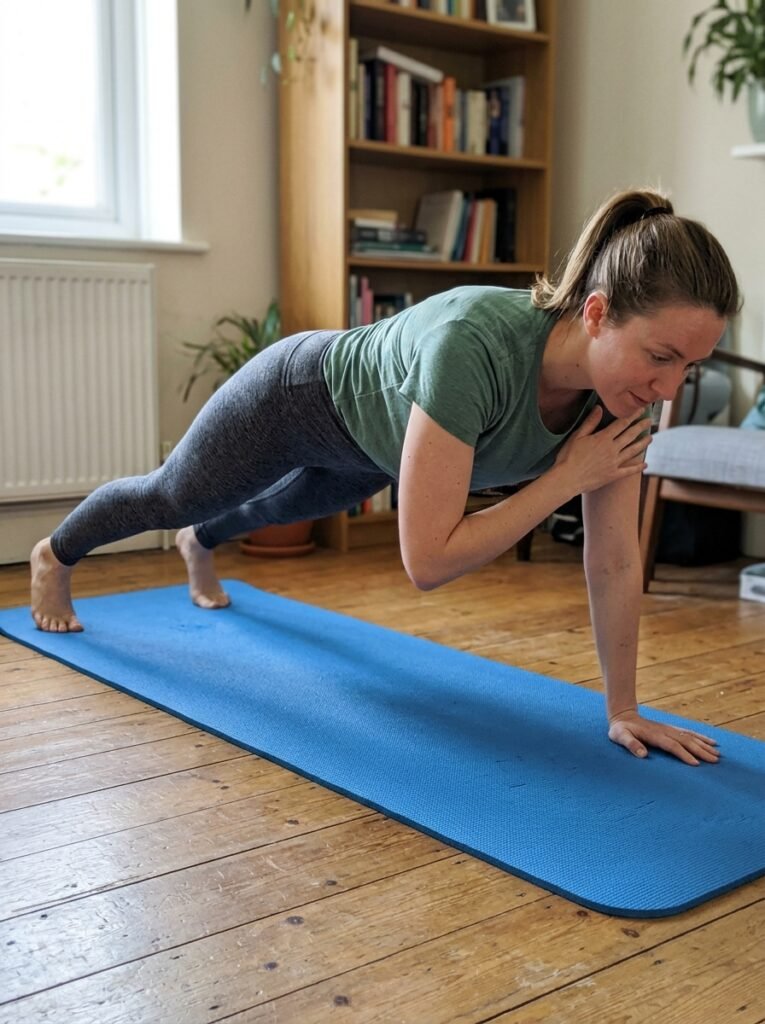
Time: 45 seconds
This combination adds a little extra core stability to your push-up pattern.
If a full push-up is too challenging, perform the movement from an elevated surface.
How to Do It
- Start in a high plank.
- Perform one push-up, or lower only as far as comfortable.
- Return to the top.
- Tap your opposite shoulder with one hand.
- Place your hand down.
- Tap the other shoulder.
- Repeat.
Try to keep your hips relatively steady.
If your hips are rocking from side to side, slow down.
Quality beats speed here.
8. Alternating Side Lunges
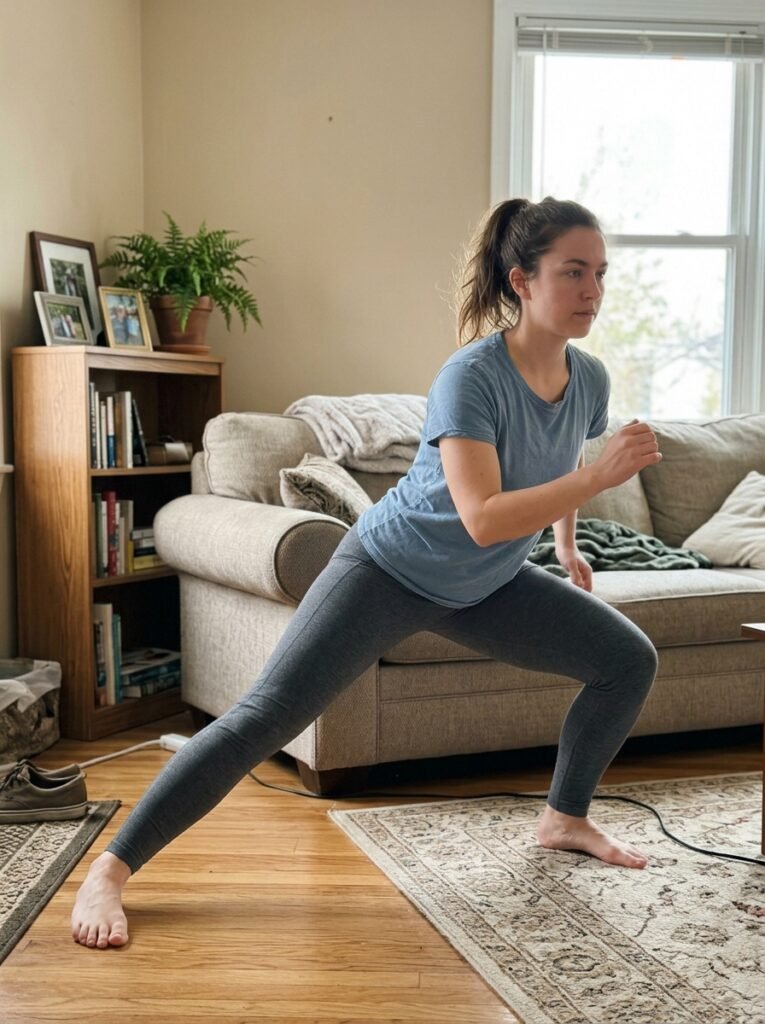
Time: 45 seconds
Side lunges introduce movement in a different direction and work your legs and glutes from another angle.
How to Do a Side Lunge
- Stand tall with your feet together.
- Take a comfortable step to the right.
- Bend your right knee and push your hips backward.
- Keep your left leg relatively straight.
- Push through your right foot to return to center.
- Repeat on the other side.
Don’t force a huge side step.
Start with a smaller range of motion and gradually increase it as your mobility improves.
9. Plank
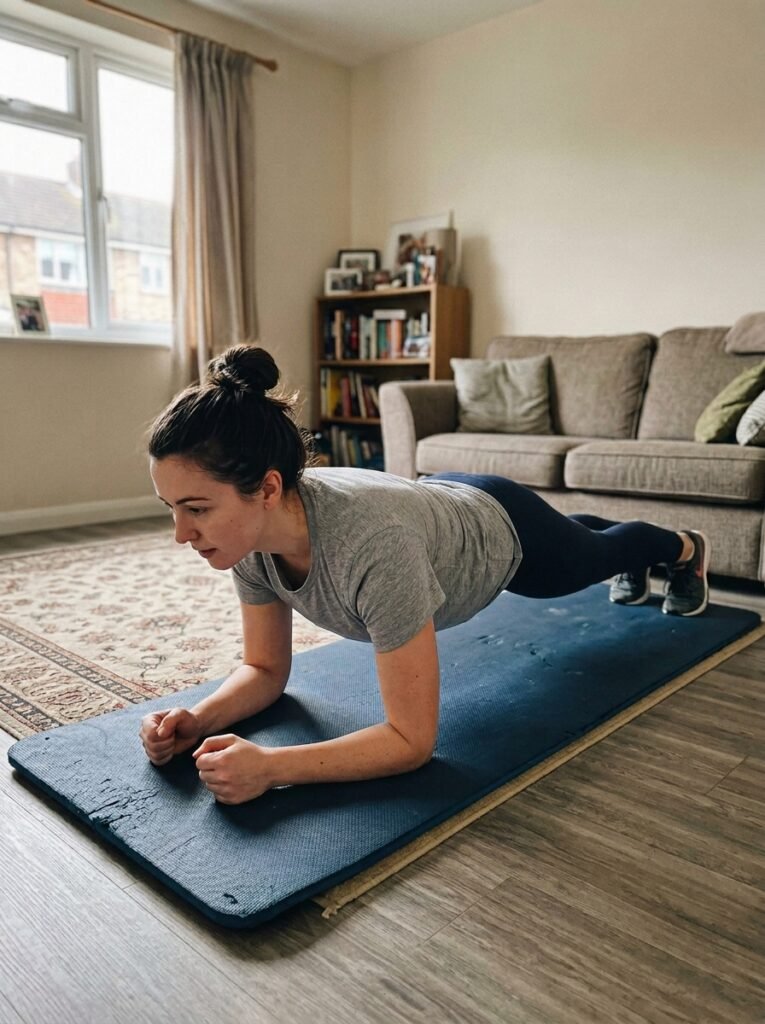
Time: 45 seconds
The plank looks simple, but maintaining a solid position can challenge your entire body.
It primarily trains your core’s ability to stabilize your body.
How to Do a Plank
- Start on your forearms and toes.
- Position your elbows underneath your shoulders.
- Keep your body in a relatively straight line.
- Tighten your stomach gently.
- Squeeze your glutes.
- Breathe normally while holding the position.
Don’t hold your breath.
And don’t worry if you can’t maintain a plank for the entire 45 seconds.
Break it into shorter intervals if needed.
Beginner Modification
Place your knees on the floor while keeping your core engaged.
You can also perform an elevated plank with your hands on a sturdy surface.
10. Fast March or Low-Impact Jumping Jacks
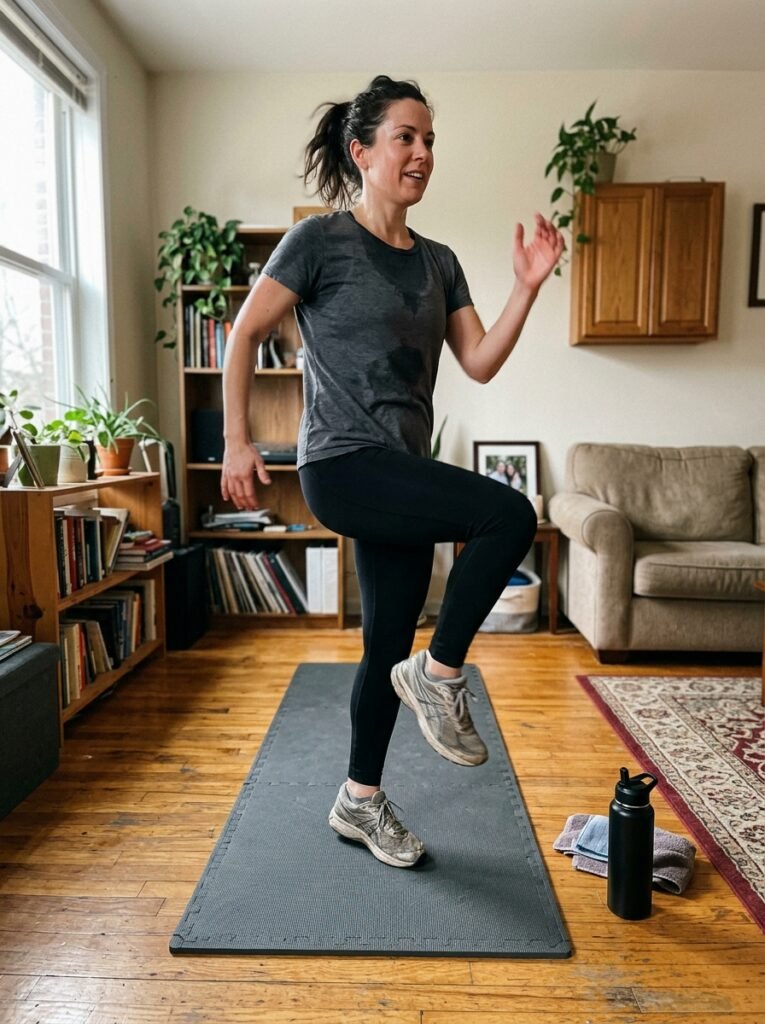
Time: 45 seconds
Finish the first round with a movement that gets your heart rate up without requiring complicated coordination.
You have two choices.
Option A: Fast March
March in place while driving your knees upward and moving your arms naturally.
This is a great low-impact choice for beginners.
Option B: Jumping Jacks
If jumping feels comfortable, perform traditional jumping jacks at a controlled pace.
Land softly and keep your knees slightly bent.
If jumping doesn’t feel good, stick with the marching variation.
The 3-Minute Finisher
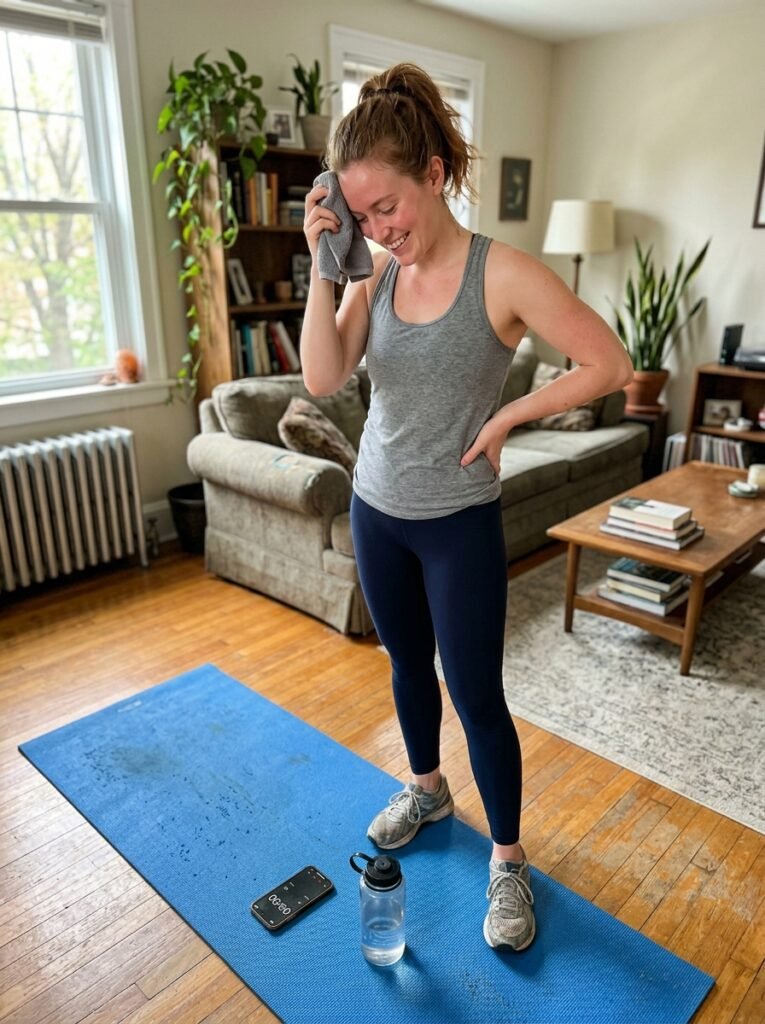
You’ve completed the 10 main exercises.
Now use the final 3 minutes for a simple bodyweight circuit.
Perform each exercise for 30 seconds, followed by 15 seconds of rest or transition.
Repeat the sequence twice.
Round Finisher
- Bodyweight squats
- Incline or regular push-ups
- Alternating reverse lunges
- Marching in place
Don’t treat the finisher as a punishment.
The goal is simply to finish the workout feeling like you’ve done something positive for yourself.
How to Make This Workout Easier
A good workout should meet you where you are.
If you’re a beginner, you don’t need to perform every exercise at maximum intensity.
Try these adjustments:
- Work for 30 seconds instead of 45.
- Rest for 30 seconds between exercises.
- Perform incline push-ups.
- Use a wall for balance during lunges.
- Replace jumping jacks with marching.
- Perform mountain climbers slowly.
- Hold planks for 10–20 seconds at a time.
- Reduce the depth of squats and lunges.
There’s no prize for making the workout unnecessarily difficult.
Your first goal should be learning the movements and building consistency.
How to Make a 15-Minute Workout More Challenging
Once the routine starts feeling easy, you don’t necessarily need to find a completely new workout.
You can gradually increase the challenge.
For example:
- Increase your work period from 30 to 45 seconds.
- Reduce your rest slightly.
- Perform more controlled repetitions.
- Increase your range of motion.
- Add a second round.
- Use harder exercise variations.
- Slow down the lowering portion of squats and push-ups.
Progress doesn’t always mean moving faster.
Sometimes moving slower and with better control is the harder option.
How Many Calories Does a 15-Minute Workout Burn?
The number of calories you burn during a 15-minute workout varies from person to person.
Your body weight, exercise intensity, fitness level, movement selection, and individual metabolism can all affect energy expenditure.
That’s why it’s better not to judge a workout purely by a calorie number.
A short workout can still contribute to your overall physical activity, strength, cardiovascular fitness, and daily movement.
If your goal is weight loss, your overall eating pattern, daily activity, sleep, and long-term consistency matter much more than trying to burn a specific number of calories during one short workout.
Can You Lose Weight With a 15-Minute Workout?

Yes, a 15-minute workout can be part of a weight-loss plan.
But the workout itself isn’t the whole picture.
Weight loss generally depends on maintaining an appropriate calorie deficit over time, while regular physical activity can support your overall energy balance, fitness, and ability to maintain muscle.
Instead of thinking, “I only have 15 minutes, so there’s no point,” try thinking, “I have 15 minutes, so I’ll use them.”
That small shift can make exercise feel much more achievable.
Combine Short Workouts With Everyday Movement
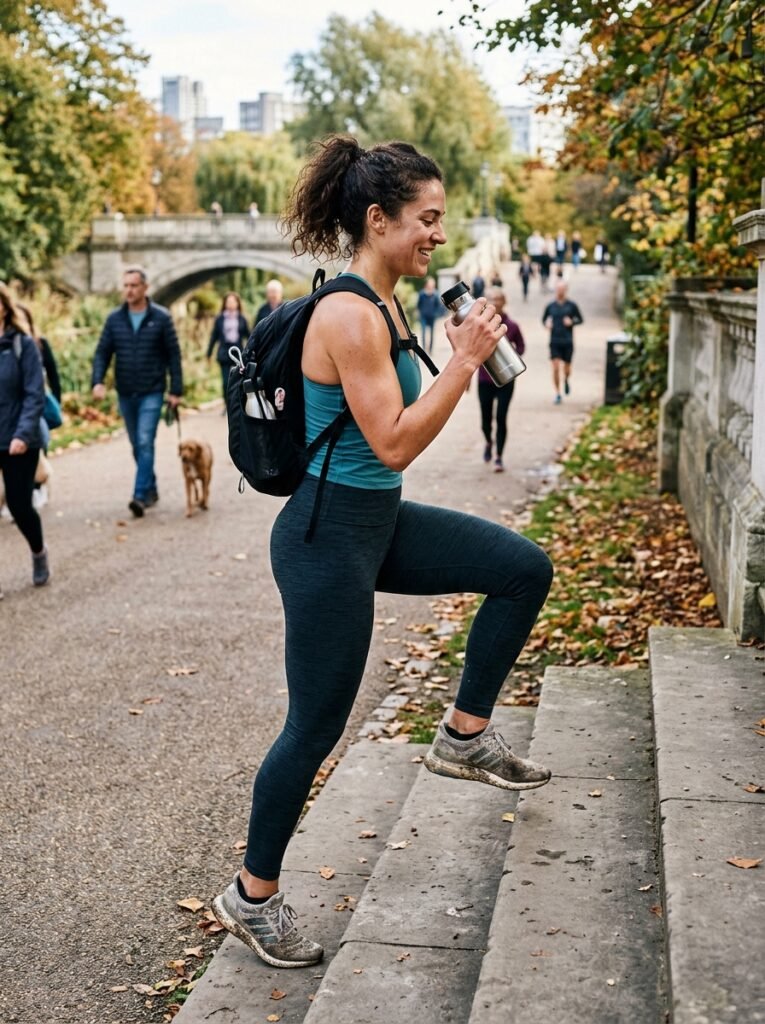
Your workout is only one part of your daily activity.
You can also look for easy ways to move more throughout the day:
- Take a short walk after a meal.
- Use the stairs when practical.
- Stand up regularly if you work at a desk.
- Walk while talking on the phone.
- Do household chores actively.
- Take short movement breaks.
- Spend some time outdoors walking.
These small habits can add up.
How Often Should You Do This Workout?
For most healthy adults, a short bodyweight workout can be repeated several times per week depending on your fitness level and recovery.
A beginner might start with 2–3 sessions per week.
As your fitness improves, you can gradually increase frequency or alternate this routine with walking, mobility work, or other forms of exercise.
You don’t have to train the same muscles intensely every day.
Rest and recovery are part of a sustainable fitness routine.
A Simple Weekly Schedule
Here’s one realistic example:
- Monday: 15-minute full-body workout
- Tuesday: Easy walk or active recovery
- Wednesday: 15-minute full-body workout
- Thursday: Rest or gentle mobility
- Friday: 15-minute full-body workout
- Saturday: Walking or another enjoyable activity
- Sunday: Rest
The best schedule is one that fits your life.
If three workouts feel overwhelming, start with two.
Tips for Getting Better Results From a Short Workout
Fifteen minutes doesn’t mean you have to rush.
In fact, rushing through exercises can make it harder to maintain good technique.
Focus on Form First
Before worrying about repetitions, learn how each movement should feel.
Keep your movements controlled and avoid using momentum to force your body through an exercise.
Keep Your Rest Intentional
Rest when you need it, especially when you’re beginning.
However, try to avoid turning a 15-minute workout into a 30-minute scrolling session.
Set a timer if that helps.
Breathe
Don’t hold your breath during challenging movements.
Try to breathe steadily and avoid tensing your entire body unnecessarily.
Stop If Something Feels Wrong
Muscle fatigue and a challenging workout are normal.
Sharp, severe, sudden, or unusual pain isn’t something you should try to push through.
Stop the exercise and seek appropriate medical guidance if you’re concerned about an injury or persistent pain.
Common Mistakes to Avoid
A short workout can be effective, but a few common mistakes can make it less enjoyable or less useful.
Trying to Go Too Fast
Speed isn’t the goal.
If you’re bouncing through squats or rushing your push-ups, slow down and regain control.
Skipping the Warm-Up
Even two minutes of easy movement can help you transition into the workout.
Don’t feel like you need to spend 15 minutes warming up for a 15-minute workout, though.
Keep it practical.
Comparing Yourself With Advanced Exercisers
Someone else’s workout is not your fitness test.
If you need wall push-ups while someone else is doing full push-ups, that’s completely fine.
Training Through Pain
Being uncomfortable because your muscles are working is different from experiencing sharp or concerning pain.
Listen to your body and modify the exercise when necessary.
Expecting Instant Results
One workout won’t transform your body.
But repeating manageable workouts week after week can help you build a much stronger routine.
How to Stay Consistent With Home Workouts
The hardest part of exercise is often starting.
You might tell yourself you’ll work out later, then the day gets busy and suddenly it’s bedtime.
That’s why reducing friction can help.
Keep It Simple
You don’t need a perfect home gym.
Choose a small space where you can comfortably move, keep your workout routine saved on your phone, and start when you have a free 15 minutes.
Attach Exercise to an Existing Habit
Try exercising after something you already do regularly.
For example:
- After your morning coffee
- Before your shower
- After finishing work
- Before dinner
- During a lunch break
When exercise becomes connected to an existing routine, you don’t have to rely entirely on motivation.
Give Yourself Permission to Modify
Some days you’ll have lots of energy.
Other days you’ll feel tired.
On those days, reduce the intensity rather than abandoning the habit completely.
A gentle 15-minute session can still be a worthwhile form of movement.
Is 15 Minutes Really Enough?
This is one of the most common questions beginners ask.
And the honest answer is: 15 minutes is enough to be useful, but it doesn’t have to be everything you do.
A short workout can help you build strength, increase your activity, practice movement patterns, and establish a consistent exercise habit.
Over time, you can add walking, recreational activities, longer workouts, or other forms of exercise if you enjoy them.
Think of 15 minutes as a starting point, not a limit.
Who Is This Workout Best For?
This 15-minute full body home workout (no equipment) is especially convenient for:
- Beginners
- People with busy schedules
- People working from home
- Students
- Anyone who doesn’t have gym equipment
- People returning to exercise after a break
- Anyone who prefers short workouts
However, fitness levels and health needs vary.
If you have a medical condition, recent injury, significant joint problems, are pregnant or postpartum, or have been advised to limit exercise, talk with an appropriate healthcare professional before starting a new workout routine.