
How Often Should You Do Low-Impact Workouts Gentle Exercises That Keep You Moving
Knee pain can make exercise feel like a frustrating guessing game. You want to stay active, but every squat, jump, or long walk can leave your knees complaining afterward.
The good news? You don’t have to stop moving just because your knees hurt. With the right approach, low-impact exercise can help you maintain strength, mobility, balance, and fitness without putting unnecessary stress on your knees.
In this guide, I’ll walk you through practical low-impact home workouts for knee pain that you can do with little or no equipment. The goal isn’t to push through pain—it’s to find movements your body can tolerate and gradually build from there.
Important: Knee pain can have many causes. If your knee is severely swollen, unstable, locked, injured, unusually hot or red, or you cannot put weight on it, seek medical advice rather than starting a new workout routine. If exercise consistently makes your symptoms worse, speak with a qualified healthcare professional or physical therapist.
Key Takeaways
- Low-impact workouts can help you stay active while reducing the pounding associated with jumping and running.
- Strengthening your hips, thighs, and core can support better movement and make everyday activities easier.
- Start slowly, use a comfortable range of motion, and avoid exercises that cause sharp or worsening pain.
- A simple routine of chair exercises, glute work, gentle cardio, and mobility can be done at home without expensive equipment.
Why Low-Impact Exercise Can Be Helpful for Knee Pain
When your knees hurt, your first instinct might be to rest completely. A short period of rest can be useful after certain injuries, but avoiding movement indefinitely can make you weaker and less confident.
Your knees don’t work alone. Your hips, thighs, ankles, and core all contribute to how you move.
When these areas are weak or poorly coordinated, your knees may have to handle more of the workload during activities such as climbing stairs, standing up, or walking.
That’s why low-impact home workouts for knee pain often focus on controlled movements rather than high-impact exercises.
Low-impact doesn’t mean “easy.” You can still challenge your muscles and cardiovascular system without repeatedly jumping or pounding your joints.
What Does Low-Impact Actually Mean?
Low-impact exercise generally means keeping at least one foot connected to the floor or using movements that minimize repetitive impact.
Examples include:
- Seated marching
- Walking at a comfortable pace
- Glute bridges
- Chair-based exercises
- Standing leg raises
- Gentle cycling
- Step-free cardio movements
- Controlled strength exercises
The key is control and tolerance, not simply choosing an exercise because someone labeled it “knee-friendly.”
An exercise that feels comfortable for one person may aggravate another person’s knee.
Before You Start: A Simple Knee-Pain Rule
Here’s one of the most useful rules I want you to remember: don’t treat pain as a competition.
A little muscle fatigue is normal when exercising. Sharp, stabbing, or rapidly increasing knee pain is a different story.
During your workout, pay attention to:
- Where you feel discomfort
- Whether the discomfort is getting worse
- Whether your movement changes because of pain
- How your knee feels later that day
- How your knee feels the following morning
If a particular exercise clearly aggravates your symptoms, stop and choose a gentler alternative.
You don’t need to prove that you can complete an exercise. The best workout is one you can perform consistently without repeatedly irritating your knee.
10 Low-Impact Home Workouts for Knee Pain
You don’t need a gym or a complicated exercise machine for an effective routine.
Here are 10 options you can mix and match depending on your fitness level and what your knees tolerate.
1. Seated Marching
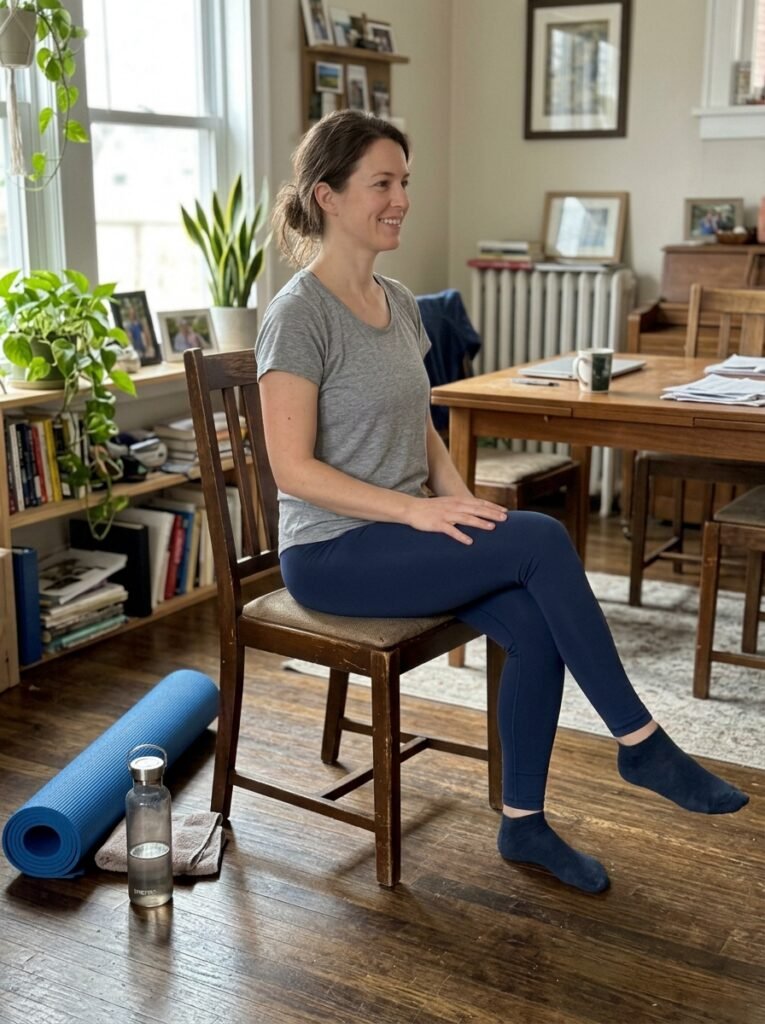
Seated marching is one of the easiest ways to get your body moving without putting much weight through your knees.
How to Do It
- Sit tall in a sturdy chair.
- Keep both feet on the floor.
- Lift one foot a few inches.
- Lower it gently.
- Lift the opposite foot.
- Continue alternating.
Keep your stomach gently engaged and avoid leaning far backward.
Try This
Start with 30 seconds, rest, and repeat for 2–4 rounds.
As it becomes easier, gradually increase the duration rather than making the movement dramatically faster.
Why It’s Useful
Seated marching can gently raise your heart rate while working the hip flexors and thighs.
It’s also a good starting point if standing exercises currently feel uncomfortable.
2. Glute Bridges
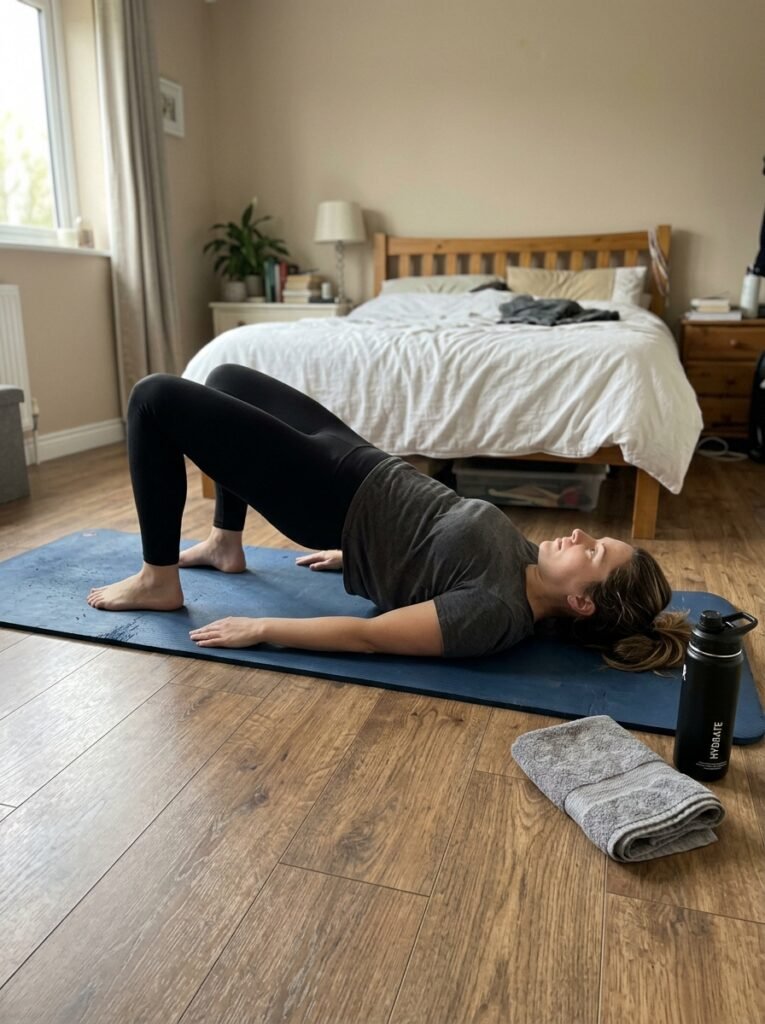
Strong glutes can help support efficient movement through your hips and legs.
Glute bridges are performed lying down, so they don’t require you to repeatedly load your knees while standing.
How to Do It
- Lie on your back with your knees comfortably bent.
- Place your feet flat on the floor.
- Keep your feet roughly hip-width apart.
- Tighten your abdominal muscles gently.
- Squeeze your glutes.
- Slowly lift your hips.
- Pause briefly.
- Lower your hips with control.
Don’t force your knees into a particular angle. Use the position that feels comfortable.
Beginner Goal
Try 8–12 repetitions for 1–3 sets.
If you feel pain in your knee rather than effort in your hips and glutes, stop and reassess your setup.
3. Straight-Leg Raises
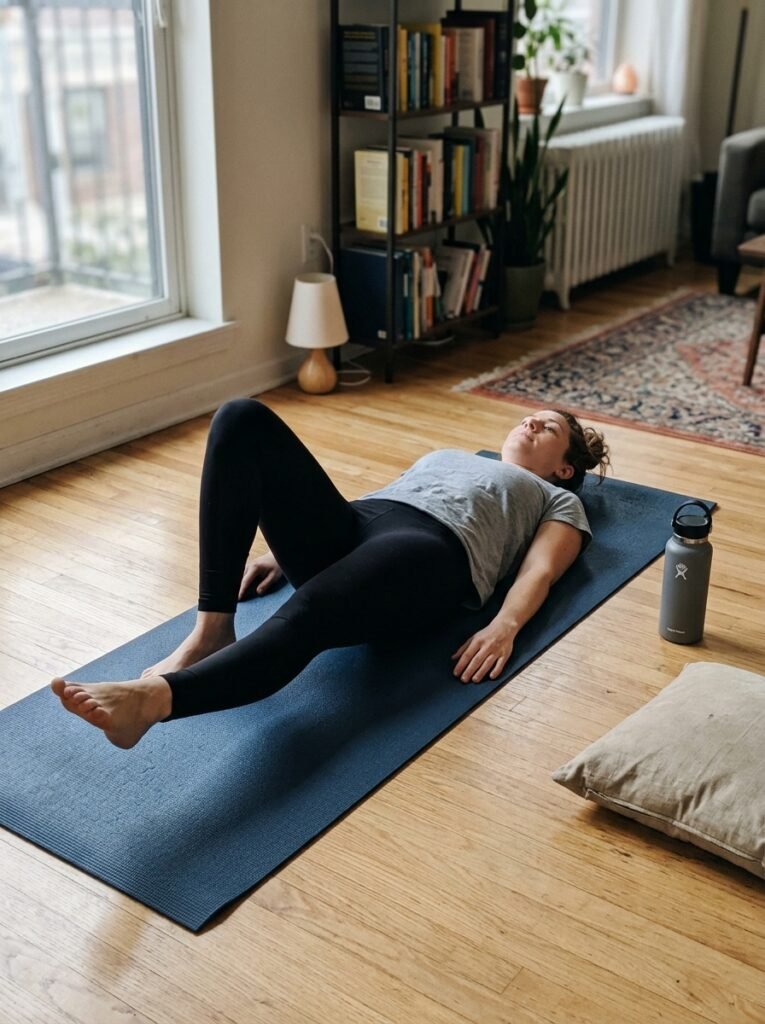
Straight-leg raises can strengthen the muscles at the front of your thigh without requiring repeated bending of the knee.
How to Do It
- Lie on your back.
- Bend one knee while keeping the other leg comfortably straight.
- Tighten the thigh of the straight leg.
- Slowly raise that leg.
- Pause for a moment.
- Lower it slowly.
Keep the movement controlled rather than swinging your leg.
Start With
Aim for 8–10 repetitions per side.
You can gradually build toward 2–3 sets if the movement feels comfortable.
4. Seated Knee Extensions
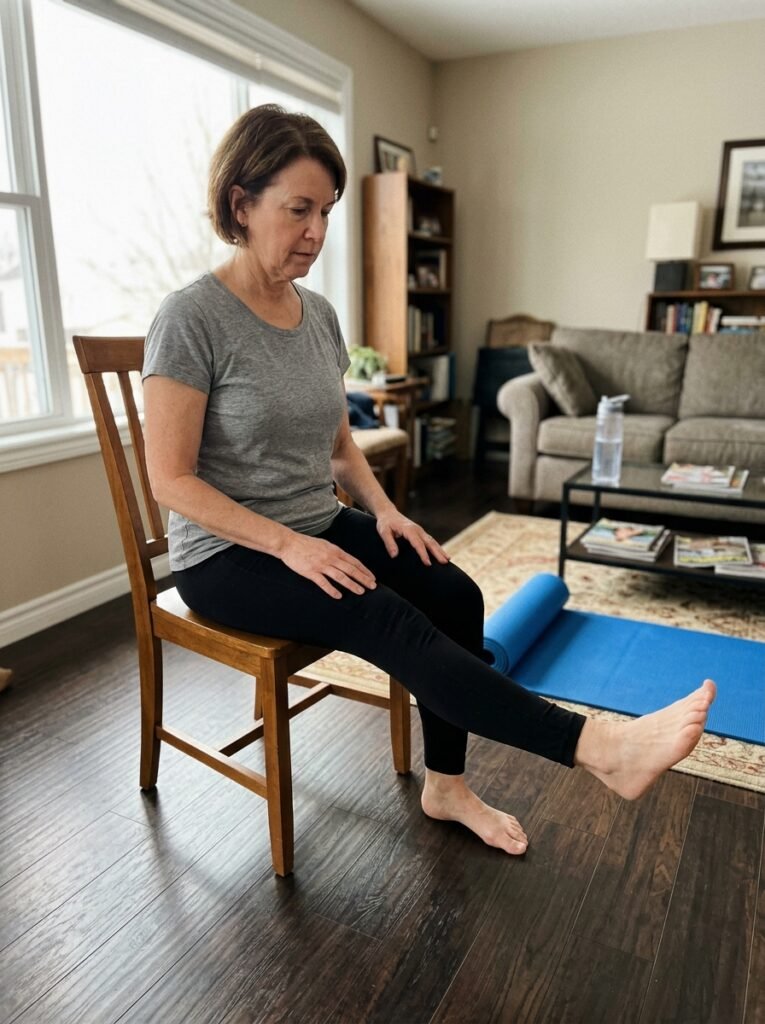
This simple chair exercise targets the quadriceps, which are important muscles for everyday movements such as standing and walking.
How to Do It
- Sit upright on a sturdy chair.
- Keep one thigh supported by the seat.
- Slowly straighten one knee.
- Pause briefly.
- Lower your foot.
- Repeat on the other side.
You don’t have to force your knee completely straight if that feels uncomfortable.
Beginner Goal
Perform 8–12 repetitions per leg.
Move slowly and avoid kicking your leg upward.
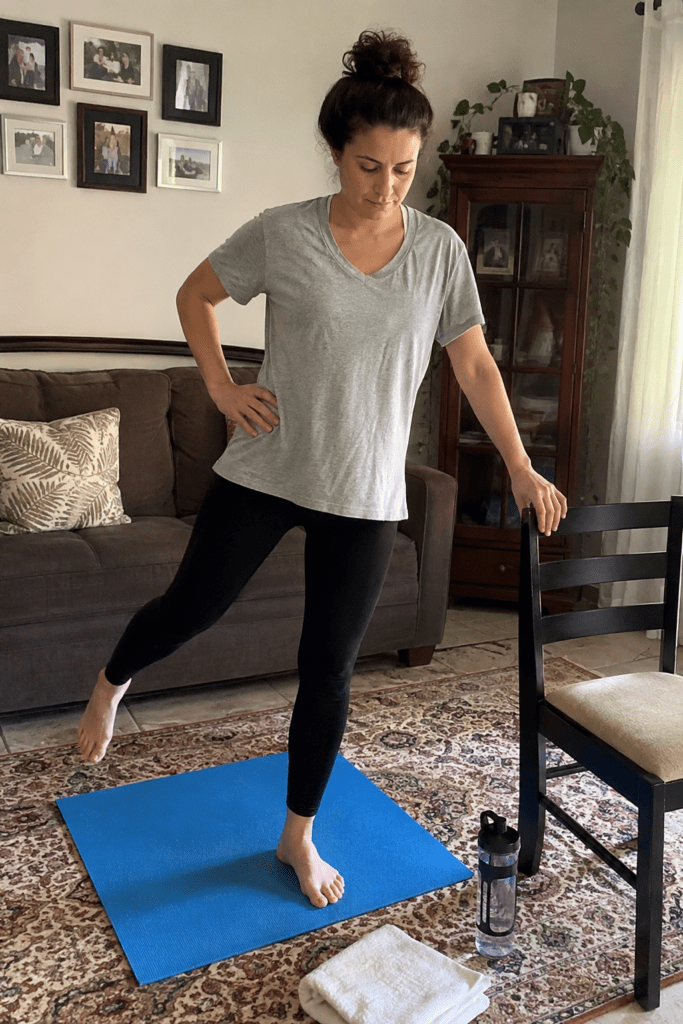
5. Standing Hip Abductions
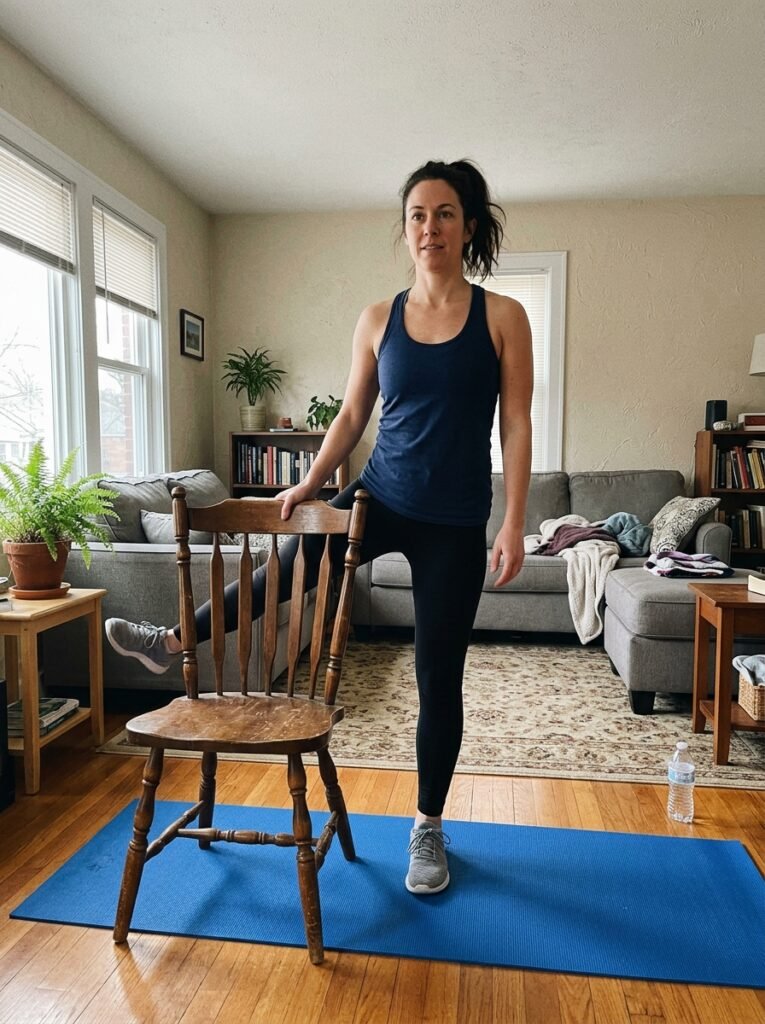
Your hip muscles play an important role in controlling your legs while you walk and perform everyday movements.
Standing hip abductions work the muscles on the outside of your hip.
How to Do It
- Stand behind a sturdy chair.
- Hold the chair lightly for balance.
- Keep your torso upright.
- Move one leg slowly out to the side.
- Return it to the starting position.
- Repeat on the other side.
Don’t swing your leg or rotate your entire body.
Try This
Start with 8–12 repetitions per side.
If standing is uncomfortable, you can ask a physical therapist about an appropriate seated alternative.
6. Glute Kickbacks
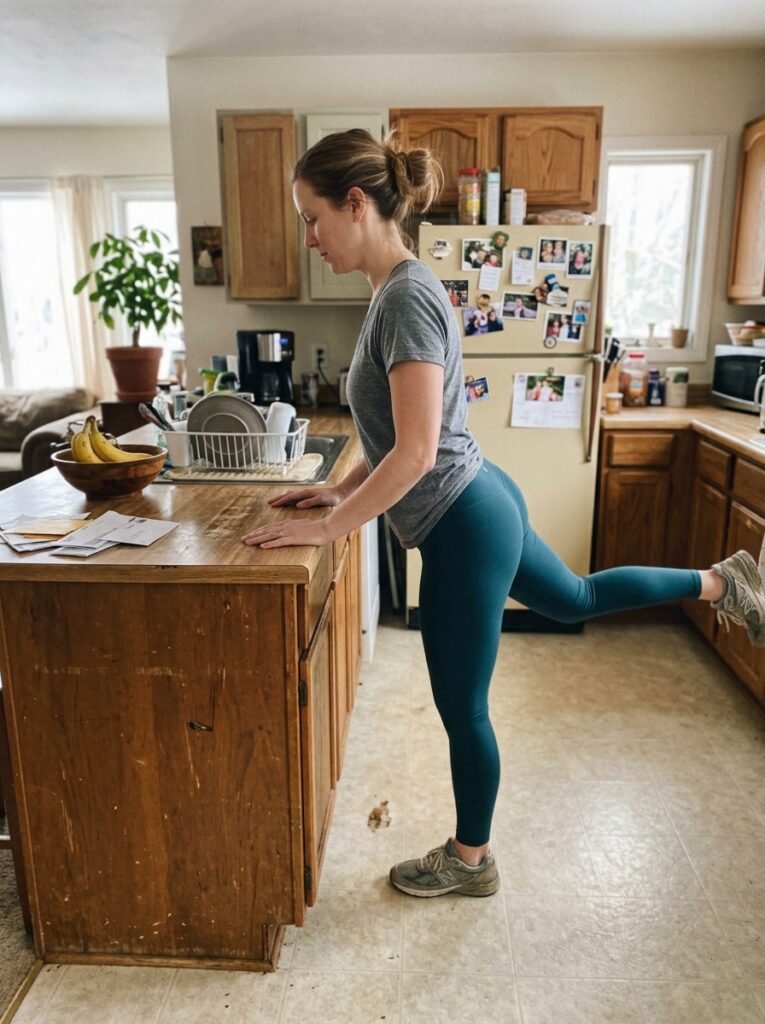
Glute kickbacks are another way to work your hip muscles without jumping or running.
How to Do It
- Stand behind a sturdy chair or countertop.
- Hold it for support.
- Keep your upper body relatively still.
- Move one leg backward.
- Squeeze your glute gently.
- Bring the leg forward again.
- Switch sides.
You only need a small range of motion.
Don’t arch your lower back to make the movement bigger.
Beginner Goal
Try 8–12 repetitions per side for 1–3 sets.
7. Sit-to-Stand From a High Chair
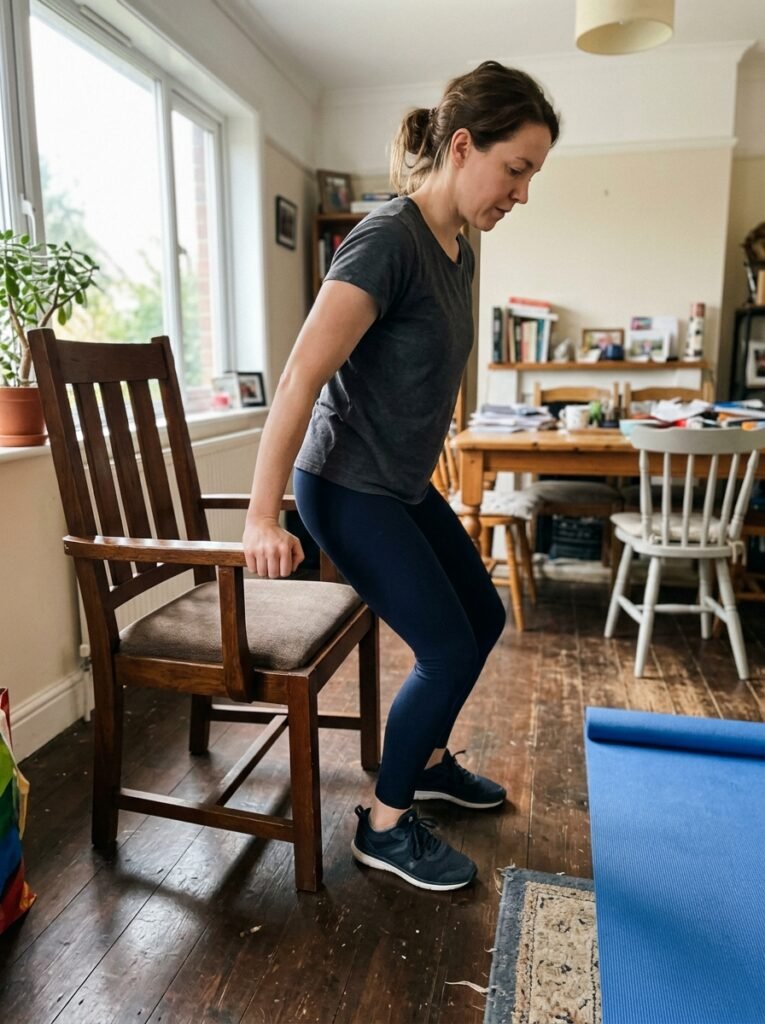
Getting up from a chair is something you already do every day, so practicing the movement can have practical benefits.
However, this exercise isn’t appropriate for everyone with knee pain.
If bending your knees deeply causes discomfort, use a higher chair and a smaller range of motion—or skip it for now.
How to Do It
- Sit toward the front of a sturdy chair.
- Place your feet comfortably underneath you.
- Lean forward slightly.
- Push through your feet.
- Stand up slowly.
- Sit back down with control.
Avoid dropping heavily into the chair.
Make It Easier
Use your hands on the chair or armrests if needed.
As you become stronger, you may be able to rely less on your hands.
8. Gentle Heel Raises
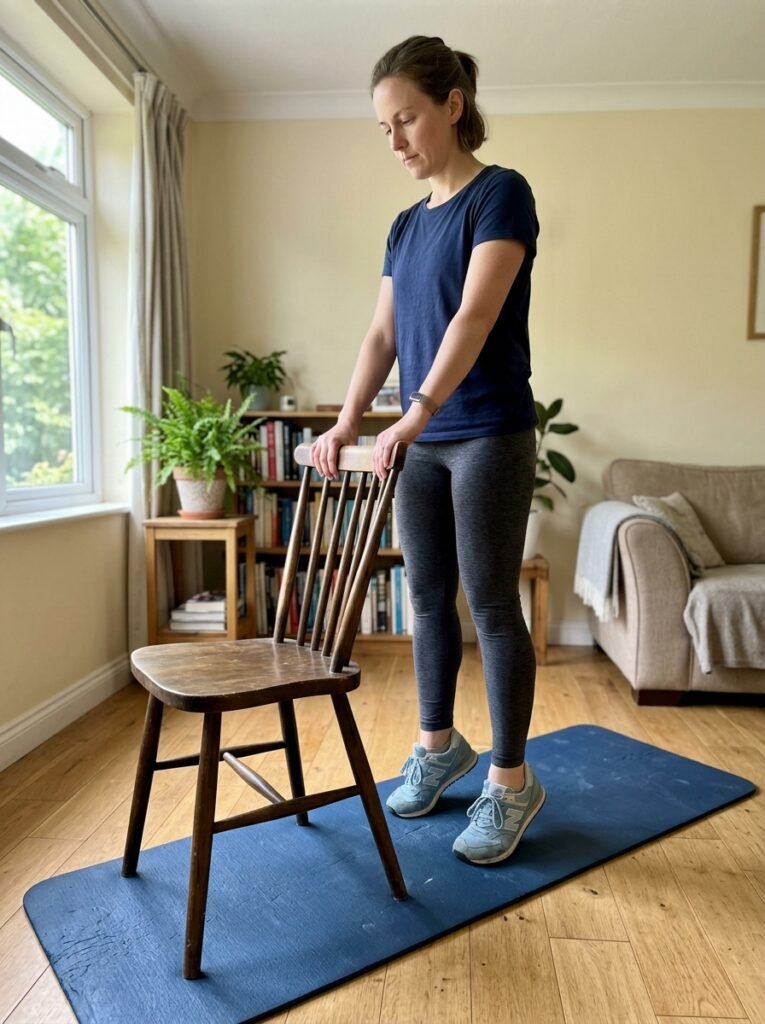
Heel raises strengthen the calf muscles and can help you work on lower-leg strength and balance.
How to Do It
- Stand behind a sturdy chair.
- Hold it for balance.
- Keep your feet comfortably positioned.
- Slowly raise your heels.
- Pause briefly.
- Lower them with control.
Keep the movement smooth.
Beginner Goal
Try 8–15 repetitions.
If standing on both legs feels comfortable, you can gradually increase the challenge later, but there’s no need to rush.
9. Low-Impact Standing March
If you can comfortably stand and walk, standing marching can provide a gentle cardiovascular challenge.
Unlike jumping jacks or high knees, you’re keeping the movement controlled and avoiding impact-heavy landings.
How to Do It
- Stand near a sturdy support.
- Keep your posture upright.
- Lift one foot slightly.
- Lower it gently.
- Alternate legs.
- Swing your arms naturally if comfortable.
Keep the knees at a comfortable height.
You don’t need to lift them toward your chest.
Try This
March for 30–60 seconds, rest, and repeat several times.
If standing marching bothers your knees, switch to seated marching.
10. Gentle Walking Around the House
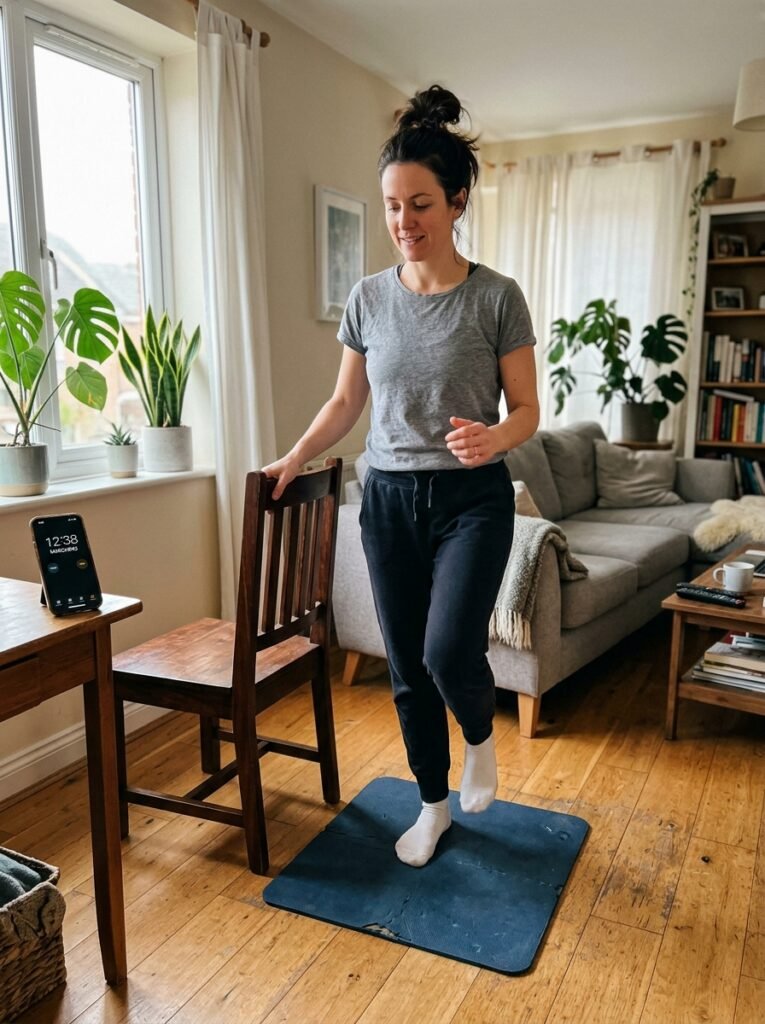
Walking can be an excellent low-impact option when your knees tolerate it.
You don’t need a long outdoor walk to benefit from movement.
Try walking around your home for a few minutes at a comfortable pace.
You could also break movement into smaller chunks throughout the day.
For example:
- 5 minutes in the morning
- 5 minutes after lunch
- 5 minutes in the evening
Short bouts can feel much more manageable than trying to complete one long workout.
A 20-Minute Low-Impact Home Workout for Knee Pain
If you want something structured, here’s a simple routine you can try.
The goal isn’t to finish exhausted. The goal is to finish feeling like you moved your body without unnecessarily irritating your knees.
Warm-Up: 4 Minutes
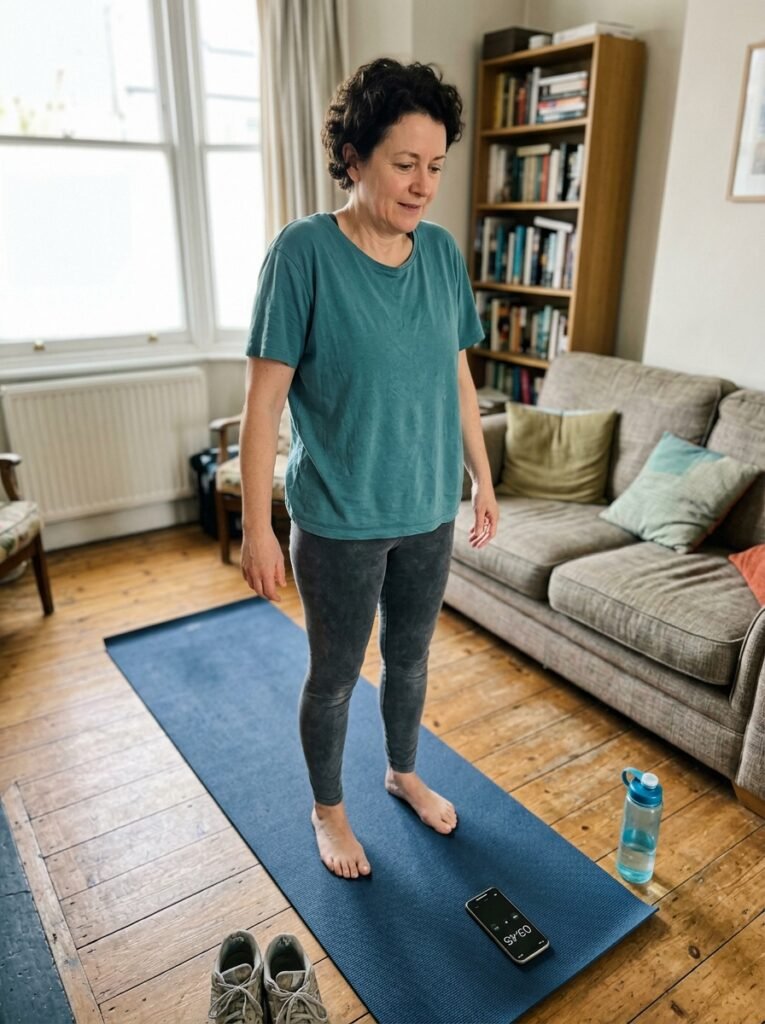
Start gently.
- Seated marching — 60 seconds
- Shoulder rolls — 30 seconds
- Gentle ankle movements — 30 seconds per side
- Easy standing or seated movement — 60 seconds
Move comfortably rather than trying to stretch aggressively.
Strength Circuit: 10 Minutes
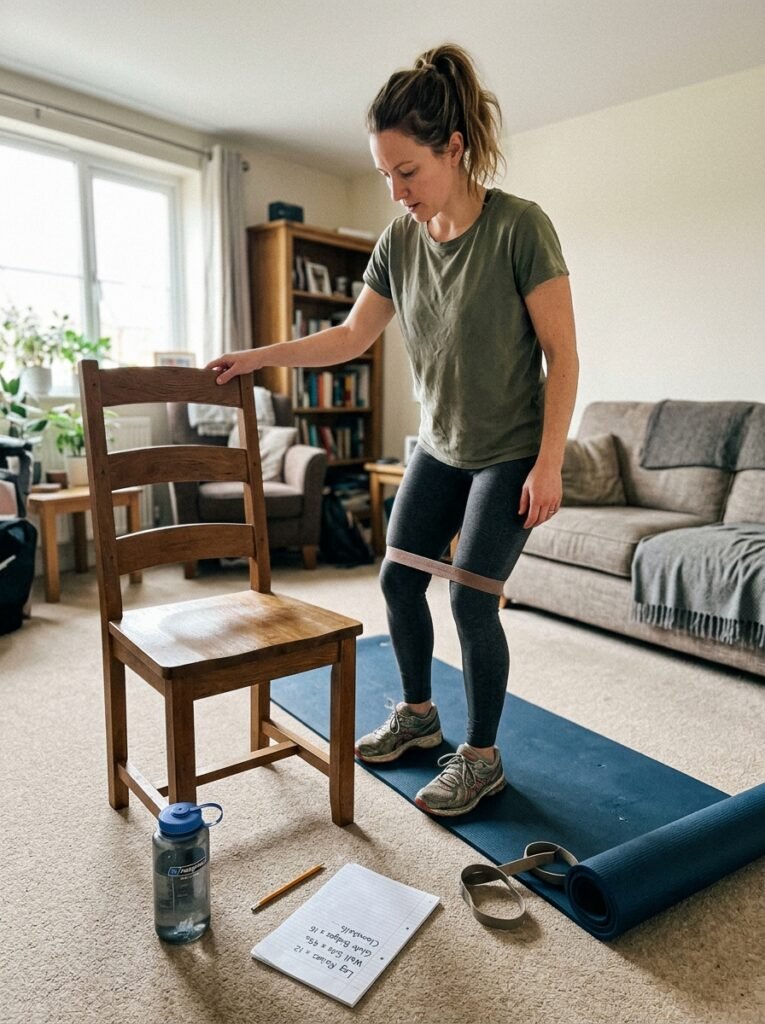
Perform the following exercises:
- Glute bridges — 10 repetitions
- Seated knee extensions — 10 per leg
- Standing hip abductions — 10 per side
- Glute kickbacks — 10 per side
- Heel raises — 12 repetitions
Rest as needed.
Complete 1–2 rounds, depending on your fitness level and how your knees respond.
Gentle Cardio: 4 Minutes
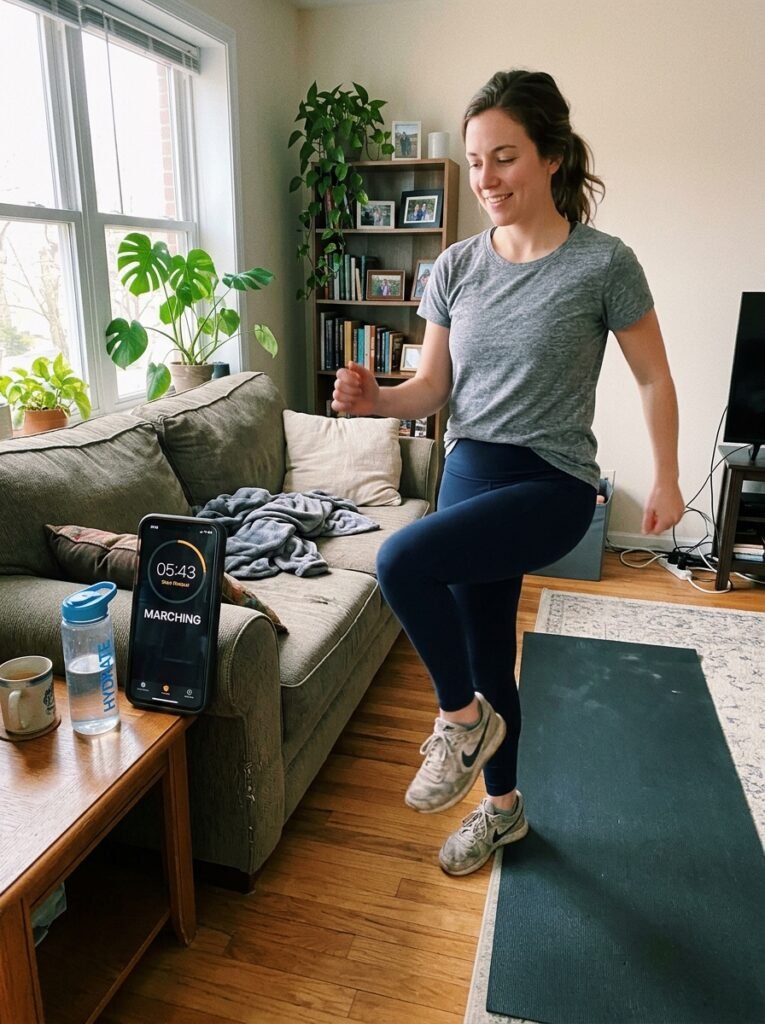
Choose one:
- Seated marching
- Standing marching
- Easy walking around your home
Use an intensity that allows you to speak in short sentences without feeling completely out of breath.
Cooldown: 2 Minutes
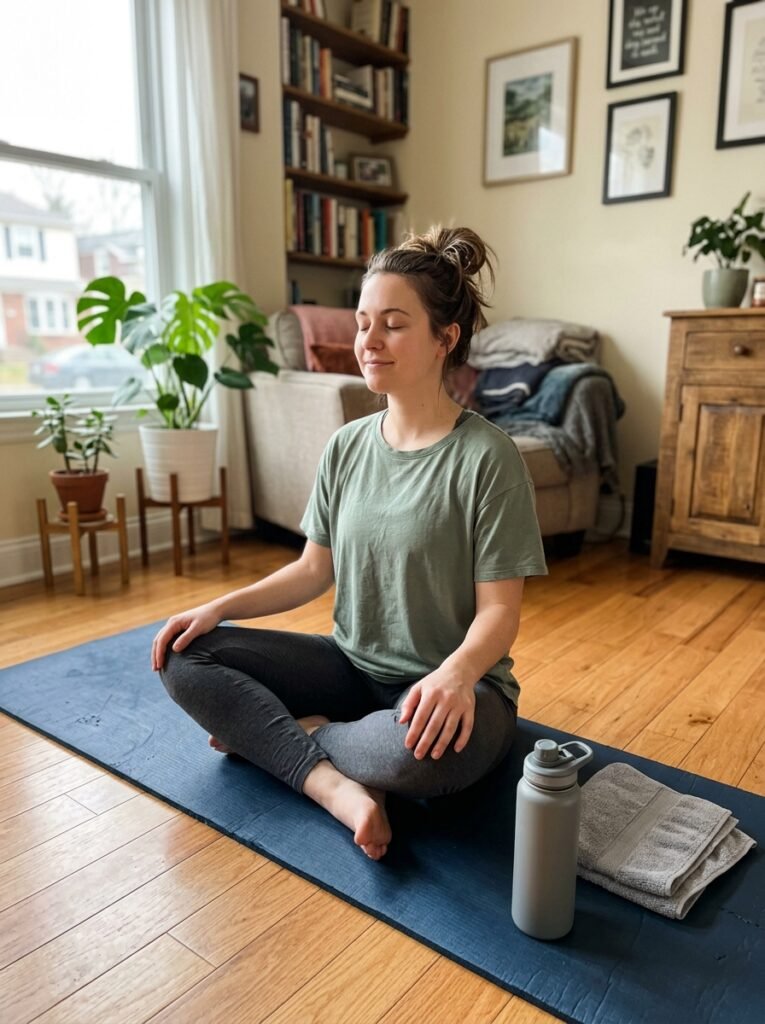
Finish with gentle movement and relaxed breathing.
You don’t need to force deep stretches.
How Often Should You Do Low-Impact Workouts?
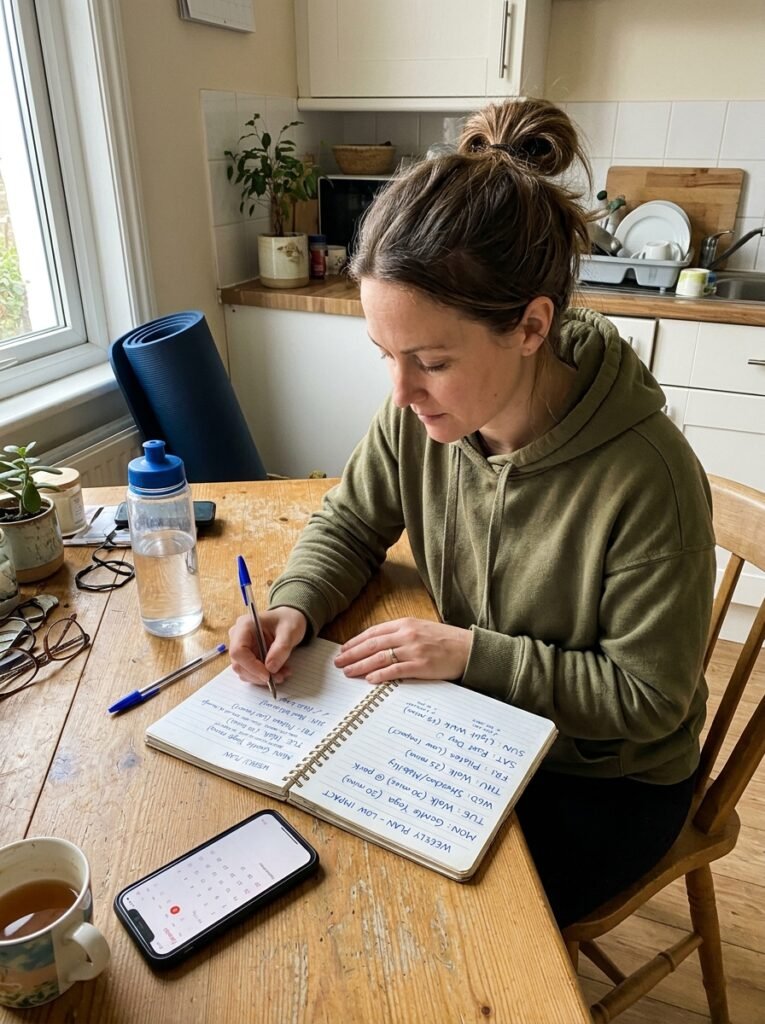
Consistency matters more than trying to complete a brutal workout once a week.
For many beginners, 2–3 strength-focused sessions per week can be a reasonable starting point, with gentle movement such as comfortable walking or mobility work on other days if tolerated.
You can gradually increase your activity as your body adapts.
A simple weekly schedule might look like this:
| Day | Activity |
|---|---|
| Monday | 20-minute low-impact workout |
| Tuesday | Gentle walking or mobility |
| Wednesday | Rest or light movement |
| Thursday | 20-minute low-impact workout |
| Friday | Gentle walking |
| Saturday | Optional short workout |
| Sunday | Rest or easy movement |
Your schedule doesn’t need to look exactly like this.
If your knees need more recovery time, take it.
Exercises to Be Careful With When Your Knees Hurt
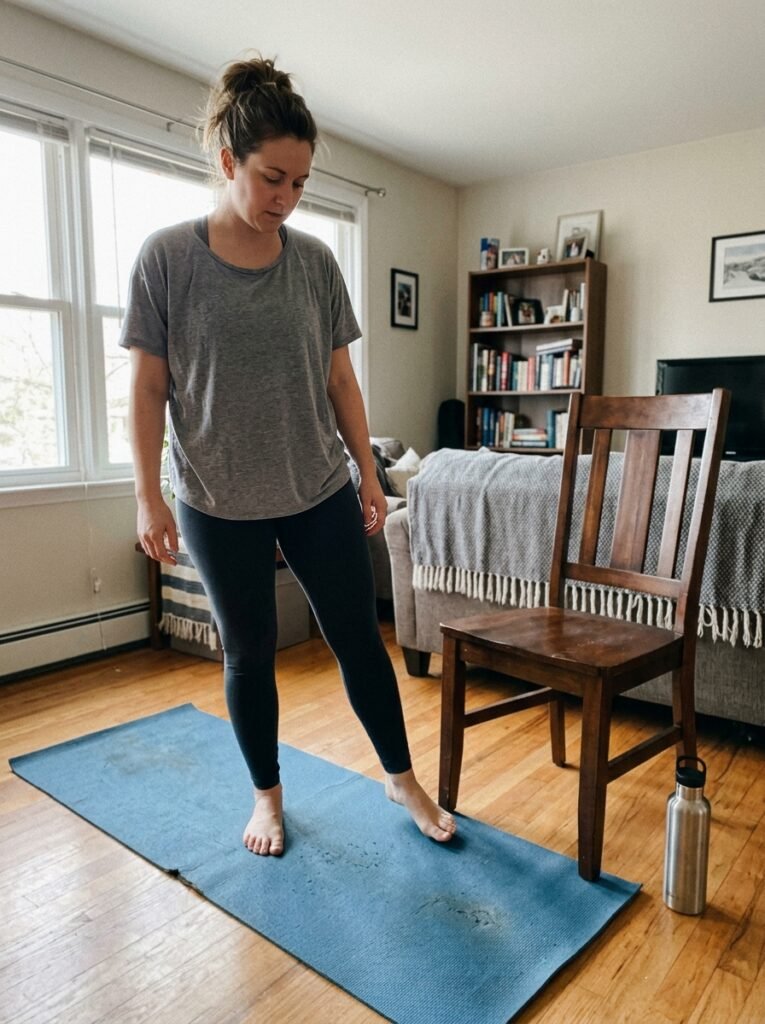
You don’t necessarily have to permanently avoid every high-impact exercise.
But if you’re currently experiencing knee pain, jumping and repetitive impact may not be the best place to start.
Exercises that may need modification or temporary avoidance include:
- Jump squats
- Box jumps
- Burpees with jumping
- Jumping jacks
- Sprinting
- Deep squats
- Deep lunges
- Repetitive stair workouts
- High-impact dance workouts
The important point is that exercise selection should match your current tolerance.
You can always progress later.
How to Modify Common Exercises for Sensitive Knees
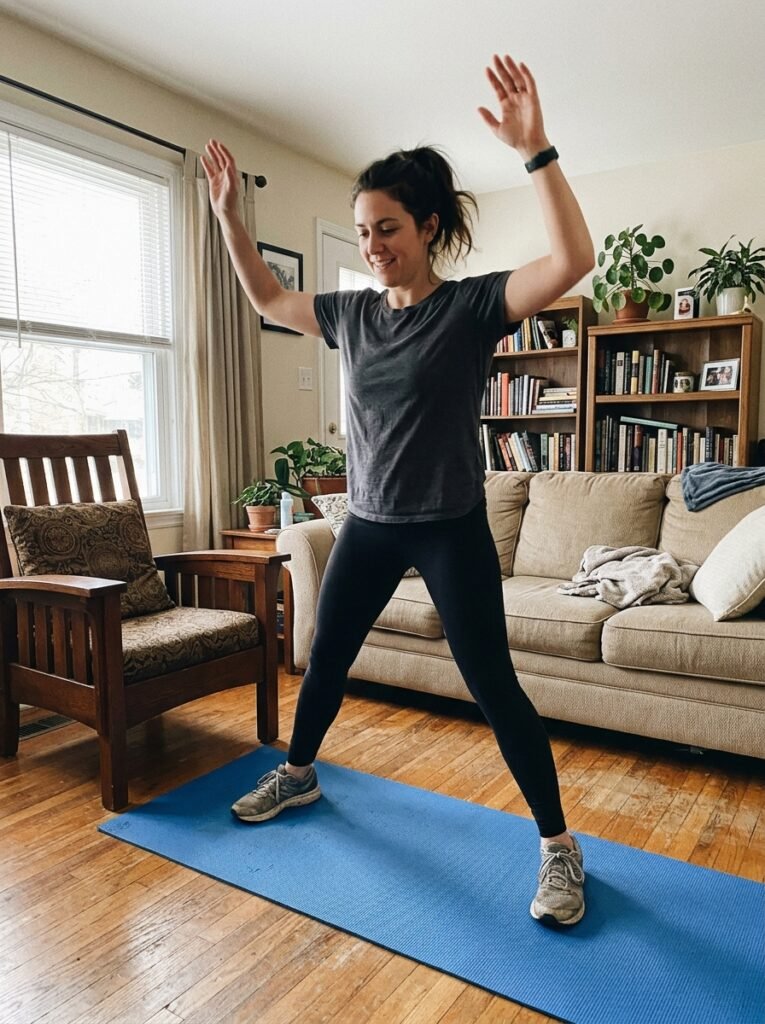
You don’t have to abandon your favorite workouts completely.
Often, you can make an exercise more manageable by changing the range, speed, impact, or support.
Instead of Jumping Jacks
Try step-out jacks.
Step one foot out at a time instead of jumping.
Instead of Jump Squats
Try controlled chair sit-to-stands.
Use a higher chair and reduce the depth if needed.
Instead of Running
Try comfortable walking or another low-impact cardiovascular activity that your knees tolerate.
Instead of Deep Lunges
Try supported, shallow movements—or choose a different strengthening exercise.
Instead of High Knees
Try gentle seated or standing marching.
The goal is to keep moving while respecting your current limitations.
How to Make Your Home Workouts Safer
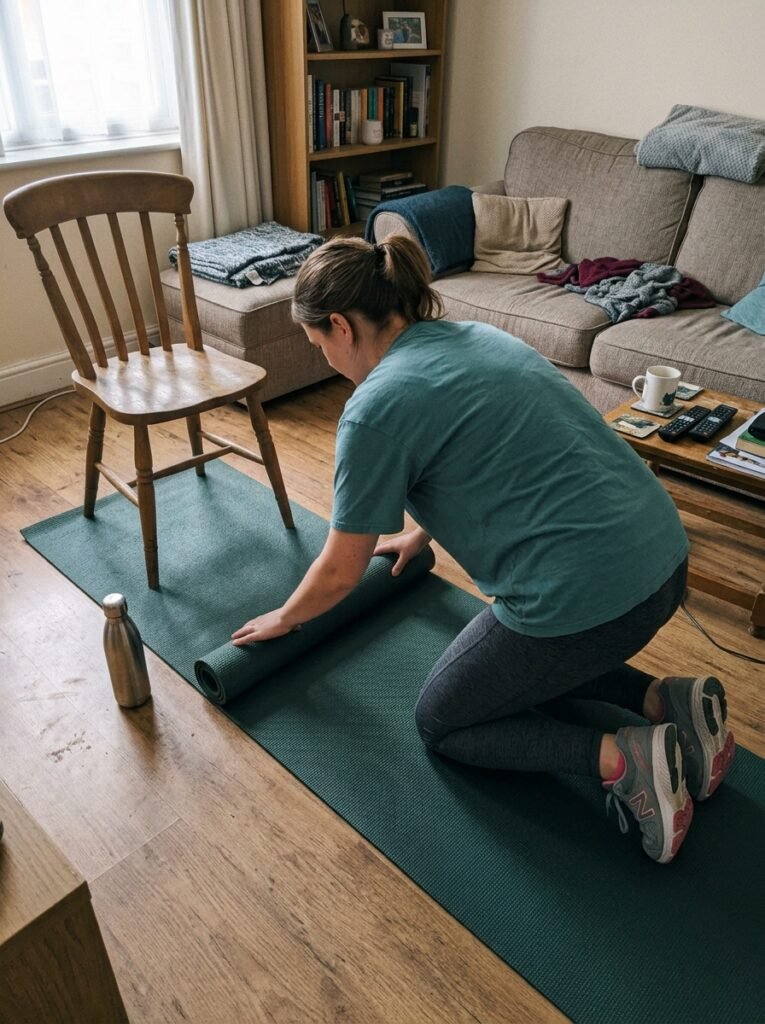
A few simple habits can make your workouts much more comfortable.
Use a Stable Surface
Don’t perform balance exercises beside a lightweight table or unstable furniture.
A sturdy chair or countertop can provide useful support.
Wear Comfortable Shoes
If you’re exercising while standing, supportive footwear may feel better than exercising barefoot on a hard floor.
Choose something comfortable that gives you a stable base.
Keep Your Movements Slow
Fast isn’t automatically better.
Controlled repetitions allow you to pay attention to your knee position and stop if something feels wrong.
Don’t Chase Deep Range of Motion
You don’t need to squat as low as possible to get stronger.
Start with a range that feels manageable and gradually increase it only if your body tolerates it.
Give Yourself Recovery Time
More exercise isn’t always better.
If your knee consistently feels worse after every session, your current workout may be too much.
Reduce the volume, intensity, range of motion, or frequency.
What If Your Knees Hurt After Exercise?
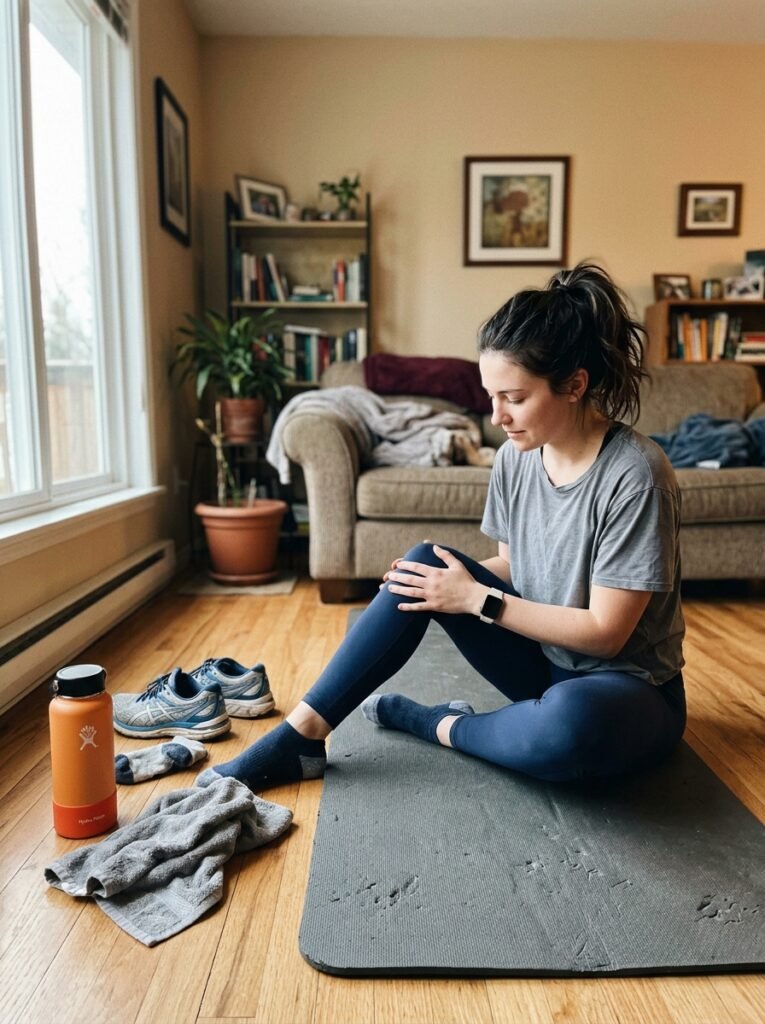
It’s normal for muscles to feel tired after a workout.
But if your knee becomes significantly more painful, swollen, or difficult to move after exercising, don’t simply force yourself through another session.
Consider reducing the intensity or stopping the exercise and getting professional guidance.
Keeping a simple note of which movements trigger symptoms can also be useful.
For example, write down:
- Exercise performed
- Number of repetitions
- Pain or discomfort during exercise
- How your knee felt afterward
- How it felt the next morning
This can help you identify patterns.
How to Progress Without Overdoing It
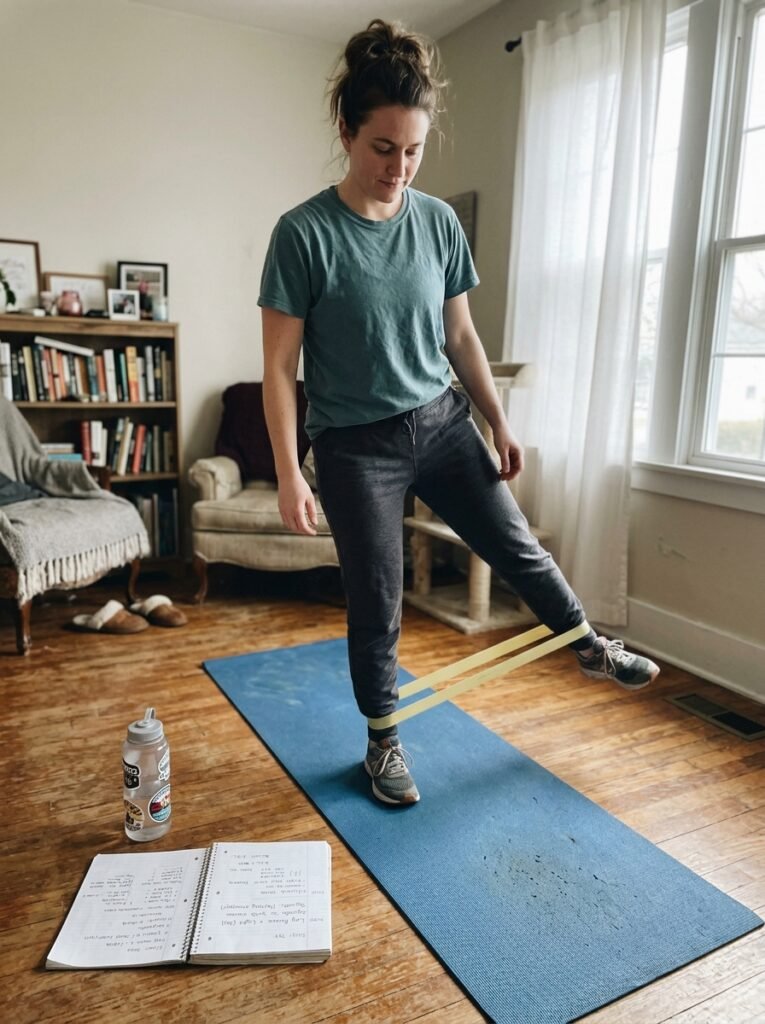
Once your current routine feels comfortable, you can gradually make it more challenging.
Don’t increase everything at once.
Instead, change one variable at a time.
For example:
- Add 2–3 repetitions.
- Add another set.
- Increase your walking time by a few minutes.
- Add a little more resistance.
- Increase workout frequency gradually.
If you suddenly double your workout volume because you’re having a good week, your knees may not appreciate the enthusiasm.
Slow progress is still progress.
Can You Lose Weight With Knee-Friendly Home Workouts?
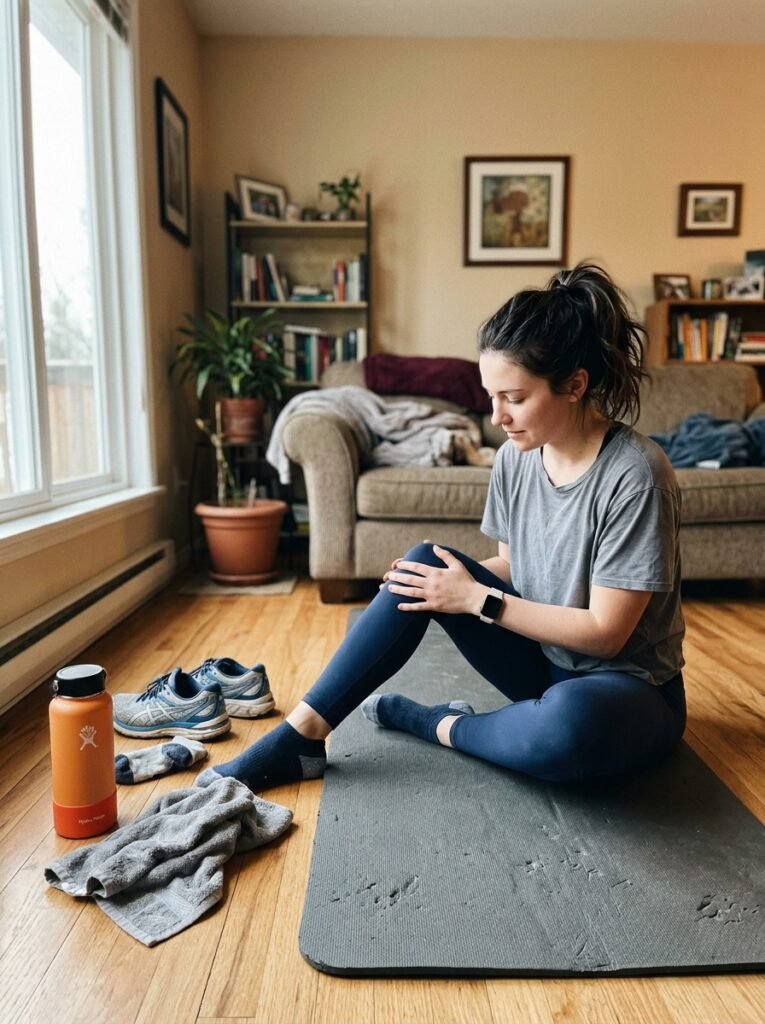
Yes, but exercise isn’t the only factor involved in weight management.
If losing weight is one of your goals, focus on sustainable habits rather than trying to burn as many calories as possible during every workout.
Your overall routine can include:
- Regular low-impact movement
- Strength training
- Protein-rich meals
- Vegetables and fruit
- High-fiber foods
- Appropriate portions
- Adequate sleep
- Regular hydration
Even if your knees prevent you from doing intense cardio, you can still build a healthier routine.
You don’t need to punish your joints to make progress.
A Beginner-Friendly 7-Day Movement Plan
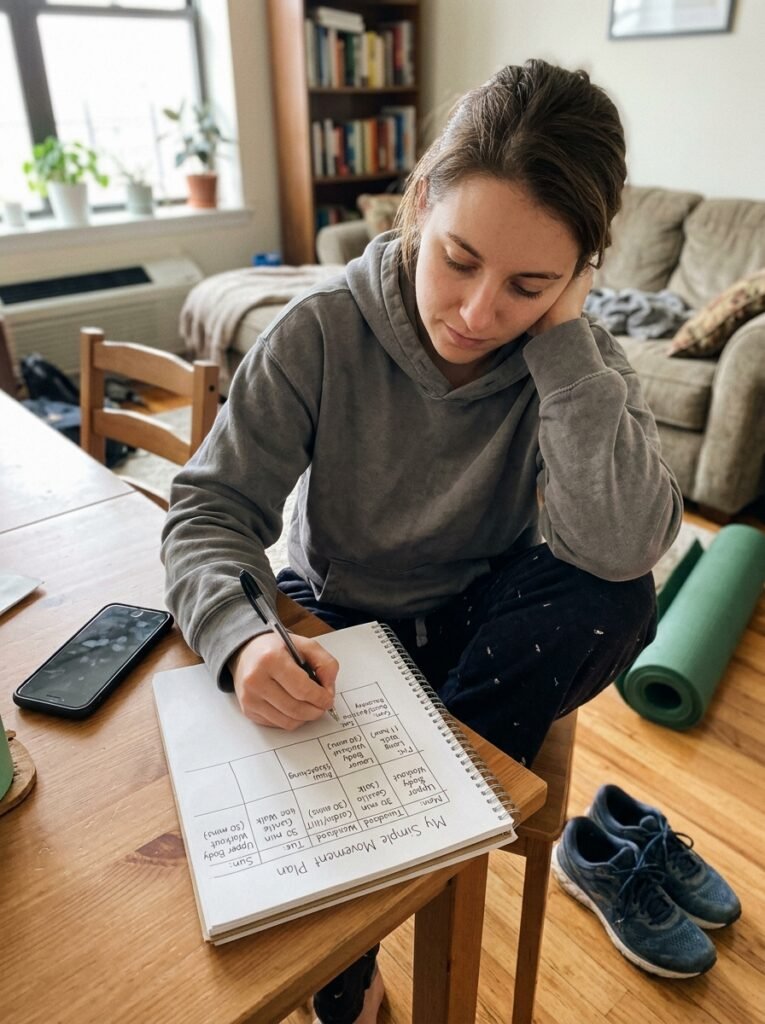
If you’re unsure where to start, keep things simple.
Day 1: Strength
- Glute bridges
- Seated knee extensions
- Standing hip abductions
- Heel raises
Day 2: Gentle Movement
Take several short walks around your home if comfortable.
Day 3: Strength
Repeat your basic strength routine.
Day 4: Recovery
Rest or perform gentle mobility movements.
Day 5: Low-Impact Cardio
Try seated marching, standing marching, or comfortable walking.
Day 6: Strength
Repeat the strength exercises at an easy-to-moderate level.
Day 7: Rest
Give your body time to recover.
Remember, this is a starting framework—not a requirement.
If three workouts feel like too much, start with two.
When Should You See a Professional About Knee Pain?
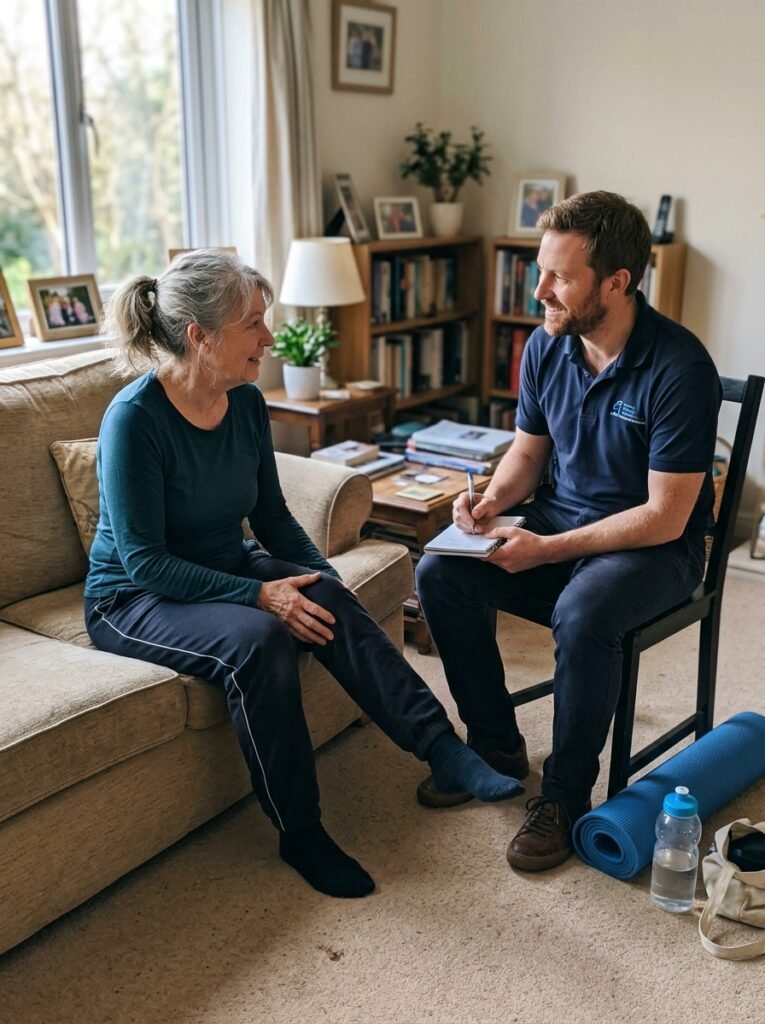
Exercise can be helpful, but it isn’t a substitute for determining the cause of persistent knee pain.
Consider speaking with a healthcare professional or physical therapist if:
- Your knee pain persists or keeps returning.
- Your knee repeatedly gives way.
- You have significant swelling.
- You cannot comfortably bear weight.
- Your knee locks or catches.
- You experienced a significant injury.
- Your symptoms are getting worse.
- You aren’t sure which exercises are appropriate.
A physical therapist can also help tailor exercises to your specific limitations and goals.
That’s especially useful if you’ve been dealing with knee pain for a long time.