
Beginner Home Workout Plan: A Simple Routine You Can Actually Stick With
You don’t need a gym membership, expensive equipment, or hours of free time to start getting stronger and more active. With the right Beginner Home Workout Plan, you can build a realistic exercise habit from the comfort of your own home.
If you’re starting from zero, the goal isn’t to crush yourself with intense workouts. It’s to learn the basic movements, stay consistent, and gradually make exercise feel like a normal part of your week.
This guide gives you a simple home workout plan you can follow even if you’re busy, out of shape, or completely new to exercise. You can start with your body weight and adjust the routine as your fitness improves.
Key Takeaways
- A good beginner workout plan should focus on consistency, basic movements, and gradual progress rather than exhausting workouts.
- You can train your entire body at home without equipment using exercises such as squats, wall push-ups, glute bridges, and bird dogs.
- Start with 3 workouts per week and give your body time to recover between sessions.
- You don’t need to exercise perfectly. A routine you can realistically repeat is much more useful than an extreme plan you abandon after one week.
Why Start With a Home Workout Plan?
Starting at home removes many of the barriers that can make exercise feel intimidating.
You don’t have to drive to a gym, wait for equipment, or worry about whether other people are watching you. You can simply put on comfortable clothes, clear a little floor space, and begin.
For beginners, that simplicity matters.
A Beginner Home Workout Plan can also help you establish a routine before worrying about heavier weights, advanced exercises, or complicated training programs.
The first goal is to make movement part of your normal week.
Once that habit becomes easier, you can gradually increase the difficulty.
How Often Should Beginners Work Out at Home?
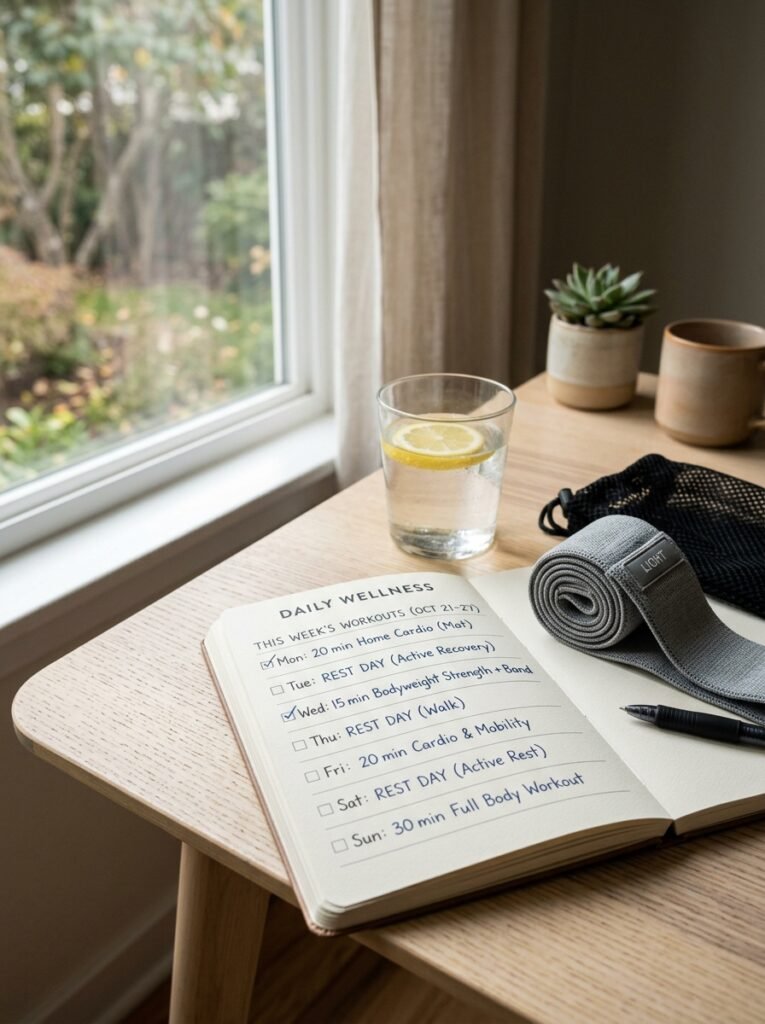
For most beginners, three full-body workouts per week is a practical starting point.
For example:
- Monday: Full-body workout
- Tuesday: Light walking or rest
- Wednesday: Full-body workout
- Thursday: Light activity or rest
- Friday: Full-body workout
- Saturday: Optional walk or gentle activity
- Sunday: Rest
You don’t need to train seven days a week.
In fact, jumping from very little exercise into daily hard workouts can leave you excessively sore and make it harder to stay consistent.
Give your muscles time to recover.
If three workouts feel like too much initially, start with two. You can always add another session when your body and schedule are ready.
What Should a Beginner Home Workout Include?
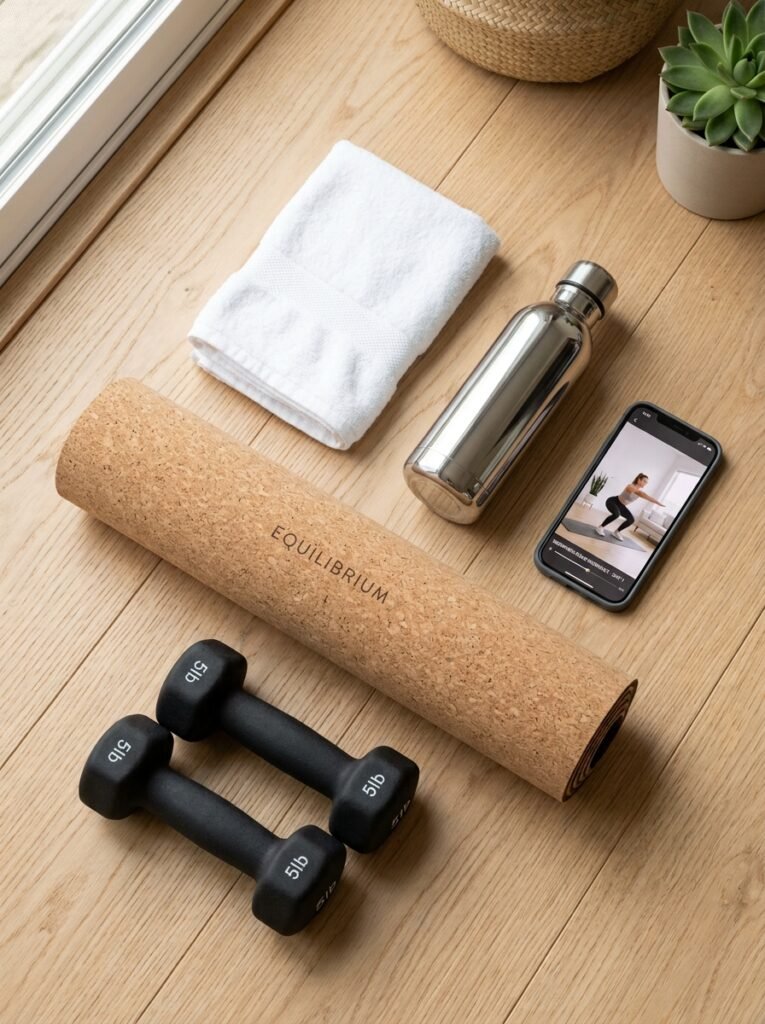
A balanced beginner routine doesn’t need dozens of exercises.
Instead, focus on basic movement patterns that train different parts of your body.
Your routine can include:
- Squat movements for your legs and hips
- Push movements for your chest, shoulders, and arms
- Hip movements for your glutes and hamstrings
- Core exercises for your trunk
- Low-impact cardio to increase activity and fitness
- Mobility exercises to help you move comfortably
The exercises below can be modified to match your current fitness level.
That’s important because beginners don’t all start from the same place.
Your Beginner Home Workout Plan
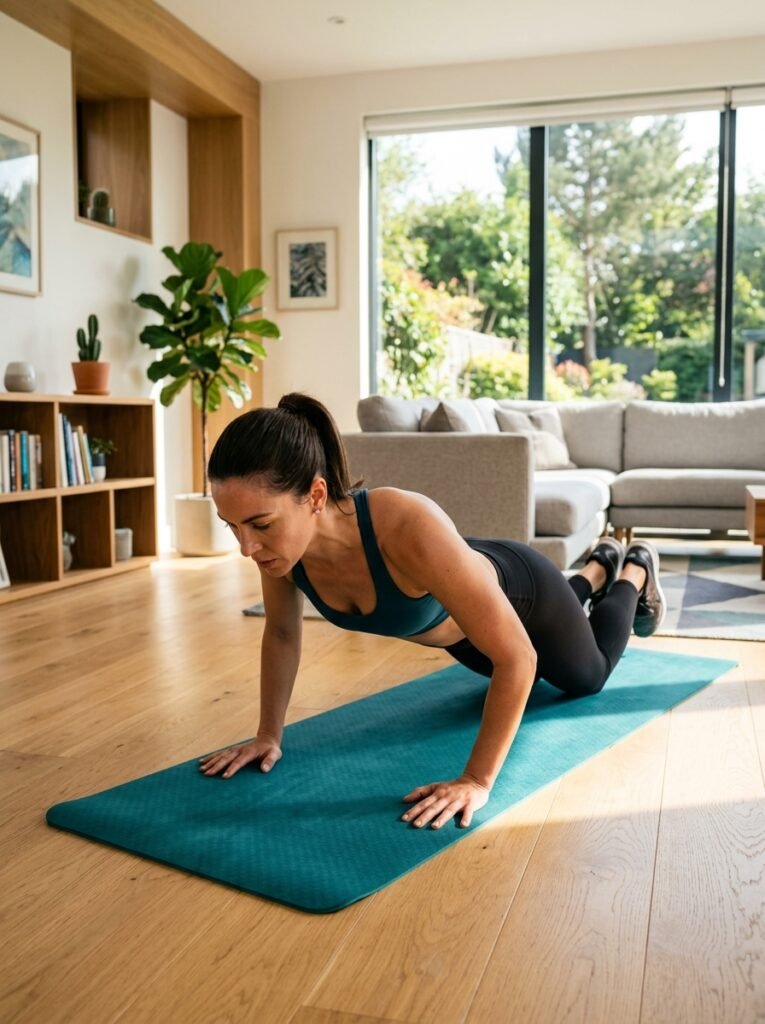
Here’s a simple full-body routine you can perform three times per week.
Warm-Up: 5 Minutes
Before starting the main workout, spend about five minutes getting your body moving.
Try:
- Marching in place for 60 seconds
- Shoulder rolls for 30 seconds
- Arm circles for 30 seconds
- Gentle bodyweight squats for 30 seconds
- Alternating knee lifts for 60 seconds
- Easy step-touches for 60 seconds
- Gentle hip movements for 30 seconds
The warm-up shouldn’t exhaust you.
Think of it as a transition from sitting or resting into exercise.
Exercise 1: Bodyweight Squats
Squats are one of the most useful beginner exercises because they train several muscles around your lower body.
Stand with your feet around shoulder-width apart.
Keep your chest comfortably lifted, bend your knees, and push your hips backward as if you’re sitting into a chair. Lower only as far as you can while maintaining control, then push through your feet to stand.
Start with:
2–3 sets of 8–12 repetitions
If regular squats feel difficult, use a chair.
Sit down slowly and stand back up. The chair gives you a target and can make the movement feel more manageable.
Beginner Squat Tip
Don’t worry about getting extremely low.
A controlled squat with a comfortable range of motion is more useful than forcing yourself into a position you can’t control.
Exercise 2: Wall Push-Ups
Traditional floor push-ups can be challenging when you’re new to exercise.
Wall push-ups are an excellent starting point.
Stand facing a wall with your hands against it around chest height. Walk your feet slightly backward, bend your elbows, and bring your chest toward the wall.
Then push yourself back to the starting position.
Try:
2–3 sets of 8–12 repetitions
As you get stronger, you can progress from wall push-ups to countertop push-ups, then to an elevated push-up using a sturdy surface.
Eventually, you may be ready for modified or full floor push-ups.
There’s no need to rush that progression.
Exercise 3: Glute Bridges
Glute bridges are performed on the floor and primarily work the muscles around your hips and backside.
Lie on your back with your knees bent and your feet flat on the floor.
Keep your arms relaxed beside you. Press through your feet and gently lift your hips, then lower them with control.
Try:
2–3 sets of 10–15 repetitions
Avoid turning the exercise into a fast bouncing movement.
A slower, controlled motion makes it easier to focus on the muscles you’re trying to use.
Exercise 4: Bird Dogs
Bird dogs are a beginner-friendly core exercise that also challenges coordination and stability.
Start on your hands and knees.
Slowly extend one arm and the opposite leg while keeping your torso as steady as possible. Return them to the starting position and switch sides.
Try:
2 sets of 6–10 repetitions per side
If balancing both limbs at once feels difficult, start by lifting only one arm or one leg at a time.
The goal is control, not speed.
Exercise 5: Reverse Lunges or Supported Lunges
Lunges can strengthen your legs while challenging balance.
If you’re a beginner, hold onto a sturdy chair or wall for support.
Stand tall, step one foot backward, and bend both knees as far as feels comfortable. Push through your front foot to return to standing.
Try:
2 sets of 6–10 repetitions per side
If lunges feel uncomfortable or unstable, don’t force them.
You can continue with squats and supported sit-to-stands while you build strength and confidence.
Exercise 6: Marching in Place
You don’t need a treadmill for simple cardio.
Marching in place can increase your heart rate and add some movement between strength exercises.
Stand tall and alternate lifting your knees while gently swinging your arms.
Try:
30–60 seconds
Keep the pace comfortable at first.
As your fitness improves, you can increase the duration or pace.
Exercise 7: Standing Calf Raises
Calf raises are simple and require almost no space.
Stand near a wall or sturdy chair if you need balance support.
Slowly rise onto the balls of your feet, pause briefly, and lower your heels back down.
Try:
2–3 sets of 10–15 repetitions
Move slowly instead of bouncing.
Exercise 8: Dead Bug
The dead bug is another useful beginner core exercise.
Lie on your back with your knees bent and raised. Keep your lower back in a comfortable position while slowly extending one leg and the opposite arm.
Return to the starting position and switch sides.
Try:
2 sets of 6–10 repetitions per side
If this feels too difficult, move only your legs or only your arms.
A Simple Weekly Schedule
You don’t need to repeat every exercise in every session.
Here’s an easy weekly structure.
Monday: Full-Body Strength
- Bodyweight squats — 2–3 sets
- Wall push-ups — 2–3 sets
- Glute bridges — 2–3 sets
- Bird dogs — 2 sets
- Calf raises — 2 sets
- Marching in place — 2 rounds
Wednesday: Full-Body Strength
- Supported lunges — 2 sets
- Wall or countertop push-ups — 2–3 sets
- Glute bridges — 2–3 sets
- Dead bugs — 2 sets
- Bodyweight squats — 2 sets
- Marching in place — 2 rounds
Friday: Full-Body Strength
- Bodyweight squats — 2–3 sets
- Push-ups — 2–3 sets
- Glute bridges — 2–3 sets
- Bird dogs — 2 sets
- Calf raises — 2 sets
- Marching in place — 2–3 rounds
On the other days, you can walk, stretch gently, do household activities, or simply rest.
How Long Should a Beginner Home Workout Take?
You don’t need a 60-minute workout.
For many beginners, 20–30 minutes is enough to create a useful routine.
A simple session might look like this:
- 5 minutes: Warm-up
- 15–20 minutes: Strength exercises
- 5 minutes: Easy movement or cooldown
If you only have 15 minutes, that’s okay too.
I’d rather see you complete a manageable 15-minute workout consistently than plan an hour-long session that never happens.
How Many Repetitions Should You Do?
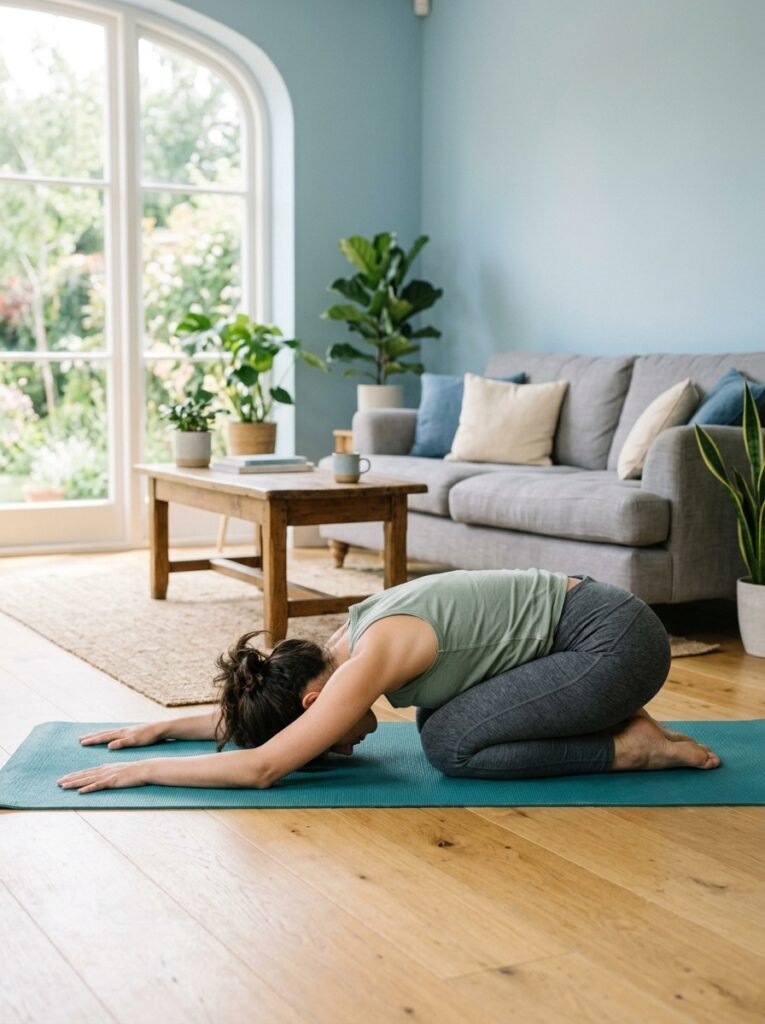
There’s no single perfect number for every beginner.
A useful starting point is around 8–12 controlled repetitions for many strength exercises.
You should finish a set feeling like you worked, but you don’t need to push yourself until you completely collapse.
If you can’t maintain good form, stop the set.
If 12 repetitions feel extremely easy and controlled, you can gradually make the exercise harder.
How to Make Your Workouts Harder
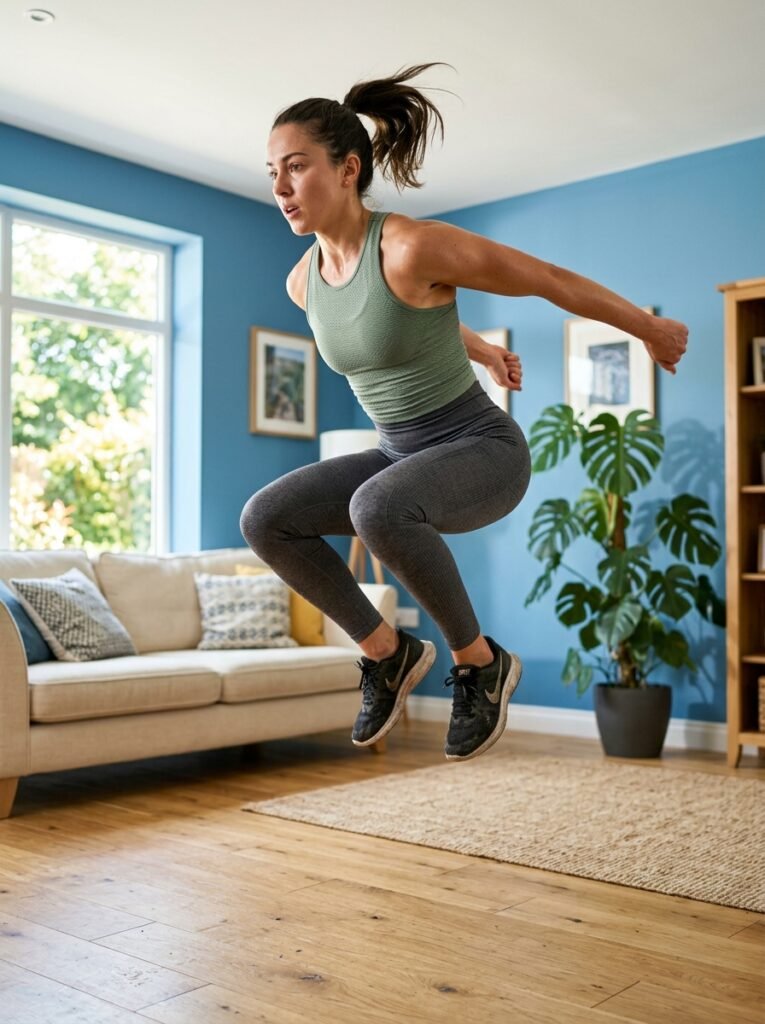
Your body eventually adapts to repeated exercise.
That’s a good thing.
It means you’re getting stronger and your routine is becoming easier.
When an exercise starts feeling comfortable, you can progress by:
- Adding a few repetitions
- Adding another set
- Moving more slowly
- Increasing your range of motion when comfortable
- Choosing a more challenging variation
- Reducing rest slightly
- Adding light resistance
For example, your push-up progression might look like:
Wall push-up → countertop push-up → lower elevated surface → knee push-up → full push-up
You don’t have to move to the next level until the current version feels controlled.
What If You Can’t Do a Full Workout?
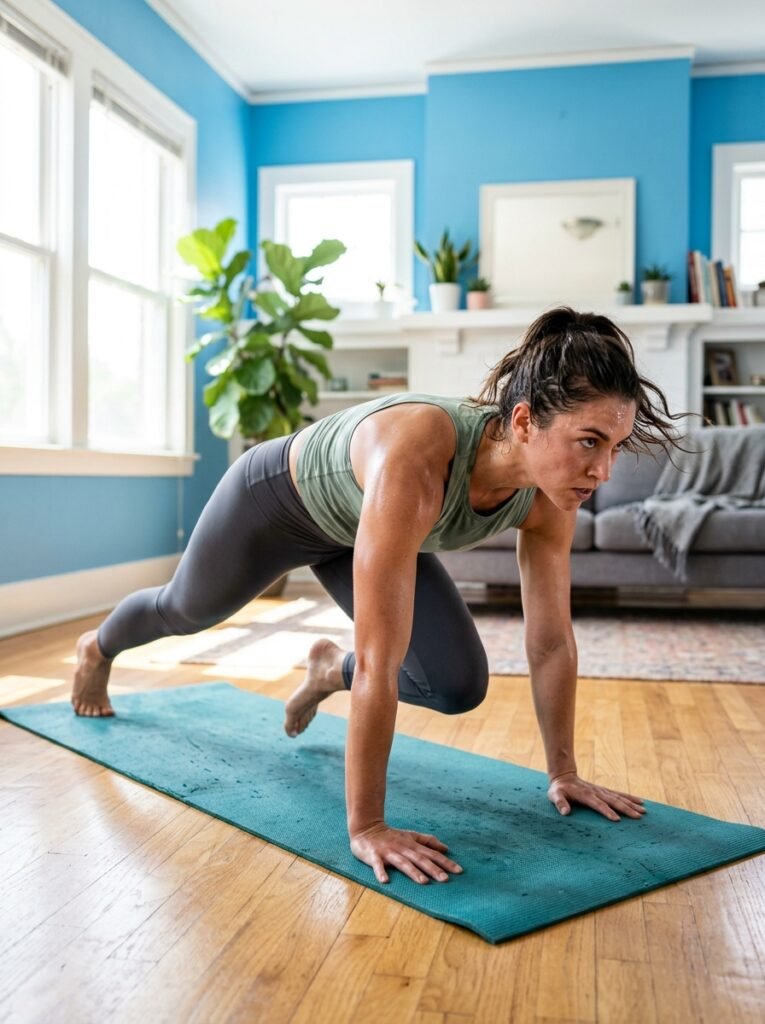
Do the smaller version.
Maybe you planned 30 minutes but only have 10.
Do 10.
You can perform one round of:
- 10 squats
- 8 wall push-ups
- 10 glute bridges
- 6 bird dogs per side
- 60 seconds of marching
Then you’re done.
That may not look impressive on paper, but it keeps the habit alive.
Consistency is built from these ordinary sessions.
Beginner Home Workout Plan for Weight Loss
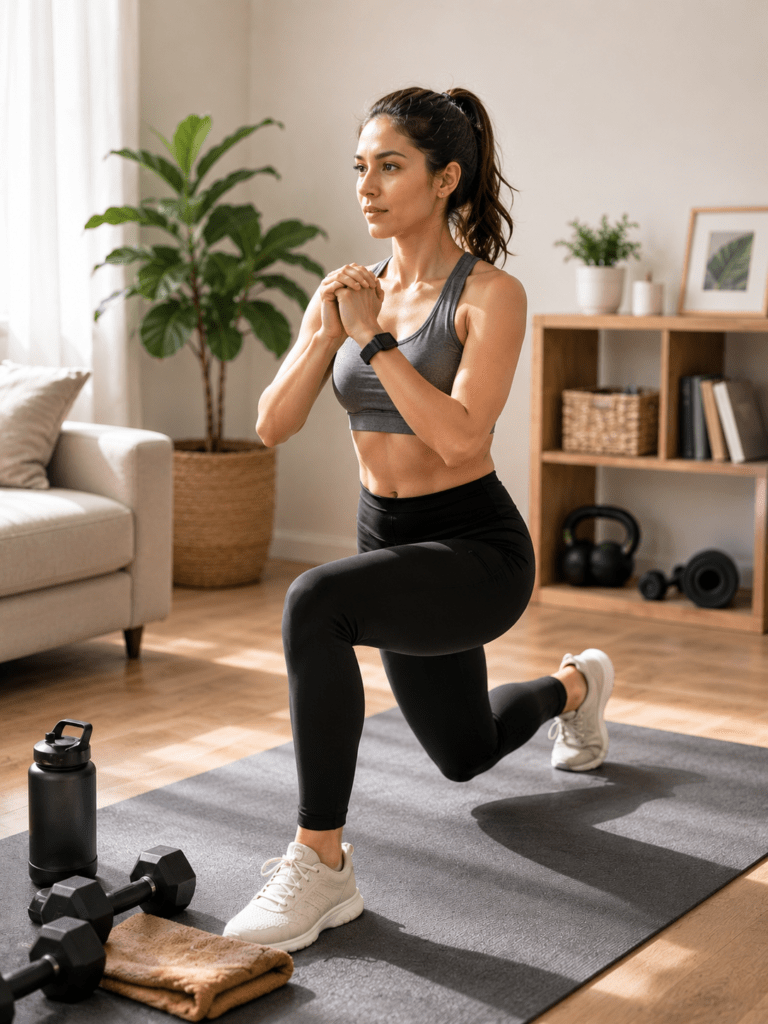
If your goal is weight loss, exercise can be part of the picture, but you don’t need to turn every workout into a punishment.
Weight loss generally involves creating an energy deficit over time, while physical activity can support overall health, fitness, and energy expenditure.
A realistic approach combines regular movement with sustainable eating habits.
Your week might include:
- 3 strength workouts
- Regular walking
- Plenty of everyday movement
- Balanced meals
- Adequate protein and fiber
- Reasonable portions
- Enough sleep and recovery
You don’t need to eliminate entire food groups or spend hours doing cardio.
The best plan is one you can continue for months, not one that makes you miserable for ten days.
How Walking Fits Into Your Plan

Walking is an underrated tool for beginners.
It’s accessible, easy to adjust, and doesn’t require complicated equipment.
If you currently don’t walk much, start with a comfortable amount and gradually increase it.
For example, you might take a 10-minute walk after dinner.
When that feels easy, you can add another short walk during the day.
Small increases in daily movement can be much easier to maintain than suddenly trying to hit an unrealistic step target.
Should You Exercise Every Day?
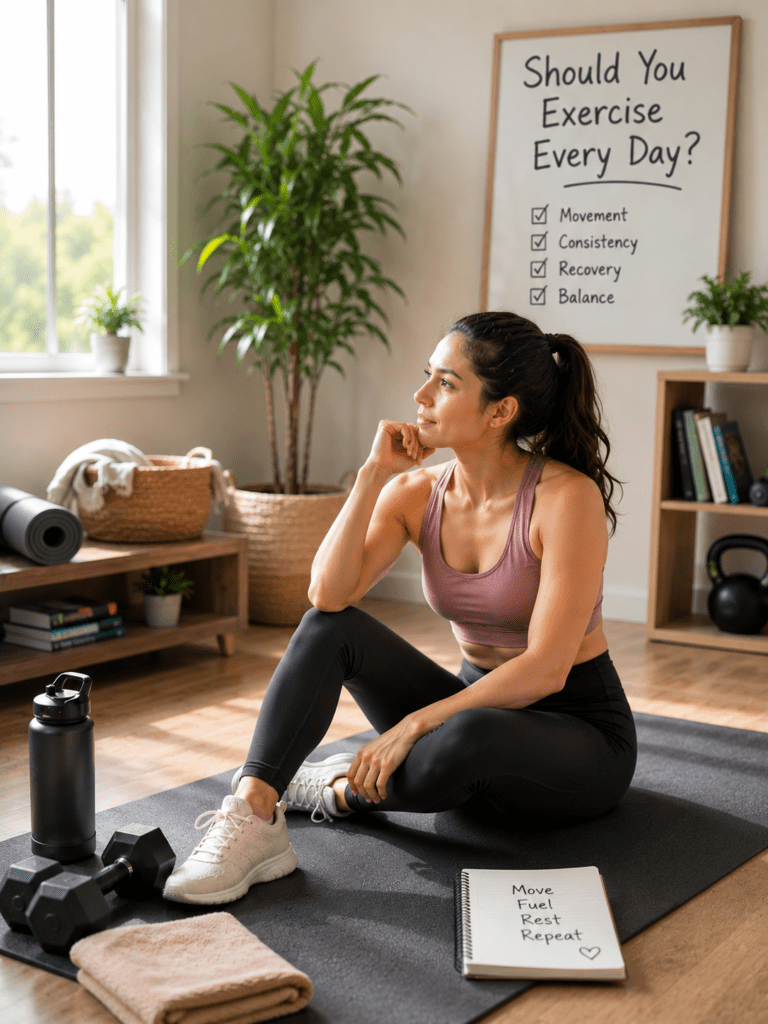
Not necessarily.
Your body needs recovery, especially when you’re new to strength training.
You can be active every day without doing a hard workout every day.
For example:
Monday: Strength workout
Tuesday: Walk
Wednesday: Strength workout
Thursday: Easy movement
Friday: Strength workout
Saturday: Optional walk
Sunday: Rest
Listen to your body and adjust as needed.
Common Beginner Workout Mistakes
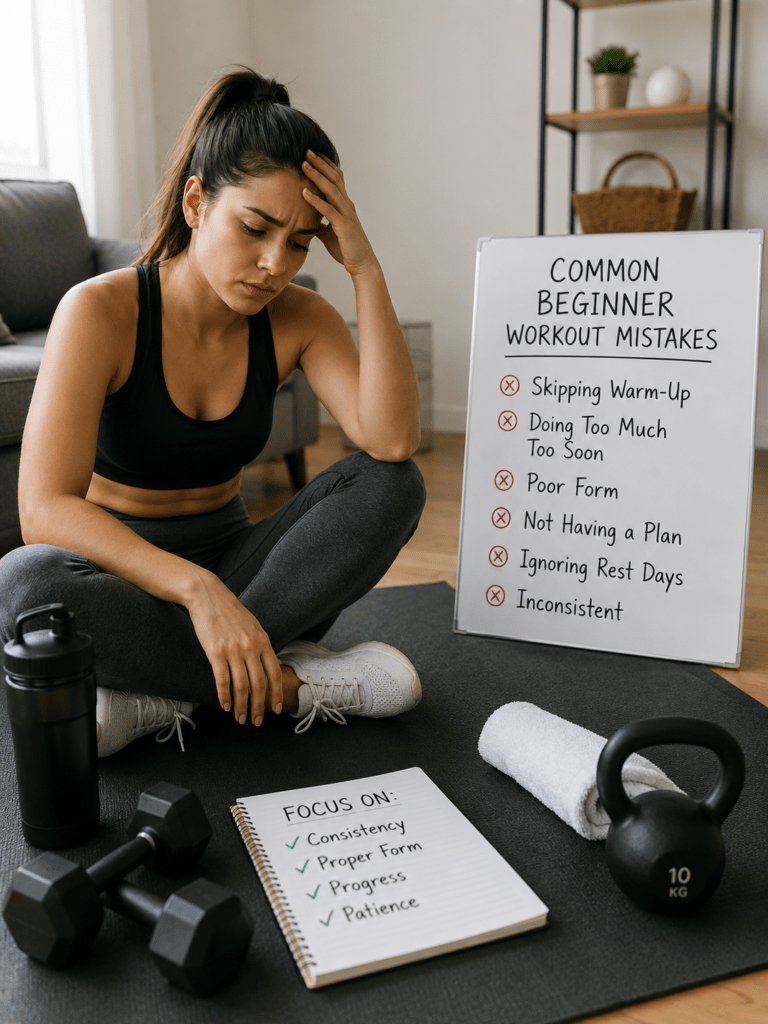
Starting an exercise routine is exciting, but a few common mistakes can make it harder to stick with.
Doing Too Much Too Soon
You don’t need to prove anything during your first workout.
Starting with an extremely difficult routine can leave you exhausted and very sore.
Begin at a level you can recover from.
Chasing Soreness
Being sore isn’t proof that a workout was successful.
A productive session can leave you feeling challenged without making normal activities uncomfortable for several days.
Ignoring Technique
More repetitions aren’t automatically better.
Pay attention to how you’re moving, especially when you’re learning a new exercise.
Skipping Rest
Rest isn’t wasted time.
Recovery gives your body an opportunity to adapt to training.
Comparing Yourself With Other People
Someone else’s workout isn’t your starting point.
Your fitness level, schedule, mobility, experience, and goals are different.
Measure your progress against where you started.
How to Stay Consistent With Home Workouts
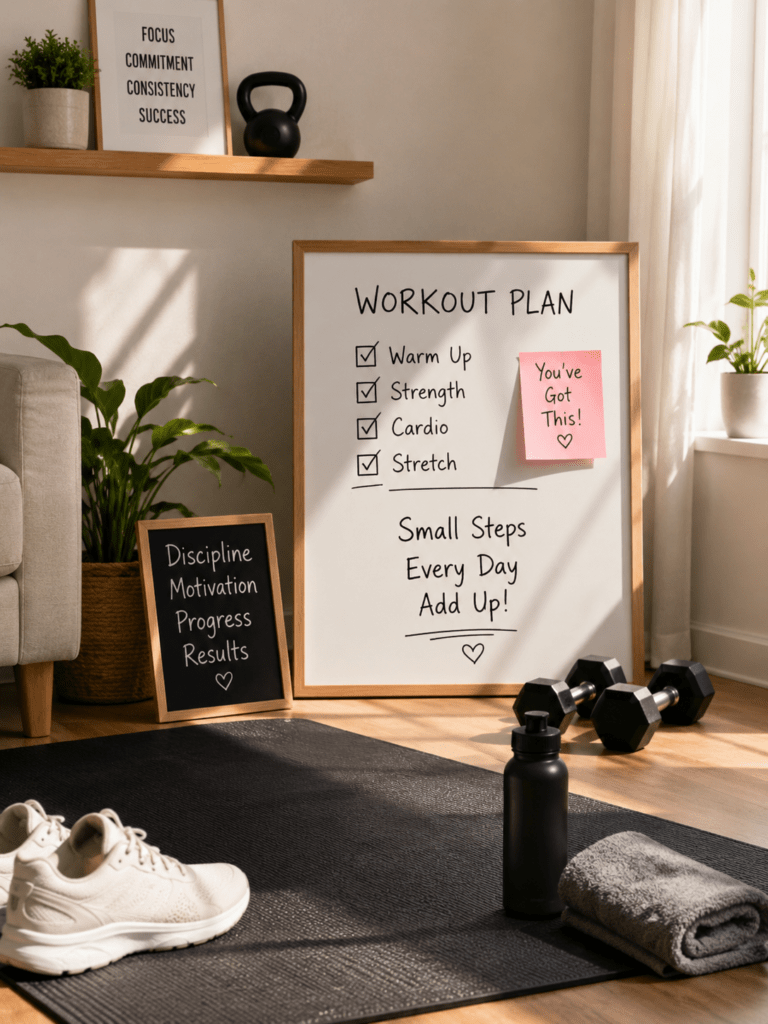
Motivation can disappear.
That’s normal.
Instead of relying on motivation every day, make your workout easier to start.
Choose a Specific Time
Pick a realistic time that works with your schedule.
Maybe it’s before breakfast, during a lunch break, or after work.
The exact time matters less than having a consistent routine.
Keep Your Equipment Visible
If you use a yoga mat, resistance band, or pair of light dumbbells, keep them somewhere you’ll see them.
A visible reminder can make it easier to remember your workout.
Start With Five Minutes
Tell yourself you’ll exercise for just five minutes.
Once you start moving, you may naturally continue.
And if you don’t, you’ve still done something useful.
Track Your Progress
You can keep a simple note on your phone.
Record:
- Workout date
- Exercises completed
- Repetitions
- Sets
- How difficult the workout felt
After several weeks, you’ll have evidence that you’re improving.
What Equipment Do Beginners Actually Need?
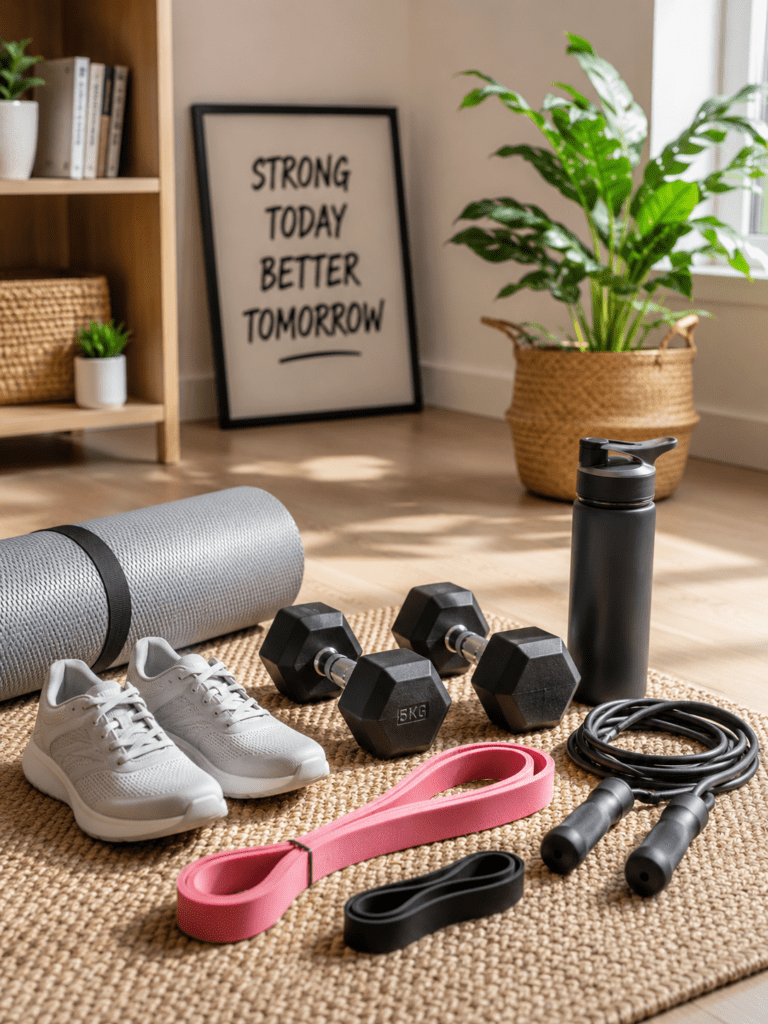
You can start with nothing.
Bodyweight exercises are enough to begin building strength and movement skills.
As you progress, optional equipment can make your workouts more varied.
Useful additions include:
- Exercise mat
- Resistance bands
- Light dumbbells
- Sturdy chair
- Comfortable athletic shoes
Don’t feel pressured to buy everything at once.
Start with what you have.
How to Warm Up and Cool Down
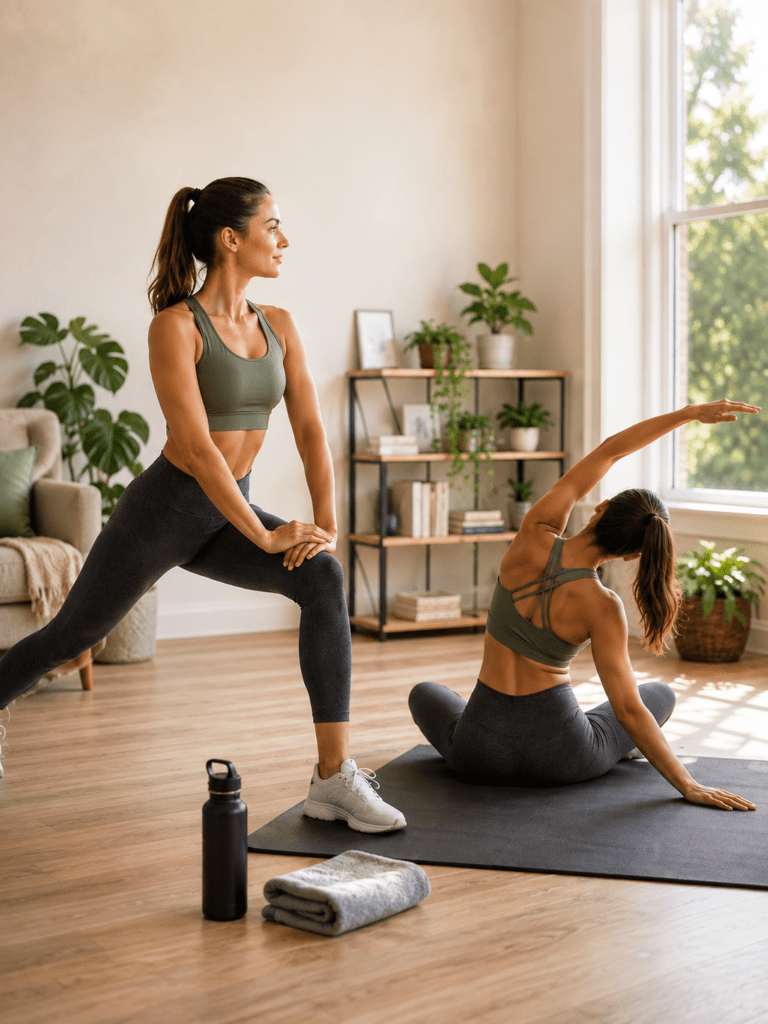
A warm-up should prepare you for movement rather than drain your energy.
Try gentle activities such as marching, arm circles, hip movements, and easy squats.
After your workout, spend a few minutes gradually bringing your activity level down.
You can walk around slowly and perform gentle stretches if they feel comfortable.
You don’t need a complicated stretching routine.
How to Know If You’re Progressing

Progress isn’t only about the number on a scale.
You might notice that:
- You can perform more repetitions.
- Your movements feel more controlled.
- You recover faster.
- Stairs feel easier.
- You can walk longer.
- Your balance improves.
- Everyday tasks feel less tiring.
- You feel more confident exercising.
These changes matter.
Fitness is bigger than one measurement.
What to Do When You Miss a Workout
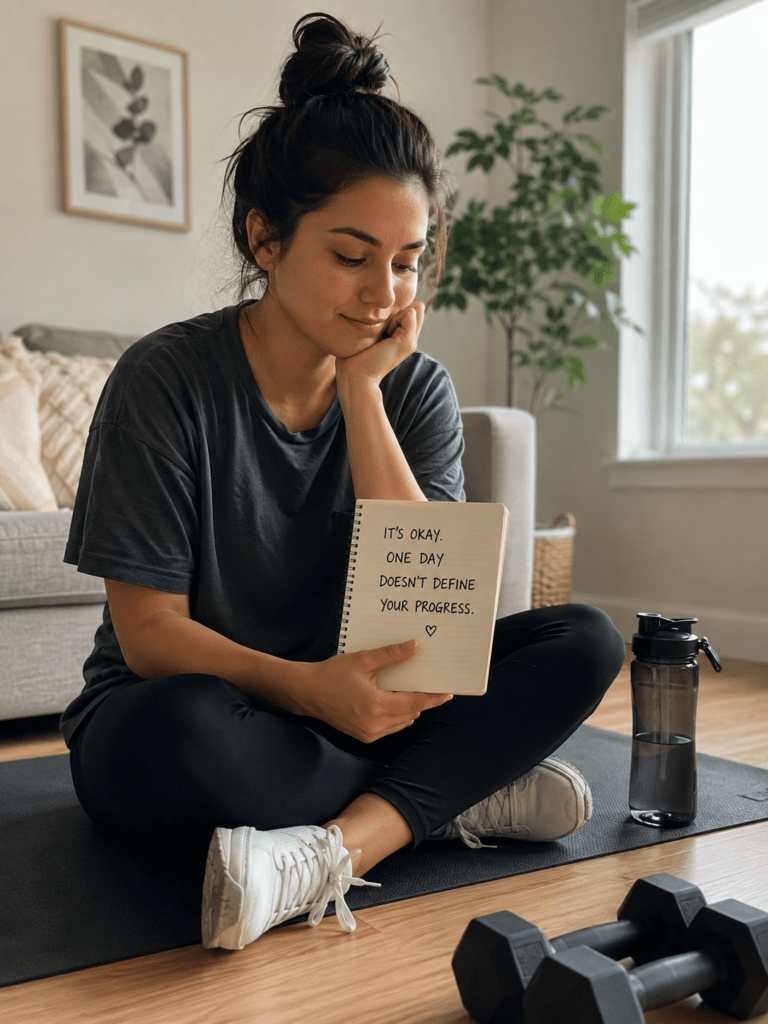
Don’t try to punish yourself by doubling the next workout.
Just continue with your normal schedule.
Missing one session doesn’t erase your progress.
The problem usually isn’t missing one workout. It’s deciding that one missed workout means you’ve failed.
You haven’t failed.
You simply missed a workout.
Get back to your routine at the next reasonable opportunity.
When Should You Increase Workout Difficulty?
Give yourself time to learn the movements.
If you can comfortably complete your planned repetitions with good control and the workout feels noticeably easier for several sessions, consider progressing.
Change only one thing at a time.
For example, add two repetitions before adding another set.
Small adjustments make it easier to understand how your body responds.
Safety Tips for Beginners
Exercise should challenge you, but you shouldn’t ignore warning signs.
Keep these basics in mind:
- Clear your workout area before exercising.
- Wear appropriate footwear when needed.
- Use a sturdy chair or surface for support.
- Start with controlled movements.
- Don’t hold your breath during strength exercises.
- Stop if you experience sharp or unusual pain.
- Give yourself recovery days.
- Stay hydrated according to your needs.
If you have a medical condition, recent injury, significant joint problems, or you’re unsure whether exercise is appropriate for you, talk with a qualified healthcare professional before starting a new exercise program.
A 4-Week Beginner Home Workout Progression
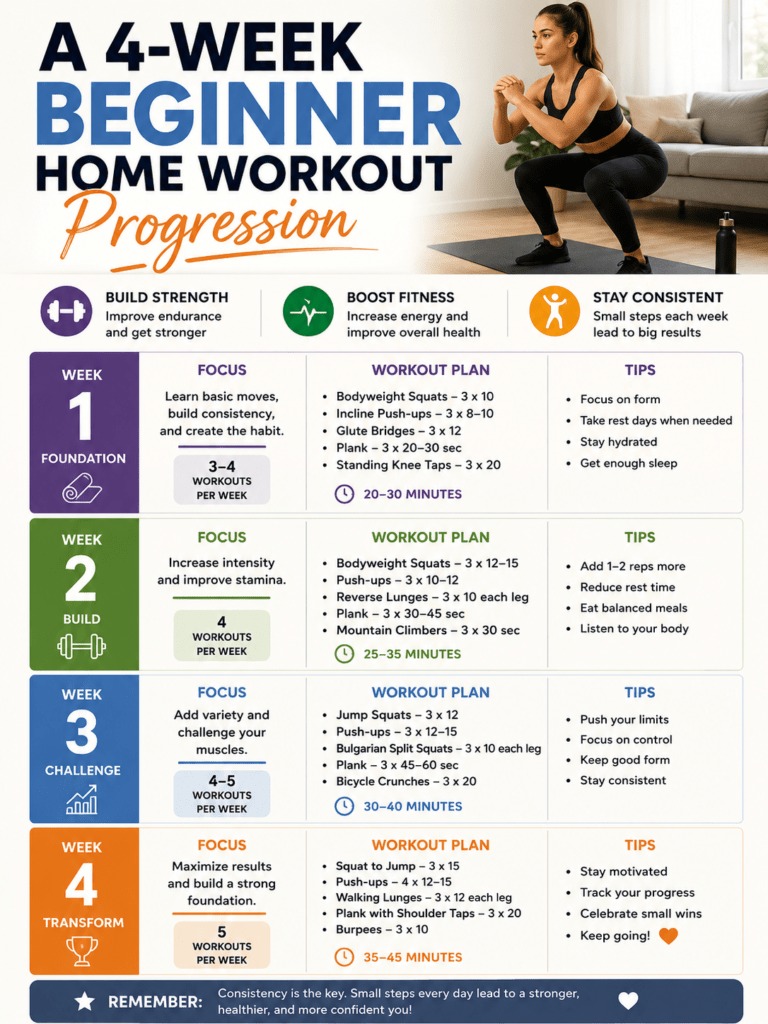
You don’t have to change your workout every day.
Instead, give your body time to adapt.
Week 1: Learn the Movements
Focus on technique and consistency.
Complete two workouts if you’re very new, or three if you feel comfortable.
Keep the intensity moderate.
Week 2: Build Consistency
Aim for three workouts.
Try to perform the same basic movements with slightly better control.
Don’t worry about making everything harder yet.
Week 3: Add a Little Challenge
If your exercises feel comfortable, add a few repetitions or one additional set to selected movements.
You can also try a slightly more challenging variation.
Week 4: Assess Your Progress
Look back at your first workout.
Ask yourself:
- Do the exercises feel easier?
- Can I perform more repetitions?
- Is my technique better?
- Am I recovering well?
- Do I enjoy this routine?
- What feels too difficult?
Use those answers to decide what to adjust next.
Beginner Home Workout Plan: A Sample 20-Minute Routine
If you want something extremely simple, start here.
Warm-Up — 4 Minutes
- March in place — 60 seconds
- Arm circles — 30 seconds
- Step touches — 60 seconds
- Gentle squats — 30 seconds
- Knee lifts — 60 seconds
Main Workout — 12 Minutes
Complete 2–3 rounds:
- 10 bodyweight squats
- 8 wall push-ups
- 12 glute bridges
- 6 bird dogs per side
- 10 supported reverse lunges per side
- 30 seconds marching in place
Rest briefly whenever needed.
Cooldown — 4 Minutes
Walk slowly around the room.
Then perform a few gentle stretches for areas that feel tight, without forcing any position.
That’s it.
You don’t need a complicated routine to get started.
How to Make This Plan Fit Your Life
Your workout should fit your life rather than requiring your entire life to revolve around exercise.
If mornings are chaotic, don’t force morning workouts.
If you have children, you may need shorter sessions.
If you work long hours, break your activity into smaller chunks.
You can even split movement throughout the day.
For example:
- 10 minutes in the morning
- 10 minutes during lunch
- 10 minutes in the evening
Three short sessions can be easier to manage than one long workout.