
How to Lose Belly Fat in 30 Days: A Realistic Plan That Actually Works
If you’re wondering how to lose belly fat in 30 days, I want to start with something important: you can make noticeable progress in a month, but you can’t safely force your body to burn fat from one specific area.
Belly fat tends to decrease as your overall body fat decreases. The good news is that a simple combination of better eating habits, regular movement, strength training, quality sleep, and consistency can help you make real progress without starving yourself or spending hours at the gym.
You don’t need a perfect diet or an extreme workout plan. You need a routine you can repeat for the next 30 days and continue afterward.
Key Takeaways
- You cannot specifically target belly fat, but reducing overall body fat can make your waist smaller.
- A moderate calorie deficit, protein-rich meals, vegetables, whole foods, and sensible portions can support fat loss.
- Walking and strength training are excellent ways to increase daily activity while helping you maintain muscle.
- Sleep, stress management, hydration, and consistency can make your 30-day plan much easier to follow.
- Aim for steady progress rather than dramatic overnight changes.
Can You Really Lose Belly Fat in 30 Days?
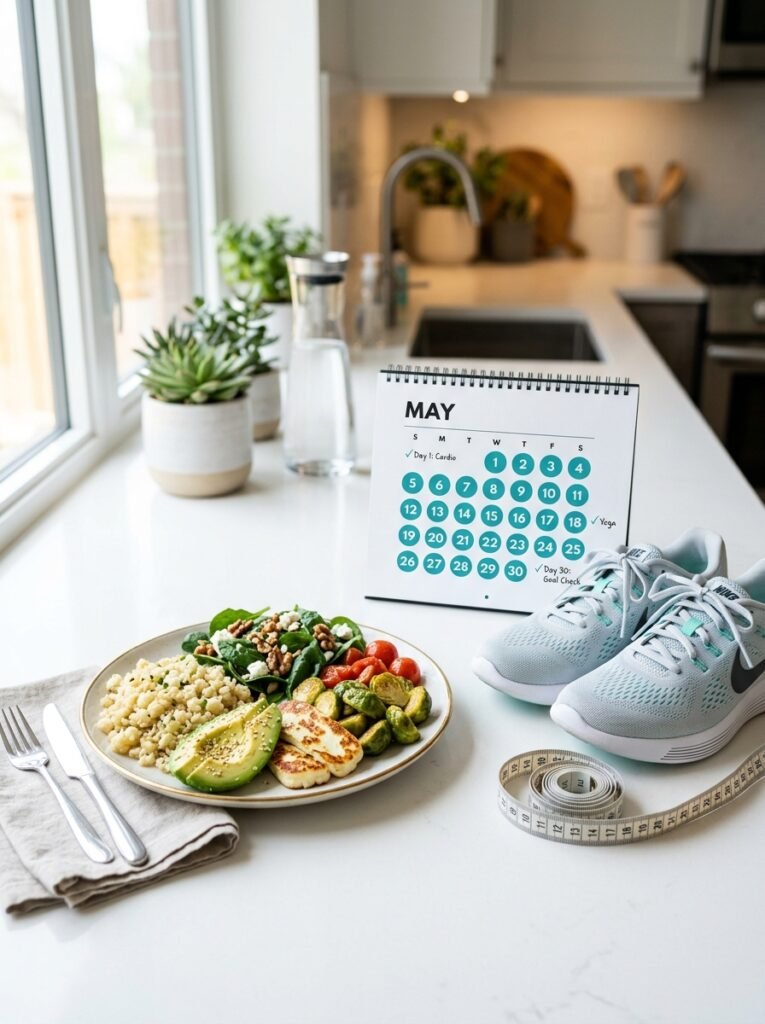
Yes, you can make progress in 30 days, but your results will depend on your starting point, eating habits, activity level, sleep, genetics, and consistency.
For some people, the biggest early change may be a smaller waist measurement. For others, the scale may move more noticeably. You may also feel less bloated and more energetic before seeing a major visual difference.
A healthy approach is to focus on overall fat loss, not a promise of eliminating belly fat within a specific number of days.
Why You Can’t Spot-Reduce Belly Fat
Your body decides where it stores and releases fat based on several factors, including genetics, hormones, age, and overall energy balance.
Doing hundreds of crunches won’t tell your body to burn fat specifically from your stomach.
Ab exercises can strengthen your abdominal muscles, but they don’t directly remove the layer of fat covering them.
That’s why the better question isn’t simply, “What exercise burns belly fat?”
Instead, ask:
“What habits can help me reduce overall body fat while becoming stronger and healthier?”
That shift makes your goal much more realistic.
Understanding Belly Fat
Not all belly fat is the same.
Subcutaneous fat sits underneath your skin. It’s the type you can usually pinch around your waist.
Visceral fat is stored deeper inside the abdomen around internal organs. Having excessive visceral fat is associated with increased health risks, which is one reason reducing excess abdominal fat can be beneficial for overall health.
You don’t need to obsess over identifying which type you have.
Instead, focus on habits that improve your overall health and body composition.
Your 30-Day Belly Fat Loss Strategy
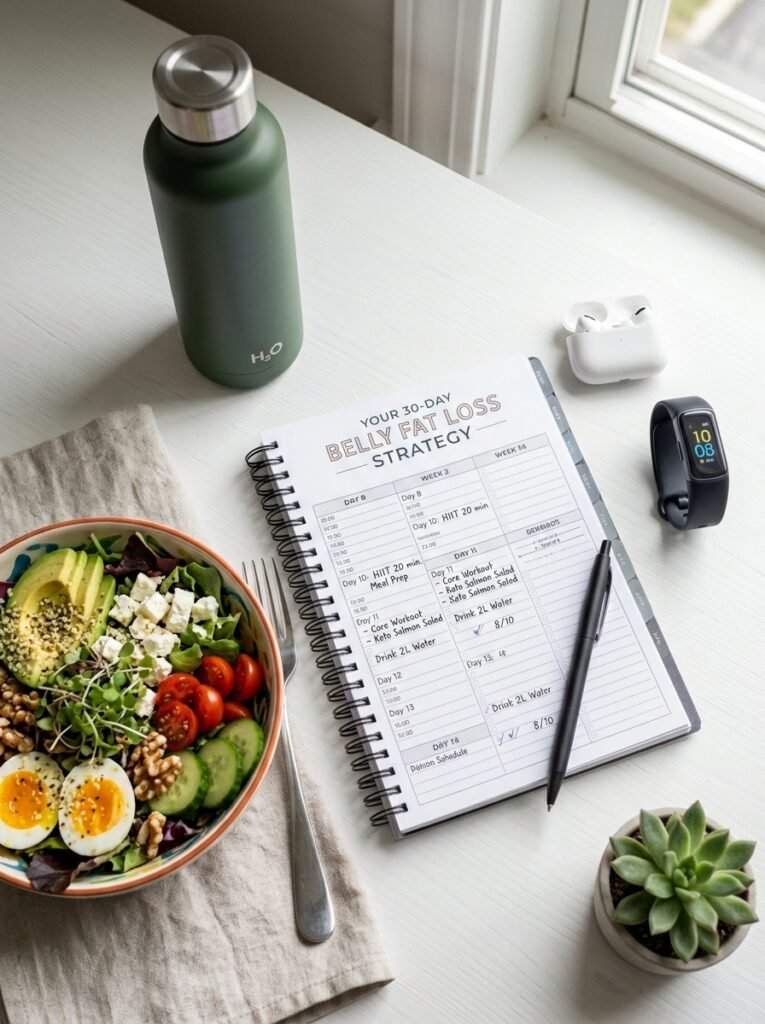
If you’re serious about learning how to lose belly fat, don’t try to change everything overnight.
For the next 30 days, build your routine around five basic areas:
- Eat mostly nutrient-dense foods.
- Create a reasonable calorie deficit if fat loss is appropriate for you.
- Walk more throughout the day.
- Strength train consistently.
- Prioritize sleep and recovery.
These habits may sound simple, but simple doesn’t mean ineffective.
The challenge is repeating them often enough to produce results.
Step 1: Create a Reasonable Calorie Deficit
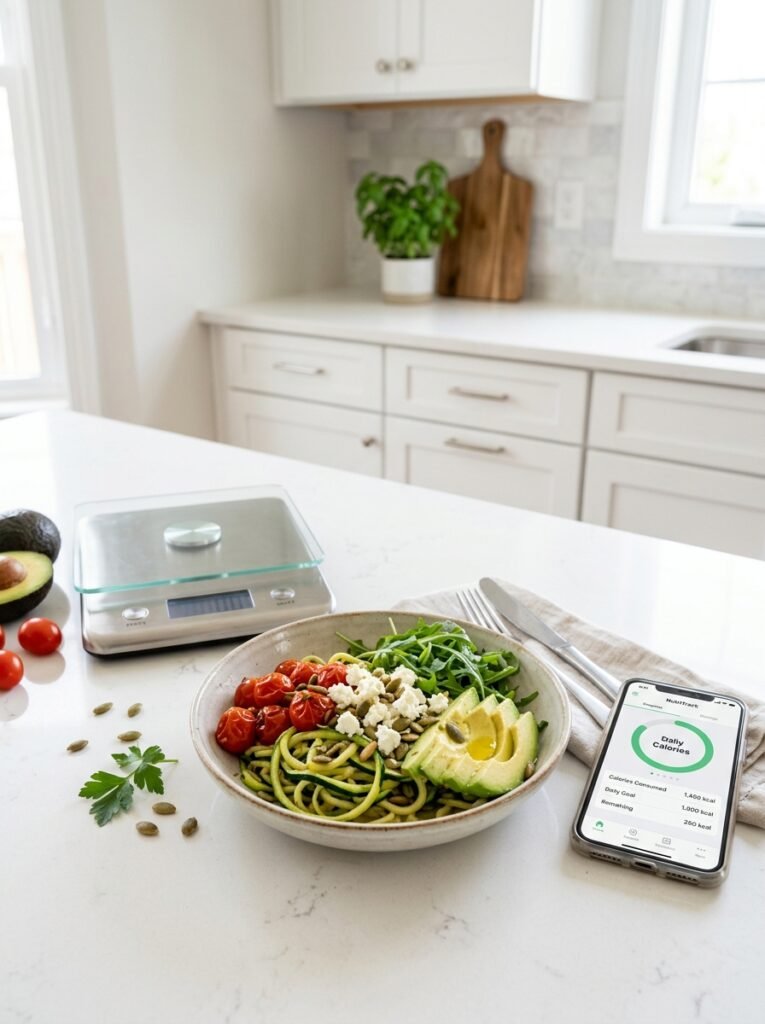
Fat loss generally requires your body to use more energy than you consume over time.
This is commonly called a calorie deficit.
You don’t need to slash your food intake or survive on salads to create one.
A moderate deficit is usually much easier to maintain than an aggressive diet.
What Does a Calorie Deficit Look Like?
You might create a deficit by:
- Eating slightly smaller portions
- Reducing high-calorie snacks
- Drinking fewer sugary beverages
- Choosing leaner protein sources
- Adding more vegetables
- Walking more
- Cooking more meals at home
- Being more mindful of calorie-dense sauces and toppings
You don’t have to eliminate your favorite foods.
If you love pizza, for example, you can still enjoy it occasionally while keeping your overall eating pattern balanced.
Don’t Try to Eat as Little as Possible
One of the biggest mistakes I see people make when trying to figure out how to lose belly fat in 30 days is assuming that eating dramatically less will produce dramatically better results.
It often makes the process miserable.
Severe restriction can leave you hungry, tired, irritable, and more likely to overeat later.
Your goal is not to win a 30-day starvation challenge.
Your goal is to create habits you can actually live with.
Step 2: Build Meals Around Protein
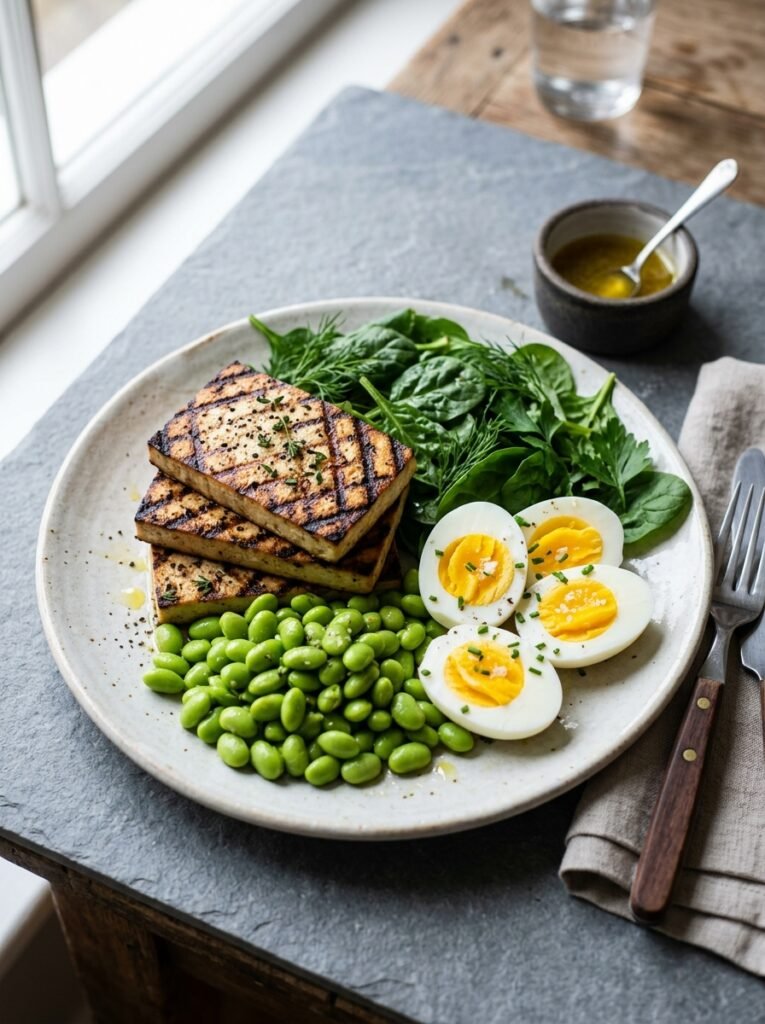
Protein can make meals more satisfying and is especially useful when you’re trying to lose fat while maintaining muscle.
Try including a protein source in most meals.
Good options include:
- Eggs
- Chicken
- Turkey
- Fish
- Greek yogurt
- Cottage cheese
- Milk
- Lentils
- Beans
- Chickpeas
- Tofu
- Tempeh
- Lean beef
You don’t need protein shakes unless they’re convenient for you.
Whole-food protein sources can work perfectly well.
A Simple Meal Formula
Try building your meals around:
Protein + vegetables or fruit + high-fiber carbohydrate + healthy fat
For example:
Breakfast: Eggs, whole-grain toast, and fruit
Lunch: Chicken, brown rice, and mixed vegetables
Snack: Greek yogurt with berries
Dinner: Lentils, roasted vegetables, and a small serving of rice
This structure gives you flexibility without requiring complicated meal plans.
Step 3: Eat More Fiber-Rich Foods
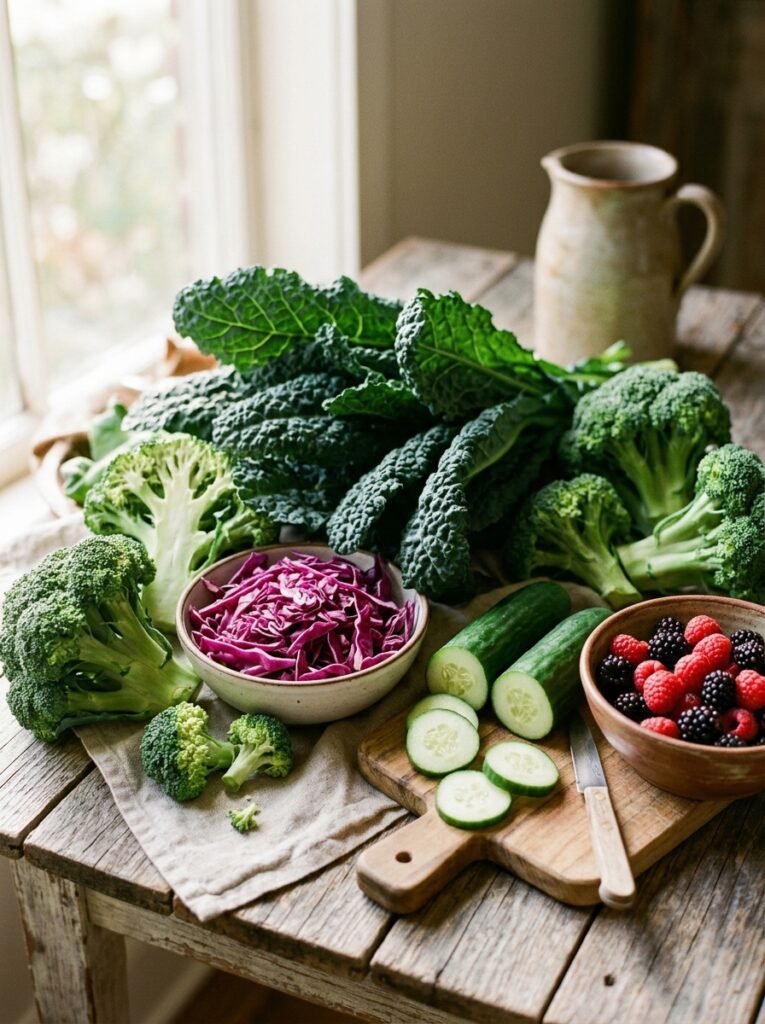
Fiber can help you feel fuller and supports healthy digestion.
It can also make your meals more satisfying without requiring huge amounts of calories.
Add more:
- Vegetables
- Fruits
- Beans
- Lentils
- Chickpeas
- Oats
- Whole grains
- Potatoes with the skin
- Nuts and seeds
If you’re currently eating very little fiber, increase it gradually and drink enough fluids to help your digestive system adjust.
Easy Fiber Swaps
Instead of white bread every day, try whole-grain bread.
Instead of chips as your regular snack, try fruit, yogurt, roasted chickpeas, or a small handful of nuts.
Instead of making vegetables an afterthought, aim to include them with lunch and dinner.
Small changes repeated for 30 days can add up.
Step 4: Cut Back on Liquid Calories
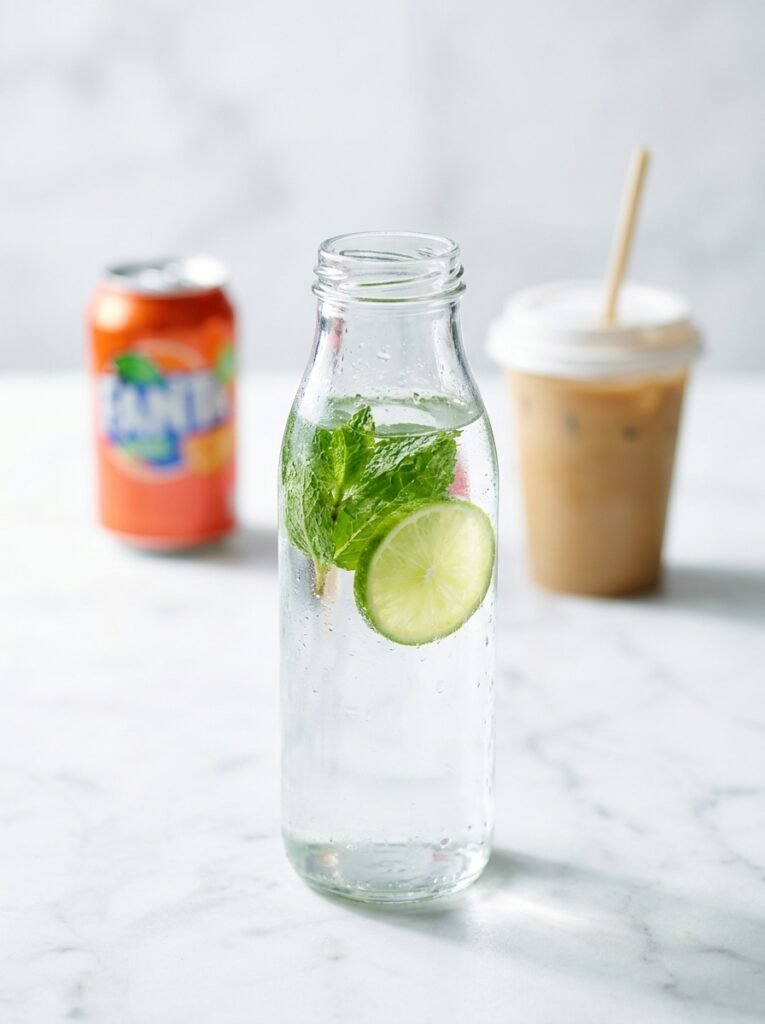
One of the easiest ways to reduce unnecessary calories is to look at what you’re drinking.
Soda, sweetened coffee drinks, energy drinks, sweet tea, and some fruit drinks can add substantial calories without making you feel particularly full.
You don’t need to drink only plain water.
Try:
- Water
- Sparkling water
- Unsweetened tea
- Black coffee
- Coffee with a modest amount of milk
- Water flavored with lemon or cucumber
If you currently drink several sugary beverages every day, reducing them could make your calorie deficit easier to achieve.
Step 5: Walk Every Day
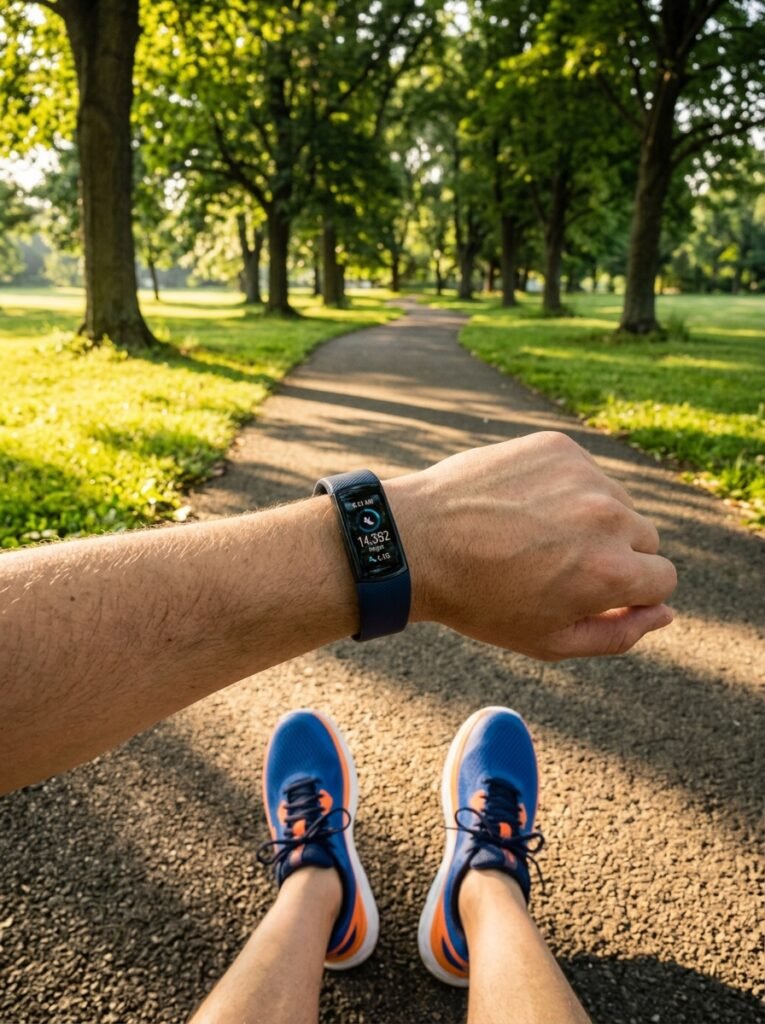
Walking is underrated when it comes to fat loss.
You don’t need to run every day to increase your energy expenditure.
A brisk walk can be an easy way to become more active without putting excessive demands on your body.
Start with a realistic target.
For example, if you’re currently sedentary, try adding a 10–15 minute walk after one or two meals.
As your fitness improves, gradually increase your walking time.
A Simple 30-Day Walking Progression
Week 1: 15–25 minutes most days
Week 2: 25–30 minutes most days
Week 3: 30–40 minutes most days
Week 4: 35–45 minutes most days
You can split this into shorter walks if necessary.
Ten minutes here and ten minutes there still counts.
Step 6: Strength Train 2–4 Times Per Week
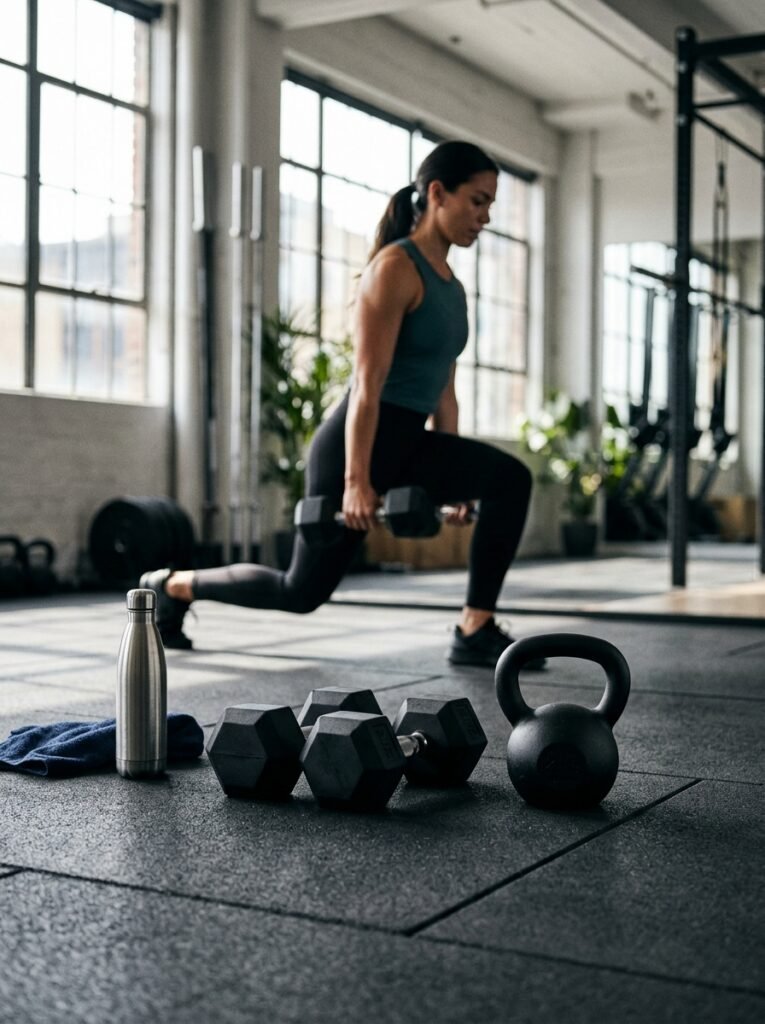
If your goal is to improve your body composition, don’t focus only on cardio.
Strength training helps you build and maintain muscle while you’re losing weight.
You can train at home without expensive equipment.
Beginner Full-Body Workout
Try 2–3 rounds of:
- 10–15 bodyweight squats
- 8–12 incline push-ups
- 10–15 glute bridges
- 8–12 reverse lunges per side
- 10–15 backpack rows
- 20–30 seconds of plank
Rest when needed.
If you’re new to exercise, start with fewer repetitions and focus on good technique.
You don’t need to destroy your muscles to make progress.
How Often Should You Train?
For many beginners, three full-body strength sessions per week is a practical starting point.
For example:
- Monday: Strength
- Tuesday: Walking
- Wednesday: Strength
- Thursday: Walking
- Friday: Strength
- Saturday: Light activity
- Sunday: Rest or gentle walking
Your exact schedule can change according to your lifestyle.
Consistency matters more than having a perfect calendar.
Step 7: Train Your Core, But Know What It Can and Can’t Do
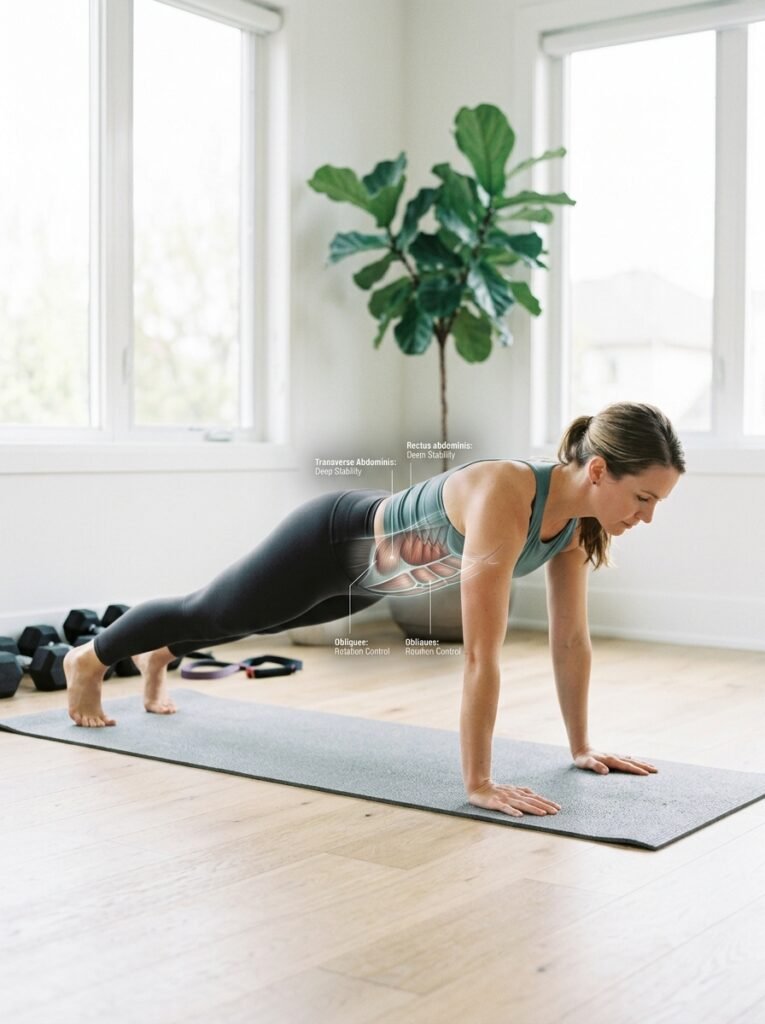
Core exercises are useful.
They can strengthen your abdominal muscles, improve stability, and make everyday movement easier.
But they aren’t a magic solution for belly fat.
Add exercises such as:
- Planks
- Dead bugs
- Bird dogs
- Side planks
- Glute bridges
- Slow mountain climbers
Perform them with controlled movements instead of rushing through dozens of repetitions.
A stronger core plus lower overall body fat can eventually make your midsection look more defined.
Step 8: Prioritize Sleep

If you’re serious about how to lose belly fat, don’t ignore your sleep.
Poor sleep can make healthy eating and regular exercise harder to maintain. When you’re exhausted, convenience foods and skipped workouts can become much more tempting.
Most adults should aim for roughly 7–9 hours of sleep per night.
You can improve your routine by:
- Keeping a fairly consistent bedtime
- Limiting caffeine late in the day
- Keeping your bedroom comfortable and dark
- Reducing unnecessary screen time before bed
- Avoiding very heavy meals right before sleeping
You don’t have to create a perfect nighttime routine.
Even going to bed 30 minutes earlier can be a useful starting point.
Step 9: Manage Stress Without Turning Food Into the Solution

Stress doesn’t automatically cause belly fat, but chronic stress can make healthy habits harder to maintain.
Some people respond to stress by eating more highly palatable foods.
If that sounds familiar, don’t rely on willpower alone.
Try creating a list of non-food stress-relief options:
- Take a short walk
- Call a friend
- Listen to music
- Stretch for 10 minutes
- Take a shower
- Read
- Practice slow breathing
- Spend time outside
- Write down what’s bothering you
You don’t need to remove all stress from your life.
You simply need healthier ways to respond to it.
A Simple 30-Day Belly Fat Loss Meal Plan
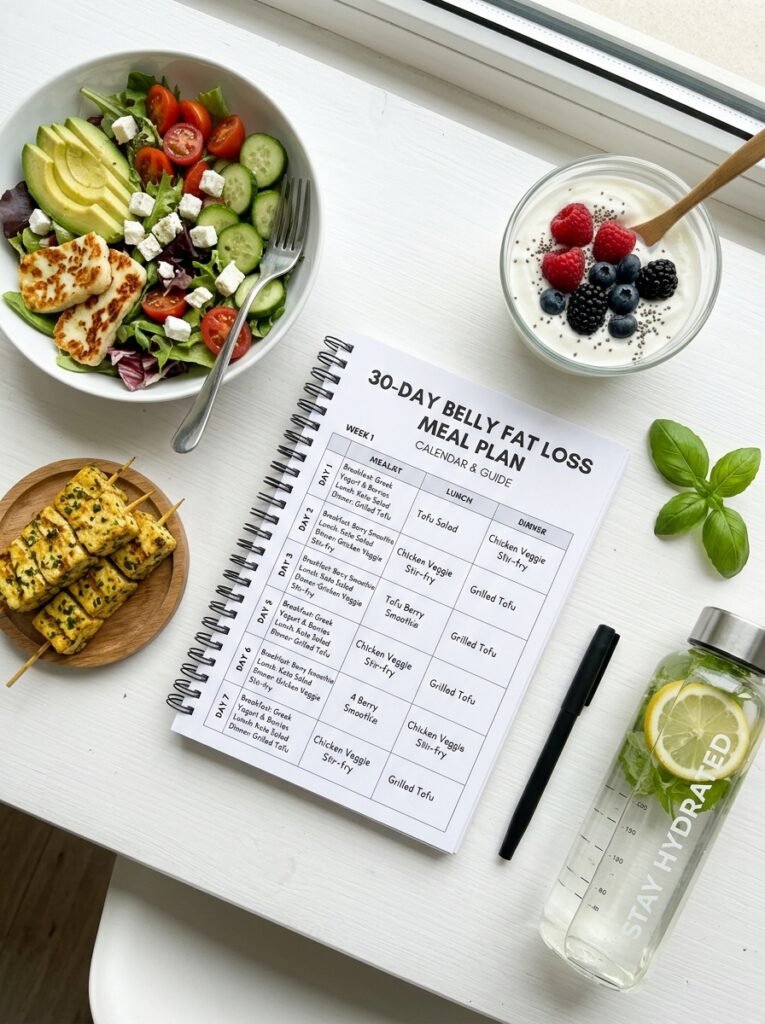
You don’t need an expensive diet program.
Here’s an example of what a simple day could look like.
Breakfast
Choose one:
- 2 eggs with whole-grain toast and fruit
- Greek yogurt with berries and oats
- Oatmeal with milk, banana, and a small serving of nuts
Lunch
Choose one:
- Grilled chicken with rice and vegetables
- Lentil bowl with salad and yogurt
- Tuna sandwich with whole-grain bread and vegetables
- Chickpea salad with a small serving of whole grains
Snack
Choose one:
- Apple and a small handful of nuts
- Greek yogurt
- Fruit and cottage cheese
- Carrots with hummus
Dinner
Choose one:
- Grilled fish with potatoes and vegetables
- Chicken with brown rice and salad
- Bean and vegetable bowl
- Tofu stir-fry with vegetables and rice
Dessert
You don’t have to ban dessert.
A small portion of something you enjoy can fit into an overall balanced diet.
The key is portion awareness and frequency rather than labeling foods as completely “good” or “bad.”
Foods to Eat More Often

If you’re trying to lose excess body fat, build your diet around foods that provide plenty of nutrition and help keep you satisfied.
Prioritize:
- Lean protein
- Vegetables
- Whole fruits
- Beans and lentils
- Whole grains
- Potatoes
- Oats
- Plain yogurt
- Nuts and seeds in sensible portions
- Healthy fats such as olive oil and avocado
These foods can form the foundation of a satisfying diet.
Foods to Limit During Your 30 Days
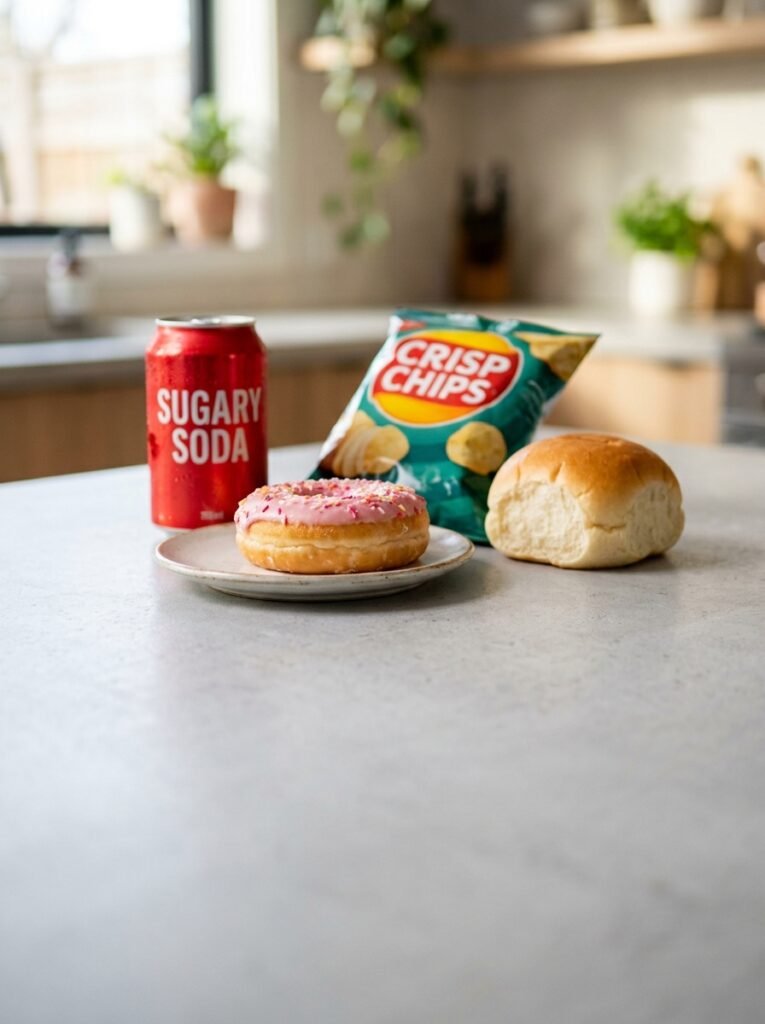
You don’t need a forbidden-food list.
However, some foods are very easy to overeat and can make a calorie deficit harder.
Consider limiting:
- Sugary drinks
- Large portions of sweets
- Frequent fast food
- Highly processed snack foods
- Large amounts of fried foods
- Excessive alcohol
- High-calorie sauces and dressings
“Limit” does not mean “never eat.”
A sustainable diet leaves room for normal life.
Your 30-Day Belly Fat Workout Plan
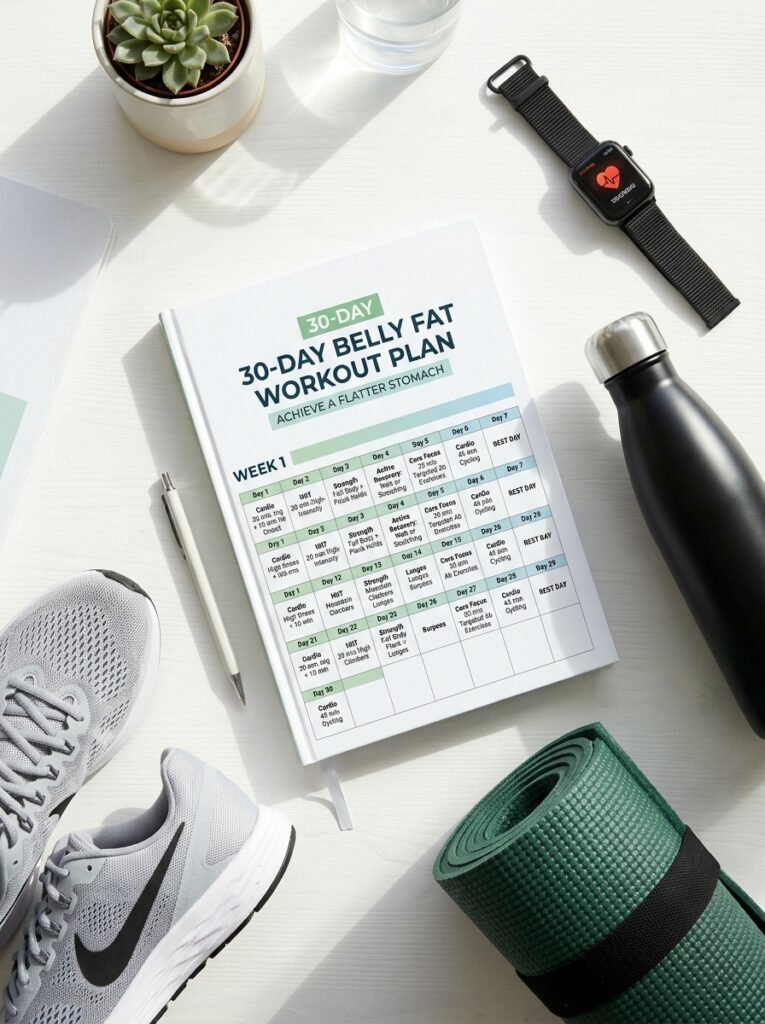
Here’s a simple schedule you can adapt.
Week 1: Build the Habit
Focus on showing up rather than pushing yourself to the limit.
Monday: Full-body strength + 15-minute walk
Tuesday: 25-minute walk
Wednesday: Full-body strength
Thursday: 25-minute walk
Friday: Full-body strength
Saturday: Easy walk or active household tasks
Sunday: Rest
Week 2: Increase Activity
Add a little more walking.
Monday: Strength + 20-minute walk
Tuesday: 30-minute walk
Wednesday: Strength
Thursday: 30-minute walk
Friday: Strength + 20-minute walk
Saturday: 30-minute easy walk
Sunday: Rest
Week 3: Build Strength and Endurance
If you’re feeling good, gradually increase your workout volume.
Monday: Strength + walk
Tuesday: 35-minute walk
Wednesday: Strength
Thursday: 35-minute walk
Friday: Strength + walk
Saturday: 30–40-minute walk
Sunday: Rest
Week 4: Make It Sustainable
Don’t suddenly double your workouts because the month is ending.
Instead, repeat the habits you’ve built.
Monday: Strength + walk
Tuesday: 35–45-minute walk
Wednesday: Strength
Thursday: 35–45-minute walk
Friday: Strength + walk
Saturday: Optional enjoyable activity
Sunday: Rest
The goal isn’t to finish day 30 exhausted.
The goal is to finish day 30 with a routine you can continue.
How to Track Your Progress
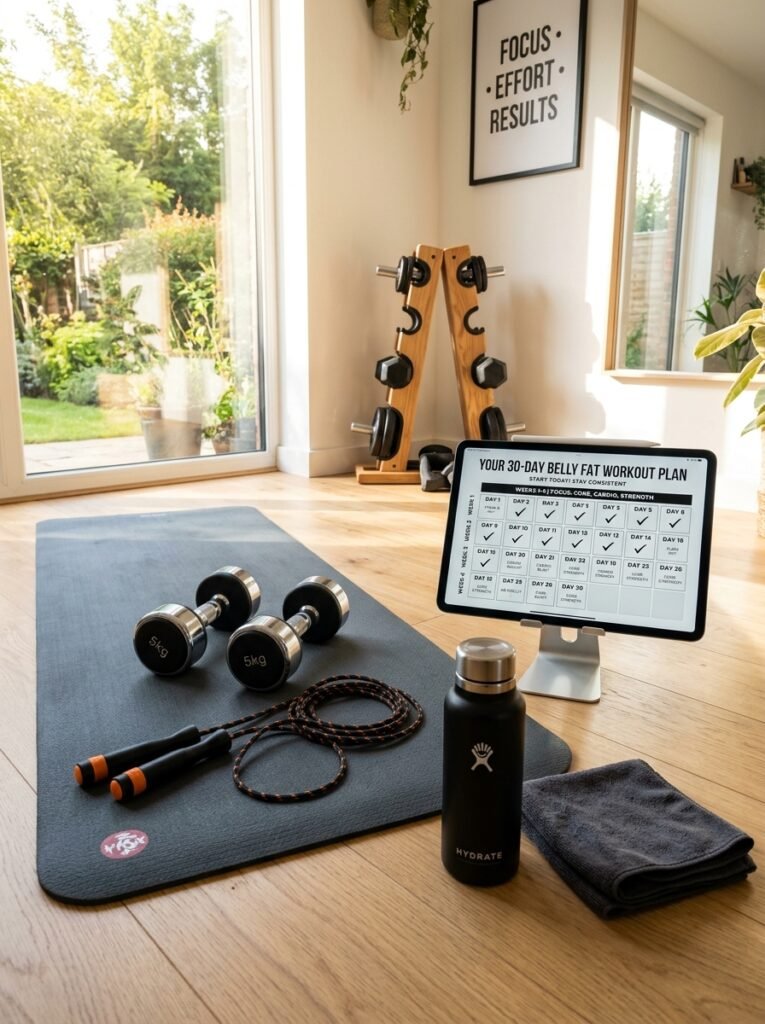
The scale is only one measurement.
For a more complete picture, track several things.
1. Waist Measurement
Measure around your waist under similar conditions each time.
For example, measure in the morning before breakfast and use the same location each time.
Don’t measure several times a day.
Your waist measurement naturally fluctuates because of food, fluids, digestion, and other factors.
2. Body Weight
If weighing yourself doesn’t cause unnecessary stress, you can weigh yourself regularly under similar conditions.
Look at the overall trend rather than becoming emotionally attached to one day’s number.
3. Progress Photos
Take photos under similar lighting, clothing, and positioning.
You may notice changes that aren’t obvious when looking in the mirror every day.
4. Fitness Improvements
Pay attention to:
- Walking farther
- Doing more push-ups
- Holding a plank longer
- Squatting more comfortably
- Recovering faster
- Feeling more energetic
These are real signs of progress too.
What Not to Do When Trying to Lose Belly Fat
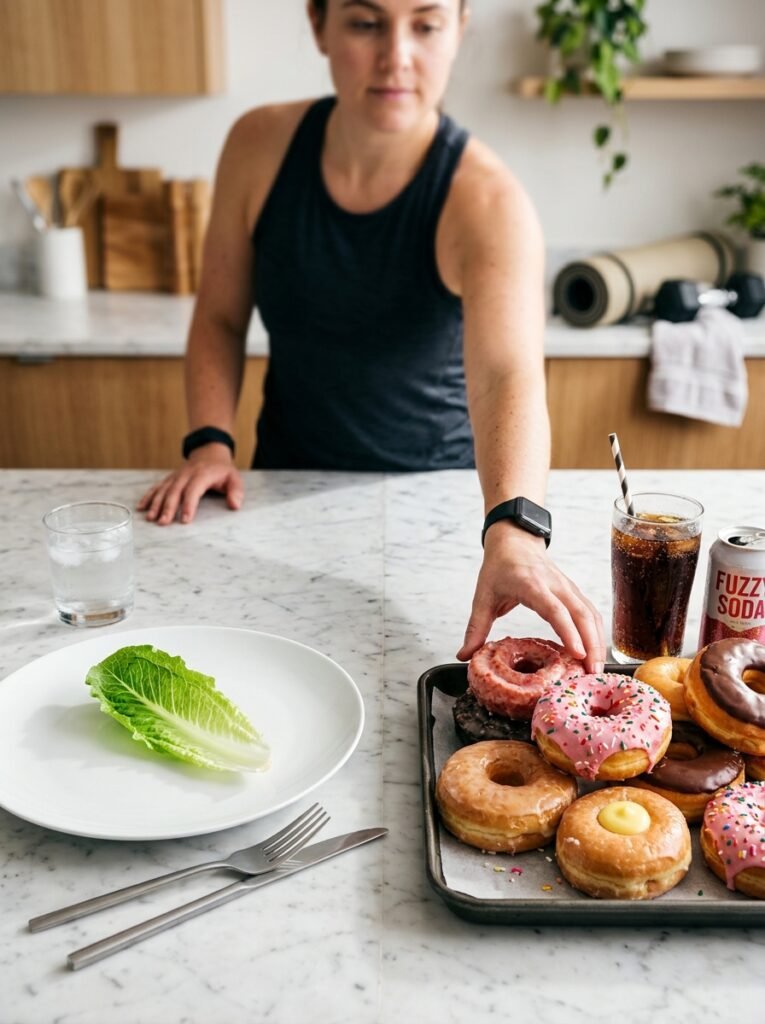
Some approaches sound attractive because they promise fast results.
Be careful with claims that suggest you can dramatically transform your stomach in a few days.
Avoid Extreme Calorie Restriction
Eating as little as possible isn’t a sustainable fat-loss strategy.
Don’t Depend on Detox Drinks
You don’t need a special drink to “flush” belly fat from your body.
Your body already has systems responsible for processing and eliminating waste.
Don’t Do Hundreds of Crunches
Ab exercises can strengthen your core, but they won’t selectively burn stomach fat.
Don’t Completely Eliminate Carbohydrates
Rice, potatoes, oats, fruit, and whole grains can all fit into a healthy diet.
The total quality and quantity of your diet matter more than blaming one macronutrient.
Don’t Expect the Scale to Drop Every Day
Your weight can fluctuate because of water, food volume, sodium, digestion, hormones, and other factors.
A temporary increase doesn’t automatically mean you’ve gained body fat.
Common Mistakes That Slow Progress
Eating Healthy Foods in Huge Portions
Healthy foods still contain calories.
Avocado, nuts, olive oil, granola, and nut butter can be nutritious but calorie-dense.
Portion size still matters.
Forgetting About Weekend Eating
A structured Monday-to-Friday diet can be undone if weekends regularly involve excessive portions and frequent high-calorie meals.
You don’t have to eat perfectly on weekends.
Just keep your overall habits reasonably consistent.
Drinking Your Calories
Liquid calories can add up quickly.
If you’re struggling to create a calorie deficit, beverages are worth examining.
Changing Your Plan Every Few Days
Trying a new diet every Monday makes it difficult to know what actually works for you.
Give your routine enough time to become a habit.
Exercising Too Hard
More exercise isn’t always better.
If your workout leaves you exhausted and sore for days, you may struggle to stay consistent.
A moderate plan you follow for months beats an extreme plan you abandon after one week.
How to Stay Consistent for 30 Days
Motivation comes and goes.
Systems are more reliable.
Make your healthy habits easier by preparing in advance.
Try These Simple Strategies
- Prepare protein sources ahead of time.
- Keep fruit visible on the counter.
- Keep convenient healthy snacks available.
- Schedule workouts on your calendar.
- Put walking shoes somewhere easy to reach.
- Drink water regularly throughout the day.
- Keep your favorite treats in reasonable portions.
- Track workouts instead of obsessing over calories.
- Don’t treat one unhealthy meal as a failed day.
One high-calorie meal doesn’t ruin your progress.
Simply return to your normal routine at the next meal.
What Results Can You Expect After 30 Days?
This is where realistic expectations matter.
Your results won’t look exactly like someone else’s.
You might notice:
- A modest reduction in body weight
- A smaller waist measurement
- Less bloating
- Better fitness
- Improved strength
- More consistent energy
- Better control over portions
- Improved confidence with exercise
Some people will see visible changes within a month.
Others may need longer.
That’s completely normal.
The amount of belly fat you lose depends on your starting body composition, calorie deficit, activity, genetics, sleep, age, and many other factors.
Don’t let social media before-and-after photos convince you that your body should change at the same speed as someone else’s.
After 30 Days: What Should You Do Next?
Don’t stop just because the 30 days are over.
If your routine is working, keep it.
You can gradually increase your strength training, walking, or other enjoyable physical activities.
Your eating pattern should also become something you can maintain rather than a temporary “diet.”
The long-term goal isn’t simply a smaller stomach.
It’s building a healthier lifestyle that supports your body without making every meal or workout feel like punishment.