
Low-Carb Stuffed Spaghetti Squash with Ground Turkey and Mozzarella
Description
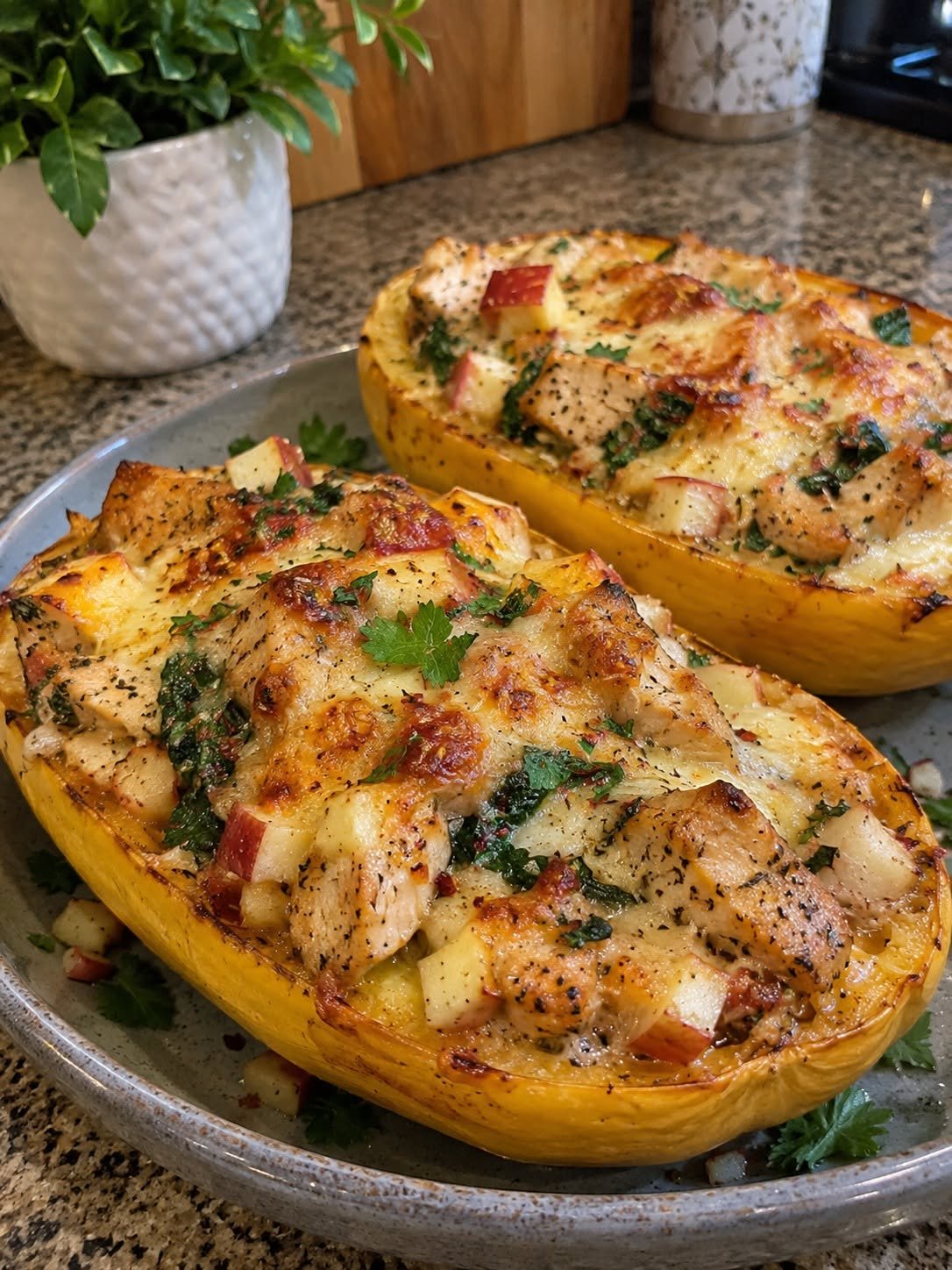
Tender, caramelized strands of roasted squash carry a rich, herbed turkey marinara, capped with golden, melted mozzarella for the ultimate macro-friendly comfort food. This wholesome baked dish captures the hearty, savory depth of classic Italian lasagna while swapping traditional pasta noodles for nutrient-dense vegetable boats. Naturally low in carbohydrates and loaded with lean protein, it delivers an indulgent, cheese-pull texture that satisfies comfort food cravings without derailing your daily dietary targets.
Can This High-Protein Stuffed Spaghetti Squash Support Weight Loss Goals?
This recipe supports weight loss primarily through high protein density and significant dietary fiber, a combination well-documented for promoting prolonged satiety and minimizing between-meal snacking. Lean ground turkey supplies ample essential amino acids to protect calorie-burning lean muscle mass while you remain in a caloric deficit. Concurrently, spaghetti squash acts as a voluminous, water-rich base that fills the stomach for a fraction of the caloric cost found in standard wheat pastas.
Does High-Protein Stuffed Spaghetti Squash Fit a High Protein Lifestyle?
With around 36 grams of complete protein per stuffed half, this dish seamlessly anchors a protein-forward, low-carb routine. Pairing extra-lean ground turkey with part-skim mozzarella concentrates the amino acid profile without driving up excess saturated fats. Spaghetti squash naturally keeps net carbs down to roughly 12 grams per generous serving, making it exceptionally macro-friendly. It provides the satisfying heft of a traditional baked pasta casserole while keeping your daily macronutrient splits balanced and lean.
My Personal Experience
-
Scraping the Strands:
Twirling the roasted squash with a fork felt just like handling traditional angel hair pasta, yet it held onto the thick marinara without turning watery.
Baking the halves cut-side down first created a tender, tender-crisp strand texture rather than a mushy mess.
-
Pre-Browning the Meat:
Searing the turkey in an extra-hot skillet developed deep fond and savory browning before I combined it with the crushed tomatoes.
That single technique eliminated the dry, bland profile often associated with ultra-lean poultry.
-
Baking the Cheese Cap:
Broiling the mozzarella-topped squash for the final two minutes created blistered, bubbly brown patches that sealed in the hot meat sauce.
It preserved the rich garlic and oregano aromas right until the fork broke through the cheesy shell.
Perfect For:
-
High-Protein Dinners: A macro-balanced main dish that hits 35+ grams of protein without requiring supplemental powders.
-
Low-Carb & Ketogenic Meal Plans: An authentic replacement for traditional pasta bakes that keeps net carbs under 15 grams per serving.
-
Make-Ahead Meal Prep: Sturdy squash skins act as built-in portion containers that reheat cleanly throughout the work week.
-
Post-Workout Recovery: Balances clean protein for muscle repair with micronutrients like potassium and vitamin C from whole vegetables.
Why You’ll Love This Recipe:
-
Built-in Portion Control:
Each roasted squash shell serves as a natural, self-contained serving vessel that keeps portions uniform and effortless.
It simplifies tracking your daily macronutrient targets without requiring repetitive scale measurements at dinnertime.
-
Pasta Comfort Without the Carb Crash:
The tender squash strands offer the rich mouthfeel and chew of pasta noodles while staying naturally light and easy to digest.
You get all the savory satisfaction of an Italian baked casserole without the afternoon lethargy or post-meal sluggishness.
-
Stands Up to Reheating:
Unlike traditional grain noodles that often turn mushy in sauce over time, roasted squash strands maintain their bite after refrigeration.
The turkey marinara actually deepens in flavor as the Italian herbs infuse the sauce over 48 hours.
Common Mistakes to Avoid:
-
Skipping the Salt-and-Sweat Step: Roasting squash with excess internal moisture causes watery marinara; salting the cut halves for 15 minutes and patting dry ensures firm, distinct strands.
-
Roasting Cut-Side Up: Facing the cut flesh upward traps steam inside the squash cavity, leading to soggy pulp instead of caramelized edges.
-
Using Runny, Watery Marinara: Choosing an ultra-thin tomato sauce dilutes the filling; reduce your sauce until thick so it clings to the meat and squash without pooling.
-
Over-Baking the Squash: Leaving the squash in the oven past fork-tender turns the firm strands into mush that cannot support the meat sauce.
Required Equipment:
-
Large Chef’s Knife: Ensures safe, clean cuts through the dense outer rind of raw spaghetti squash.
-
Heavy-Duty Rimmed Baking Sheet: Distributes intense oven heat evenly while containing rendered juices and preventing pan warping.
-
Parchment Paper: Prevents squash rims from sticking and simplifies cleanup without burning.
-
12-Inch Cast-Iron or Non-Stick Skillet: Promotes high-heat browning of lean ground meat without tearing or scorching.
-
Sturdy Metal Fork: Separates the roasted squash flesh cleanly into distinct, pasta-like strands.
Storage Instructions:
Allow leftovers to cool completely to room temperature before packing to prevent condensation buildup. Store the stuffed halves or scooped filling in airtight glass meal-prep containers in the refrigerator for up to 4 days. For freezer storage, scoop the meat and squash mixture out of the outer rinds into a freezer-safe, vacuum-sealed container or heavy-duty bag for up to 2 months (freezing the whole rind causes structural breakdown upon thawing). Reheat refrigerated portions in a 175°C (350°F) oven for 15 minutes, or microwave on high for 2 to 3 minutes until steaming hot.
Recipe Details
-
Preparation Time: 20 minutes
-
Cooking Time: 45 minutes
-
Total Time: 65 minutes
-
Servings: 4 servings (1 stuffed squash half per serving)
-
Best Season for This Recipe: Fall, winter, or all-season
-
Total Calories (Per Serving): ~385 kcal (approximate estimate)
Roasted spaghetti squash halves transform into wholesome edible bowls packed with savory Italian turkey bolognese and bubbling melted mozzarella. This macro-conscious, comfort-food dinner delivers over 35 grams of lean protein and keeps net carbohydrates exceptionally low. Simple to prepare, hearty, and satisfying, it brings rich pasta-bake flavors straight to your weeknight table.
📝 Ingredients:
-
2 medium spaghetti squashes (approx. 1.1–1.3 kg / 2.5–3 lbs each), sliced lengthwise and seeds scooped clean
-
450 g (1 lb) 93% lean ground turkey (Note: Lean ground beef or ground chicken breast also work seamlessly)
-
15 ml (1 tbsp) extra-virgin olive oil, divided
-
1 small yellow onion, finely diced
-
4 cloves fresh garlic, minced
-
350 ml (1.5 cups) no-sugar-added marinara sauce (Note: Check label to ensure no added corn syrup or cane sugar)
-
5 g (1 tsp) dried Italian seasoning (blend of oregano, basil, thyme, and rosemary)
-
1.5 g (0.5 tsp) crushed red pepper flakes (Note: Adjust down for mild palates)
-
4 g (0.75 tsp) fine sea salt, divided
-
2 g (0.5 tsp) freshly cracked black pepper, divided
-
115 g (1 cup) part-skim shredded mozzarella cheese
-
30 g (0.25 cup) freshly grated Parmesan cheese
-
10 g (2 tbsp) fresh basil leaves, chopped, for garnish
Directions:
-
Preheat and Prep the Squash:
Preheat the oven to 200°C (400°F) and line a rimmed baking sheet with parchment paper. Brush the cut surfaces of the halved squashes with 5 ml (1 tsp) olive oil, then season evenly with 2 g (0.5 tsp) salt and 1 g (0.25 tsp) black pepper. Place the squash halves cut-side down on the baking sheet.
-
Roast the Squash:
Bake at 200°C (400°F) for 35 to 40 minutes. Look for a lightly browned edge on the flat surface and a skin that yields slightly when pressed with a thumb. Do not overcook. Remove from the oven, flip cut-side up, and let rest for 5 minutes.
-
Brown the High-Protein Turkey Filling:
While the squash roasts, place a large skillet over medium-high heat with the remaining 10 ml (2 tsp) olive oil. Add the diced onion and cook for 3 minutes until translucent. Add the ground turkey, breaking it up with a wooden spoon, and sear for 6 to 8 minutes until golden-brown and no pink remains.
-
Simmer the Sauce:
Lower the skillet heat to medium-low. Stir in the minced garlic, Italian seasoning, red pepper flakes, remaining salt, and black pepper; cook for 1 minute until fragrant. Pour in the marinara sauce, bring to a gentle simmer, and cook uncovered for 5 to 7 minutes until the sauce thickens and tightly coats the meat.
-
Shred and Stuff the Shells:
Take a metal fork and gently rake the interior flesh of each squash half from the outside edge inward to loosen the strands, leaving about 0.5 cm of squash wall intact for stability. Spoon an equal portion of the hot turkey bolognese directly into each squash cavity, folding slightly to integrate the top strands with the sauce.
-
Melt the Cheese Topping:
Evenly sprinkle the shredded part-skim mozzarella and grated Parmesan across the four filled squash halves. Return the baking sheet to the oven and bake at 200°C (400°F) for 8 to 10 minutes, switching to the top broiler on high for the final 2 minutes until the cheese is blistered, bubbling, and golden-brown. Garnish with chopped fresh basil and serve immediately.
Nutrition Facts (Per Serving – Approximate):
-
Calories: 385 kcal
-
Fats: 17 g
-
Cholesterol: 85 mg
-
Sodium: 680 mg
-
Potassium: 820 mg
-
Total Carbohydrates: 17 g
-
Fiber: 5 g
-
Net Carbs: 12 g
-
Sugars: 7 g
-
Protein: 36 g
-
Calcium: 280 mg
Notes:
-
Storage & Reheating: Refrigerate in an airtight container for up to 4 days. Reheat in an oven preheated to 175°C (350°F) for 15 minutes to preserve strand texture, or microwave for 2 minutes covered with a damp paper towel.
-
Allergy Modifications: For a dairy-free variation, replace mozzarella and Parmesan with nutritional yeast or meltable plant-based shreds; ensure your marinara has no dairy additions.
-
Flavor Boosts: Stir 1 tablespoon of sun-dried tomato paste or chopped kalamata olives into the turkey bolognese for a richer, umami-forward Mediterranean profile.