
Japanese Milk Bread by Hand (No Milk Powder Needed)
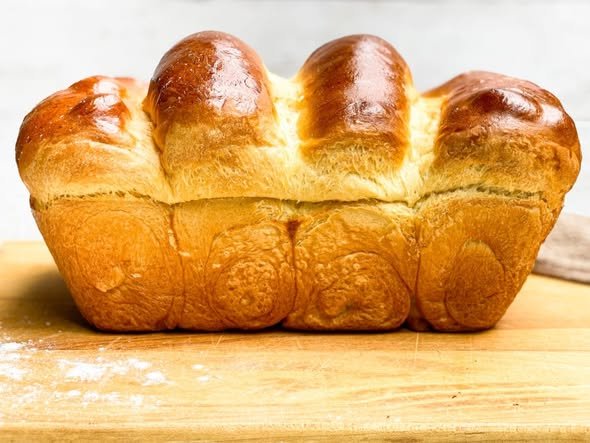
Description Tearing into a fresh loaf of Japanese milk bread (shokupan) reveals feathery, cloud-like strands and a subtly sweet, buttery aroma. Traditional recipes rely on dried milk powder, but this method uses whole dairy milk and a stovetop starter (tangzhong) to lock in moisture naturally. When paired with lean deli meats or egg whites, it creates satisfying high protein breakfast sandwiches or post-workout meals, offering a balanced carbohydrate base that supports sustained daily energy better than standard white bread.
Can This Japanese Milk Bread Support Weight Loss Goals? Weight loss depends on maintaining a consistent caloric deficit while preserving lean muscle mass. While this loaf is not inherently low-calorie, its high-moisture crumb promotes early satiety, helping prevent overeating compared to airy commercial breads. Integrating thick slices with nutrient-dense, high protein fillings slows gastric emptying, keeps insulin spikes moderate, and curtails between-meal snacking.
Does Japanese Milk Bread Fit a High Protein Lifestyle? Yes, it functions effectively as a clean carbohydrate vessel within an active, macro-conscious dietary framework. A single slice provides roughly 24g of net carbs alongside natural dairy proteins from whole milk and enriched bread flour. Pairing it with high-protein staples like Greek yogurt spreads, turkey breast, or whey-based french toast easily turns each serving into a muscle-supportive meal without relying on processed additives.
My Personal Experience
-
Stovetop Tangzhong Precision: Whisking the starter until it reaches a paste-like pudding texture prevents sticky, unworkable dough later on. Skipping dry milk powder never compromised the signature bounce because whole milk provides sufficient milk solids and butterfat.
-
Hand-Kneading Resistance: The wet, shaggy dough felt intimidating during the initial 5 minutes of hand slap-and-folds before suddenly smoothing out. Once the softened butter fully incorporated around the 10-minute mark, the gluten transformed into an elastic, non-stick sheet.
-
Tear-Drop Texture: Pulling the warm rolls apart revealed distinct vertical strands rather than standard crumbly sandwich bread. Toasting a slice lightly crisped the paper-thin crust while maintaining a soft, pillowy interior that held up under heavy spreads.
Perfect For:
-
High-protein breakfasts paired with poached eggs, smoked salmon, or lean turkey bacon.
-
Balanced pre-workout fuel providing clean, easily digestible complex carbohydrates.
-
High-protein French toast battered in egg whites and unflavored whey isolate.
-
Meal prep toast bases for savory, high-protein cottage cheese and herb spreads.
Why You’ll Love This Recipe:
-
No Specialty Ingredients Required: Standard whole milk replaces hard-to-find milk powder without sacrificing any rich, milky flavor or crust browning. You can bake an authentic bakery-style loaf entirely using everyday pantry staples.
-
Tangzhong Moisture-Locking: Pre-cooking a small portion of flour and milk gelatinizes the starches so they hold onto extra hydration throughout baking. This ensures your bread stays soft and tender for days without synthetic shelf-life extenders.
-
Complete Hand-Kneaded Simplicity: You do not need an expensive or bulky stand mixer to develop an elastic, windowpane-level gluten network. The technique relies on simple bench friction and body mechanics to develop a feathery crumb effortlessly.
Common Mistakes to Avoid:
-
Overheating the Milk Starter: Boiling the flour-milk paste will denature proteins and evaporate liquid too quickly; keep the heat low and pull it off the stove the moment lines form.
-
Adding Excess Raw Flour During Kneading: Tossing extra flour onto the counter dries out the dough, resulting in a dense, heavy loaf rather than feather-light layers.
-
Adding Cold Butter Too Early: Cold fats coat flour proteins prematurely and prevent gluten formation; add only room-temperature butter once the basic dough structure is established.
-
Slicing the Loaf While Steaming Hot: Cutting into the loaf straight out of the oven collapses the delicate gluten structure and turns the center gummy.
Required Equipment:
-
Small Saucepan: Cooks the tangzhong starter evenly without scorching the milk solids.
-
Standard 8.5 x 4.5-inch Loaf Pan: Supports uniform vertical rise and yields clean sandwich-slice shapes.
-
Bench Scraper: Manages high-hydration dough cleanly off the work surface during initial hand-kneading.
-
Kitchen Scale: Ensures precise flour-to-liquid ratios essential for soft, reproducible crumb texture.
Storage Instructions: Keep the bread at room temperature in an airtight bread box or sealed ziplock bag for up to 4 days; do not refrigerate, as cold temperatures accelerate starch retrogradation and dry out the crumb. For longer storage, slice the loaf completely, place parchment squares between slices, and freeze in an airtight freezer bag for up to 3 months. Toast frozen slices directly to retain softness and moisture.
Recipe Details
-
Preparation Time: 35 minutes (plus 2 hours proofing)
-
Cooking Time: 30 minutes
-
Total Time: 3 hours 5 minutes
-
Servings: 10 slices
-
Best Season for This Recipe: All-season
-
Total Calories (Per Serving): ~190 kcal (approximate estimate)
📝 Ingredients:
Tangzhong (Starter):
-
20g (2 tbsp) Bread flour
-
100ml (scant 1/2 cup) Whole milk
Main Dough:
-
330g (2 2/3 cups) Bread flour (high-protein content, minimum 12% protein recommended)
-
120ml (1/2 cup) Whole milk (warmed to 105°F–110°F / 40°C–43°C)
-
35g (2 1/2 tbsp) Granulated sugar
-
5g (1 1/2 tsp) Active dry yeast or instant yeast
-
1 Large egg (room temperature, lightly beaten)
-
5g (1 tsp) Fine sea salt
-
40g (3 tbsp) Unsalted butter (softened to pliable room temperature)
Egg Wash:
-
1 tbsp Whole milk mixed with 1 tbsp reserved beaten egg
Directions:
-
Make the Tangzhong: Whisk 20g bread flour and 100ml whole milk in a small saucepan over medium-low heat. Stir constantly for 2–3 minutes until the mixture thickens into a glossy, pudding-like paste that leaves clear trails behind the whisk. Remove from heat and cool to room temperature.
-
Activate Yeast: In a small bowl, combine warm whole milk (105°F–110°F), granulated sugar, and yeast. Let stand for 5–7 minutes until frothy; if using instant yeast, combine directly with the dry ingredients.
-
Form the Shaggy Dough: In a large bowl, whisk the remaining 330g bread flour and salt together. Form a well in the center; pour in the yeast mixture, the cooled tangzhong paste, and the beaten egg. Mix with a wooden spoon or spatula until a shaggy, wet dough comes together.
-
Develop the Gluten by Hand: Turn the dough onto an unfloured countertop. Use a slap-and-fold method (lift, stretch forward, slap down onto the counter, fold over itself) for 6–8 minutes; the dough will transition from sticky and clumpy to a smoother, cohesive ball.
-
Incorporate Butter: Flatten the dough slightly, spread the softened butter across the surface, and fold the edges inward. Resume kneading vigorously for 7–10 minutes. The fat will temporarily separate the dough, but continuous friction will yield a supple, satiny ball that passes the windowpane test (stretching a small piece thin enough to see light through without tearing).
-
First Proof: Form the dough into a smooth sphere. Place into a lightly oiled bowl, cover with a damp cloth, and let rise in a warm spot (75°F–80°F / 24°C–27°C) for 60–75 minutes, or until doubled in volume.
-
Shape the Loaf: Gently punch down the dough and turn it out onto a clean work surface. Divide into 3 equal portions (approx. 220g each), roll each into a smooth ball, cover, and bench-rest for 15 minutes. Roll each ball out into an oval (approx. 8 inches long), fold both long edges inward like an envelope, then roll it up tightly from the short end into a cylinder.
-
Second Proof: Place the 3 rolled cylinders seam-side down, side-by-side, into a greased 8.5 x 4.5-inch loaf pan. Cover loosely with greased plastic wrap and let rise for 45–60 minutes, or until the dough crowns roughly 1/2 inch above the rim of the pan.
-
Bake: Preheat your oven to 350°F (175°C). Brush the top of the risen dough lightly with the milk-egg wash. Bake on the center rack for 30–33 minutes until the crust is deep golden brown and the internal temperature reads 195°F–200°F (90°C–93°C). Tent loosely with aluminum foil after 18 minutes if browning too quickly.
-
Cool: Remove the loaf from the oven, tap the pan firmly on the counter once to release trapped steam, and let sit for 5 minutes. Transfer to a wire rack and cool completely (at least 90 minutes) before slicing.
Nutrition Facts (Per Serving – Approximate):
-
Calories: 190 kcal
-
Fats: 5g
-
Cholesterol: 32mg
-
Sodium: 245mg
-
Potassium: 82mg
-
Total Carbohydrates: 29g
-
Fiber: 1.5g
-
Net Carbs: 27.5g
-
Sugars: 5g
-
Protein: 6.5g
-
Calcium: 48mg
Notes:
-
Storage: Keep enclosed in a plastic bag at room temperature for up to 4 days.
-
Reheating: Warm individual slices in a 300°F (150°C) toaster oven for 2 minutes to restore the original pillowy texture.
-
Allergy Swaps: Substitute dairy milk with unsweetened soy milk and unsweetened plant butter at a 1:1 ratio for a dairy-free crumb.
-
Flavor Variations: Add 1 tsp of ground cinnamon or the zest of one orange into the dry flour mix for subtle warmth.
Frequently Asked Questions:
Can I substitute all-purpose flour for bread flour? Yes, but bread flour provides the high protein percentage required to produce the tall rise and chewy, pull-apart texture.
Why do I not need dry milk powder for this recipe? Using whole dairy milk in both the dough and the tangzhong supplies all the necessary milk solids, fats, and natural sugars to achieve a tender crumb.
Why did my bread turn out dense instead of fluffy? The dough was either under-kneaded, under-proofed, or weighed down by too much added raw flour during hand-kneading.
How do I know when the bread is fully baked? An internal probe thermometer inserted into the center should register between 195°F and 200°F (90°C–93°C).
Can I make the dough ahead of time? Yes, place the dough in the refrigerator for its first rise overnight (up to 16 hours), let it sit at room temperature for 45 minutes, then proceed with shaping.