 ByYara
High Protein Garlic and Herb Sourdough Bread Recipe
Description
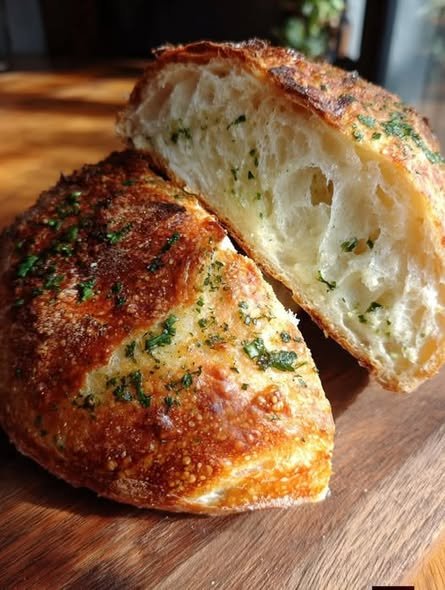
Imagine the tangy aroma of sourdough mingling with fragrant garlic, rosemary, and thyme, emerging from your oven as a beautifully golden, crusty loaf. This Garlic and Herb Sourdough Bread offers the perfect balance of a chewy, airy interior and a satisfyingly crisp crust, making it an irresistible addition to any meal. Its complex flavor is the result of a slow fermentation process that develops depth and character you simply can’t get from commercial bread .
Can This Garlic and Herb Sourdough Support Weight Loss Goals?
Yes, this bread can be a satisfying part of a weight loss plan, especially when you focus on portion control and pair it with high-protein foods. The fermentation process in sourdough can make it easier to digest and may help with blood sugar management, which is beneficial for sustained energy and avoiding cravings . Choosing lean proteins like chicken or fish alongside a slice of this fiber-rich bread creates a balanced, filling meal that supports your goals.
Does This Bread Fit a High-Protein Lifestyle?
While a traditional sourdough loaf is not inherently high-protein, it can absolutely fit into a high-protein lifestyle. The key is to treat it as a delicious, high-quality carbohydrate source to complement protein-rich foods. One slice contains approximately 4g of protein and 28g of carbohydrates ; by pairing it with eggs for breakfast, a generous portion of chicken for lunch, or fish for dinner, you create a macro-balanced meal that supports muscle maintenance and satiety.
My Personal Experience
-
The aroma that fills the kitchen is intoxicating. The smell of garlic and herbs baking into the sourdough creates a bakery-like warmth that makes the final result even more rewarding.
-
The crust is perfectly crisp while the inside remains soft and chewy. This bread delivers the authentic sourdough texture that makes it perfect for tearing, dipping in olive oil, or using for sandwiches.
-
The flavor is even better the next day. As the bread rests, the garlic and herb flavors meld beautifully with the sourdough tang, making it a fantastic make-ahead option.
-
It’s surprisingly versatile for a rustic loaf. This bread is delicious on its own, but it also elevates simple meals, from a bowl of soup to a hearty breakfast toast.
Perfect For
-
High-protein breakfasts: Serve toasted with scrambled eggs or smoked salmon.
-
Keto diet plans: This bread pairs well with keto-friendly meals, adding a comforting carb element.
-
High-protein, low-carb recipes: Use it as a side for grilled chicken or steak.
-
Cozy winter dinners: Its warm, aromatic flavor is the perfect complement to soups and stews.
Why You’ll Love This Recipe
-
It brings the flavor of an artisan bakery to your kitchen: The combination of tangy sourdough with aromatic garlic and herbs creates a crusty, flavorful loaf that complements any meal .
-
The slow fermentation develops an unbeatable depth of flavor: An overnight proof in the refrigerator not only makes the dough easier to handle but also enhances the complex, slightly tangy taste .
-
You get a beautiful, bakery-worthy crust: Using a preheated Dutch oven traps steam, creating a perfectly golden and crispy crust with a satisfying crackle .
-
It’s a versatile bread for any occasion: This loaf is just as perfect for dipping in olive oil as an appetizer as it is for making gourmet sandwiches or serving alongside a hearty soup.
Common Mistakes to Avoid
-
Not using a kitchen scale: Using cup measurements for flour, especially in sourdough baking, can lead to a dough that’s either too dry or too wet. A scale ensures accuracy and consistent results .
-
Slicing the bread while it’s still warm: It’s tempting, but cutting into the bread before it has fully cooled will result in a gummy, dense crumb. Allow it to cool completely on a wire rack for the best texture .
-
Skipping the stretch and folds: This crucial step during bulk fermentation strengthens the gluten structure, creating a light and airy loaf. Neglecting it can lead to a flat, dense bread .
Required Equipment
-
Kitchen scale — ensures precise measurements for flour and water, which is critical for sourdough success .
-
Dutch oven (or heavy oven-safe pot with lid) — traps steam during baking, creating a beautifully crisp, golden crust .
-
Proofing basket (banneton) or a bowl — helps the dough hold its shape and creates a beautiful pattern on the crust during the final rise .
-
A very sharp knife or bread lame — used to score the dough right before baking, allowing it to expand in the oven for a beautiful rise .
Storage Instructions
To store leftovers, wrap the cooled bread in a kitchen towel or place it in a paper bag to maintain its crispy crust for up to 3 days at room temperature. For longer storage, wrap the loaf tightly in plastic wrap and then foil, and freeze for up to 1 month. This method keeps the bread fresh and high-protein friendly, as you can simply toast slices directly from the freezer .
Recipe Details
Preparation Time: 45 minutes (plus 4-5 hours for bulk fermentation)
Cooking Time: 45 minutes
Total Time: Approximately 5-6 hours (plus overnight proof)
Servings: 12 slices
Best Season for This Recipe: All-season (especially comforting in fall and winter)
Total Calories (Per Serving): Approx. 150 kcal
A rustic, aromatic sourdough loaf infused with garlic and herbs, offering a crispy crust and a chewy crumb.
📝 Ingredients
-
500g bread flour
-
1 tsp garlic powder (or 6 cloves fresh garlic, minced)
-
1 tsp dried thyme or rosemary
-
Pinch of black pepper
-
100g active sourdough starter
-
350–375g water (room temperature)
-
10g salt
-
Optional: Olive oil and flaky salt for the crust
Directions
-
Mix Dry Ingredients and Autolyse: In a large bowl, combine the bread flour, garlic powder, thyme or rosemary, and black pepper. Add 350-375g of water and mix until a shaggy dough forms. Cover and let it rest for 30 minutes. This step hydrates the flour, jumpstarting gluten development .
-
Add Starter and Salt: Add the active sourdough starter and salt to the dough. Mix thoroughly until all ingredients are well incorporated .
-
Bulk Fermentation: Cover the bowl and let the dough rise at room temperature for 4 to 5 hours. During this time, perform 3 to 4 sets of “stretch and folds” every 30-45 minutes. This builds gluten strength for a lighter, airier loaf .
-
Shape and Overnight Proof: Shape the dough into a tight round (boule). Place it seam-side up into a well-floured proofing basket or a bowl lined with a floured towel. Cover and refrigerate overnight (8-12 hours) to develop flavor .
-
Preheat Oven and Dutch Oven: About 30 minutes before baking, preheat your oven to 475°F (246°C) with your Dutch oven inside. It must be piping hot for a great crust .
-
Score and Bake: Carefully invert the chilled dough onto a piece of parchment paper. Using a very sharp knife or lame, score the top of the dough about ¼ inch deep. Lower the dough (with the parchment) into the preheated Dutch oven. Bake covered for 20 minutes .
-
Finish Baking: Remove the lid and continue to bake for another 20-25 minutes, or until the crust is a deep, golden brown. Brush with olive oil and sprinkle with flaky salt during the last few minutes, if desired .
-
Cool Completely: Transfer the baked bread to a wire rack. This is the most crucial step—allow it to cool completely (about 1-2 hours) before slicing to ensure a perfect texture and prevent a gummy crumb .
Nutrition Facts (Per Serving – Approximate)
| Nutrient | Amount |
|---|---|
| Calories | 150 kcal |
| Fats | 1.5g |
| Cholesterol | 0mg |
| Sodium | 210mg |
| Potassium | – |
| Total Carbohydrates | 28g |
| Fiber | 1g |
| Net Carbs | 27g |
| Sugars | 0.5g |
| Protein | 4g |
| Calcium | – |
Notes
-
Reheating: For the best fresh-baked taste, reheat slices in a toaster or a 350°F (175°C) oven for 5-10 minutes .
-
Allergy Notes: This is a traditional wheat bread and is not gluten-free. For a gluten-free, lower-carb option, consider substituting the flour with a blend like almond flour and psyllium husk .
-
Flavor Boosts: Feel free to experiment with different herbs like oregano, chives, or add grated Parmesan cheese to the dough for an extra savory kick .
-
Storage: Store in a paper bag at room temperature for up to 3 days to maintain crustiness, or freeze for longer storage .
Frequently Asked Questions
What’s the difference between using active starter and discard?
This recipe calls for active sourdough starter to leaven the bread; using discard (which is inactive) would require additional yeast to help the dough rise .
How do I know when my sourdough starter is active enough?
Your starter is ready to use when it has doubled in size, is bubbly and frothy on top, and has a pleasant, tangy aroma after a recent feeding .
Can I use fresh garlic instead of garlic powder?
Yes, you can use 6 cloves of fresh minced garlic. However, using garlic powder ensures an even distribution of flavor throughout the dough without introducing extra moisture .
Why do I need to use a Dutch oven?
A Dutch oven traps steam released from the dough, creating a humid environment that is essential for achieving a crispy, bakery-style crust and a good “oven spring” .
Why is the bread gummy inside?
A gummy texture is almost always caused by slicing the bread before it has fully cooled. The starches need time to set, so be patient and let it cool completely on a wire rack .