
DIY Aloe Vera Hair Oil for Deep Conditioning and Hair Growth
Description
Revitalize dry strands and nourish your scalp with this botanical, restorative homemade aloe vera hair oil. Featuring a silky, lightweight texture and an earthy herbal aroma, this infusion blends fresh aloe vera gel with deeply moisturizing carrier oils to lock in lasting hydration. It provides clean, nutrient-dense topical nourishment that calms scalp irritation, tames flyaways, and restores a natural, glossy sheen without commercial chemicals.
Can This Aloe Vera Hair Oil Support Scalp Health and Hair Growth?
While no topical oil cures biological hair loss overnight, this infusion supports optimal follicle health by delivering vitamins A, C, and E alongside proteolytic enzymes naturally present in fresh aloe. These enzymes gently clear dead skin cells and sebum buildup from the scalp, while the fatty acid profile of coconut or sesame oil protects the hair shaft from protein loss, reducing breakage and helping strands grow longer and stronger.
Does Aloe Vera Hair Oil Fit a Natural Haircare Routine?
This treatment integrates seamlessly into clean, minimalist hair routines due to its pure, plant-based composition. Containing zero synthetic additives, silicones, or sulfates, it harnesses cold-pressed carrier oils to penetrate the cortex and prevent keratin breakdown. Its natural antimicrobial properties soothe an inflamed scalp while sealing the cuticle, making it an essential regular treatment for low-porosity, high-porosity, and textured hair alike.
My Personal Experience
-
Noticeable Reduction in Scalp Dryness:
Within two weeks of using this oil twice weekly as a pre-shampoo treatment, persistent dry flakes cleared up completely. The cooling sensation of the fresh aloe provided immediate relief for tightness and itchiness after washing.
-
Significant Decrease in Breakage:
Massaging this into the mid-lengths and split ends noticeably fortified my hair against daily mechanical damage. Combing through damp strands post-wash resulted in far less hair fall on my brush than before.
Perfect For:
-
Pre-poo (pre-shampoo) deep conditioning treatments for parched or brittle hair.
-
Weekly scalp massage rituals to encourage circulation and clear follicle buildup.
-
Overnight intensive hair mask sessions for damaged, bleached, or heat-styled hair.
-
Post-wash sealant for coarse, curly, or frizzy hair types to lock in moisture.
Why You’ll Love This Recipe:
-
Zero Chemical Preservatives:
You retain absolute control over the purity of the ingredients, eliminating harsh parabens, mineral oils, and artificial fragrances.
-
Potent Cuticle Repair:
The infusion of natural lipids directly coats the hair shaft, restoring structural shine and minimizing split ends over time.
-
Cost-Effective Luxury:
Making this salon-grade botanical oil at home costs a fraction of premium retail herbal hair treatments.
Common Mistakes to Avoid:
-
Leaving Excess Moisture on the Leaves: Failing to dry the cut aloe vera thoroughly introduces water into the oil, which causes rancidity, bacterial growth, and violent splattering during heating.
-
Using High Cooking Heat: Boiling or scorching the oil degrades the heat-sensitive enzymes and active vitamins in the aloe vera while creating a burnt odor.
-
Skipping the Straining Process: Leaving tiny cooked aloe fragments in the finished oil can cause mold to develop in the bottle within a few weeks.
Required Equipment:
-
Heavy-Bottomed Stainless Steel Pan: Distributes heat gently and evenly to prevent the oil and plant matter from scorching.
-
Fine Mesh Strainer or Cheesecloth: Removes fine botanical particles to ensure a crystal-clear, shelf-stable finished oil.
-
Sterilized Dark Glass Dropper Bottle: Shields the finished botanical oil from UV light degradation and allows precise scalp application.
Storage Instructions:
Store the strained oil in an airtight, sterilized amber or cobalt glass bottle in a cool, dark cupboard for up to 3 to 6 months. If you live in an exceptionally warm or humid climate, you can store the oil in the refrigerator to extend freshness, though cold-pressed coconut oil will solidify and need to be warmed in a bowl of hot water before use. Do not freeze.
Recipe Details
-
Preparation Time: 15 minutes
-
Cooking Time: 25 minutes
-
Total Time: 40 minutes
-
Servings: Approximately 8–10 topical treatments (yields ~250 ml)
-
Best Season for This Recipe: All-season (ideal year-round for dryness and sun-exposed hair)
-
Total Topical Yield: ~1 cup finished oil
Freshly harvested aloe vera gel infused slowly into unrefined coconut or jojoba oil creates an ultra-nourishing elixir. This process extracts the plant’s natural enzymes without scorching, yielding a pale green, nutrient-packed hair treatment. Apply it weekly to revitalize dull strands and balance scalp hydration.
📝 Ingredients:
-
1 large Fresh Aloe Vera Leaf (clean thoroughly, drain the yellow bitter resin for 15 minutes, and pat completely dry).
-
1 cup (240 ml) Virgin Coconut Oil (or pure unrefined sesame/jojoba oil if your hair is sensitive to coconut oil).
-
5–6 drops Rosemary Essential Oil (optional note: naturally stimulates blood flow to follicles; omit if sensitive).
-
1 capsule (approx. 1/2 tsp) Vitamin E Oil (optional note: acts as a natural antioxidant to protect oil shelf life).
Directions:
-
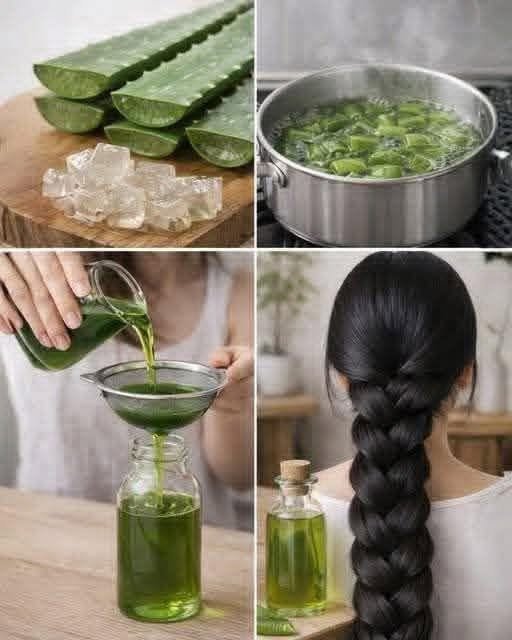
Prepare the Aloe: Trim the spiky edges off the dry aloe leaf. Slice the leaf into small, 1/2-inch cubes (skin included, provided it is washed and dried).
-
Combine on Low Heat: Place the heavy-bottomed pan over the lowest possible heat setting. Add the carrier oil and allow it to melt fully without simmering.
-
Add Aloe & Simmer: Carefully slide in the aloe cubes. Maintain a gentle, slow simmer—tiny bubbles should form around the aloe pieces, but the oil must not smoke or rapidly boil.
-
Monitor Visual Cues: Cook for 20–25 minutes, stirring occasionally. The aloe cubes will shrink, turn translucent, and eventually take on a pale golden-brown tint, indicating all residual water has evaporated.
-
Strain and Cool: Turn off the heat immediately. Allow the oil to cool until comfortably warm, then strain through a clean cheesecloth or fine sieve into a dry bowl, discarding the spent plant pulp.
-
Bottle and Preserve: Once fully cooled to room temperature, pierce the vitamin E capsule into the oil and stir in the rosemary essential oil. Pour into your sterilized glass dropper bottle.
Product Profile (Topical Cosmetic Use Only):
-
Classification: External Scalp & Hair Treatment (Do Not Ingest)
-
Active Compounds: Plant enzymes, fatty acids (lauric acid, oleic acid), vitamin E, polysaccharides.
-
Rinsability: Medium-rich oil; requires warm water and standard shampoo to cleanse.
Notes:
-
Usage Instructions: Apply 1–2 tablespoons directly onto the scalp and hair ends. Massage for 5 minutes, leave on for 30–60 minutes (or overnight), then wash thoroughly with a gentle shampoo.
-
Patch Test Requirement: Perform a skin patch test behind your ear 24 hours prior to full scalp application to ensure no allergic reaction occurs.
-
Aroma Adjustment: For a calming bedtime scent, replace rosemary essential oil with 4 drops of lavender essential oil.